If your driveway is looking darker, patchy, green around the edges or full of weeds between the joints, professional driveway cleaning in Telford can make a major visual difference without pretending that every stain or worn area can be made perfect.
This guide explains what professional driveway cleaning actually involves, what affects the result, when block paving needs re-sanding, what you can realistically expect from stubborn stains, and how pricing works. The aim is simple: help you decide whether professional cleaning is worth it for your driveway.
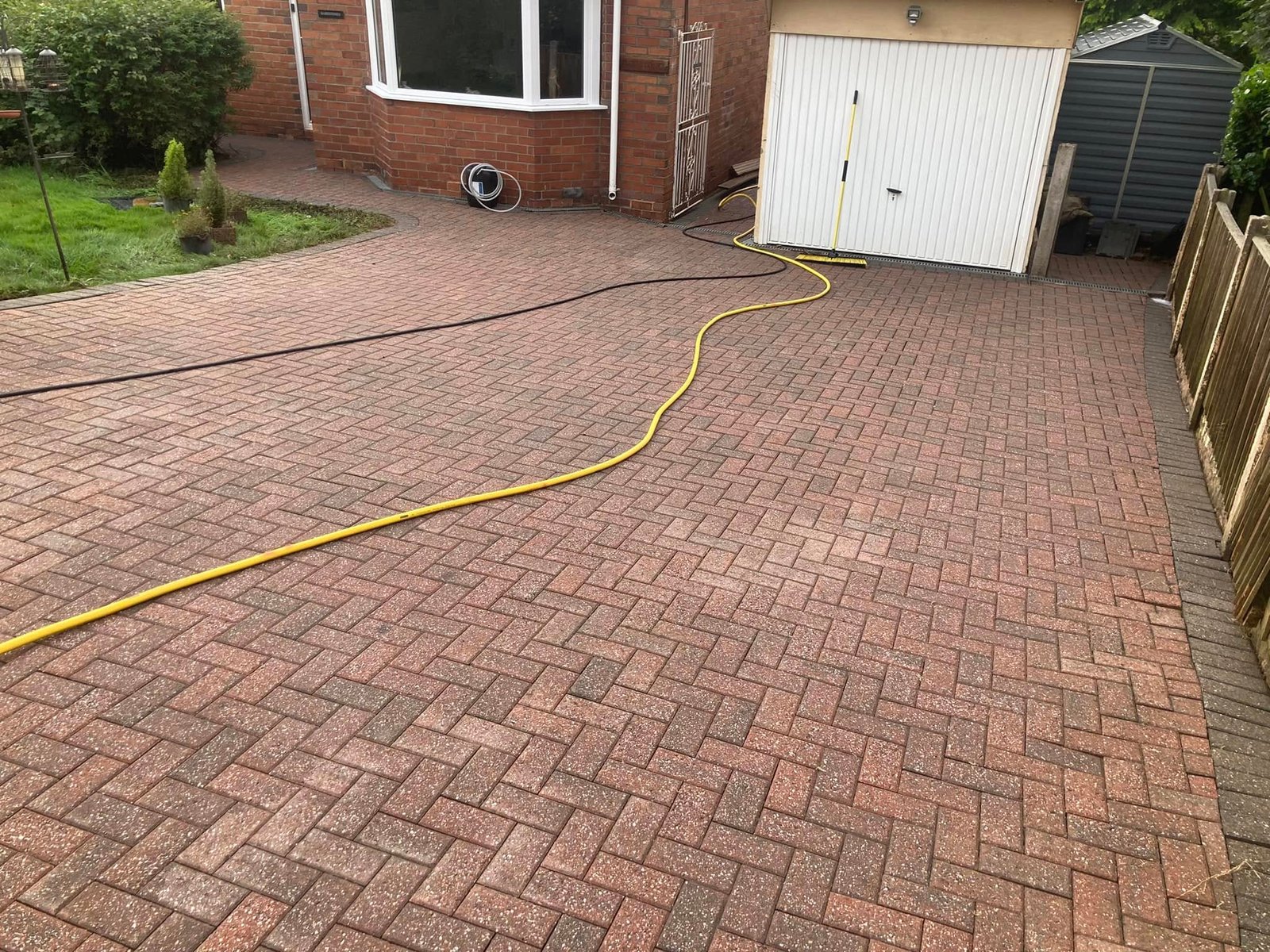
What does professional driveway cleaning include?
Good driveway cleaning is more than pointing a pressure washer at the surface. The method should depend on the material, the condition of the driveway and the type of contamination present.
At Driveway Cleaning Telford, the service is delivered by Balo Jetwash. We start by looking at the driveway in person before confirming the final quotation. That allows us to assess the surface, access, drainage, biological growth, staining and the condition of joints or edges before work starts.
Depending on the driveway, the process can include:
- inspection of the driveway and surrounding areas;
- professional pressure washing on suitable hard surfaces;
- licensed industrial detergent where appropriate;
- targeted attention to moss, algae and organic build-up;
- careful rinsing and clean-up;
- kiln-dried sand for block paving once the surface is dry and suitable for re-sanding.
You can see the main service details on our Driveway Cleaning Telford page.
Why surface type matters
A common mistake with DIY pressure washing is assuming that every driveway should be cleaned in exactly the same way. It should not. Different materials react differently to water pressure, detergents and repeated cleaning.
Block paving
Block paving can collect moss, algae, dirt and weeds in the joints. Pressure washing can remove contamination very effectively, but it can also remove jointing sand. That is why re-sanding is an important part of the process rather than an optional cosmetic extra.
Once the paving is sufficiently dry, kiln-dried sand can be brushed back into suitable joints. This helps restore the jointing material removed during cleaning and leaves the paving properly finished.
Tarmac
Tarmac requires more caution. Excessive pressure, overly aggressive nozzles or concentrating the jet in one area can mark or damage an older surface. The correct approach depends on the condition of the tarmac, so an inspection matters before deciding how it should be cleaned.
Concrete and other hard surfaces
Concrete can often tolerate professional pressure washing well, but age, cracks, previous repairs and surface finish all matter. Decorative or more delicate surfaces may need a different approach. This is why a surface-specific assessment is more useful than a one-method-fits-all promise.
What causes a driveway to look dirty?
There is rarely one single cause. Most driveways gradually collect several types of contamination at the same time.
- Moss and algae: often develop in shaded or persistently damp areas.
- Traffic film: general dirt from tyres, road dust and everyday vehicle use.
- Weeds: can establish in joints where debris and organic material accumulate.
- Oil and vehicle fluids: can soak into porous surfaces and become difficult to remove completely.
- Leaves and organic staining: can leave marks if they remain wet on the surface for long periods.
- Joint deterioration: particularly on block paving, where missing sand can make the finished surface look untidy even after washing.
Professional cleaning can remove a large amount of surface contamination, but the honest answer is that some deeply absorbed stains may remain visible.
Can oil stains be completely removed?
Not always. This is one of the most important expectations to set before cleaning begins.
Fresh oil sitting near the surface can sometimes respond better to treatment than an old stain that has soaked deeply into porous paving. Synthetic oils, long-established marks, rust, paint and other embedded contamination may improve without disappearing completely.
A reputable contractor should explain this before the work, not after it. During the initial inspection, problem areas can be identified and realistic expectations discussed.
Why re-sanding matters after block paving cleaning
Pressure washing block paving can remove dirt from the surface and contamination from the joints, but it can also wash out some of the sand between the blocks. Leaving those joints empty is not a proper finish.
Kiln-dried sand is designed to flow into the narrow joints between dry paving blocks. Re-sanding helps replace material lost during cleaning and gives the block paving a more complete finish. The paving must be dry enough before this stage, so it may not always happen immediately after washing if weather or surface conditions are unsuitable.
How much does driveway cleaning cost in Telford?
Our current guide price is £5 per square metre, with a £100 minimum charge. The final quotation is confirmed after seeing the driveway in person.
Size is important, but it is not the only factor. Surface type, access, staining, drainage, the amount of biological growth and the amount of finishing work can all affect the job. Two driveways with the same square metre area can require very different amounts of work.
See the current driveway cleaning prices page for the latest guide pricing and what is included.
DIY pressure washing or professional cleaning?
A domestic pressure washer can be useful for light maintenance, but the main risk is not simply that it will be slower. Poor technique can create striping, disturb jointing material, damage weaker surfaces or leave one area noticeably cleaner than another.
The bigger question is whether you understand the surface you are cleaning. More pressure is not automatically better. Correct distance, nozzle choice, movement, treatment and finishing matter as much as raw machine power.
If the driveway has delicate areas, significant staining, failing joints, poor drainage or an uncertain surface finish, professional assessment is usually the safer starting point.
How long does driveway cleaning take?
There is no useful universal answer because a small, lightly soiled driveway is very different from a large block-paved area with heavy growth and lost jointing sand.
The cleaning itself may be completed in one visit, but block paving can require a return or a later finishing stage if it is not dry enough for kiln-dried sand. Weather, access and the amount of preparation also affect the timing.
We prefer to inspect first and explain the likely process rather than promise an unrealistic fixed duration before seeing the site.
What should you do before the cleaning visit?
Preparation is usually straightforward. A few simple steps make the assessment and cleaning process easier and help avoid surprises on the day.
- Move vehicles off the driveway so the whole surface can be assessed and cleaned.
- Remove loose items such as bins, plant pots, toys and lightweight furniture.
- Point out known stains, especially oil, rust, paint or vehicle-fluid marks.
- Mention damaged areas such as loose blocks, crumbling edges or previous repairs.
- Check access and make sure gates or parked vehicles will not block the working area.
- Tell us about drainage issues if water regularly pools in a particular spot.
- Ask about re-sanding if you have block paving, so you know when that stage can be completed.
If you know about a particular stain, damaged block, loose edging or drainage issue, point it out during the quotation. That information helps set the right expectations before cleaning starts.
Quick driveway assessment checklist
| Check | Why it matters |
|---|---|
| Surface type | Different materials need different cleaning methods. |
| Moss or algae | Biological growth may need more than water pressure alone. |
| Oil, rust or paint | Deep stains may improve without disappearing completely. |
| Loose joints or blocks | These can affect cleaning and finishing. |
| Drainage | Poor drainage can slow drying and affect the work sequence. |
| Block paving sand | Re-sanding may be needed after cleaning. |
What makes a good driveway cleaning quotation?
A useful quotation should do more than give you a number. It should make clear what surface is being cleaned, what the price includes, whether detergent treatment is appropriate, whether block paving re-sanding is included and what limitations apply to stubborn staining.
For our Telford service, we inspect the driveway before confirming the final price. That keeps the quotation tied to the actual condition of the surface rather than a guess over the phone.
Frequently asked questions
Do you clean block paving driveways in Telford?
Yes. Block paving is one of the main driveway surfaces we clean. Where appropriate, kiln-dried re-sanding is included once the paving is dry and suitable for it.
Is detergent included?
Licensed industrial detergent is included where appropriate for the surface and contamination being treated.
Can you guarantee every stain will disappear?
No. Some old oil stains, rust, paint and deeply absorbed marks may improve without disappearing completely. We prefer to explain that honestly before work begins.
Do I get a fixed quote before the work starts?
Yes. We inspect the driveway in person and confirm the quotation before the cleaning work begins.
How do I arrange a quotation?
Use the contact page or call 07902 932947 to arrange an assessment.
Need driveway cleaning in Telford?
If your driveway needs more than a quick rinse, arrange an in-person assessment. We will look at the surface, explain the recommended cleaning method, identify any realistic limitations and confirm the price before work starts.
Call Balo Jetwash on 07902 932947 or visit our contact page.