Tag: Driveway Cleaning

  • Fresh Oil Stain on Your Driveway? What to Do in the First 24 Hours

    Fresh Oil Stain on Your Driveway? What to Do in the First 24 Hours

    Fresh Oil Stain on Your Driveway? What to Do in the First 24 Hours

    A fresh oil stain on a driveway is easier to manage before the liquid spreads or soaks into the surface. The first priority is not pressure washing: it is to stop the leak, keep oil out of drains and absorb what you safely can. The right next step depends on whether your driveway is block paving, concrete, tarmac or resin-bound surfacing.

    This practical guide is for homeowners in Telford dealing with a small, recent vehicle-oil spill. It explains what to do during the first 24 hours, when to stop DIY treatment and why even professional cleaning cannot guarantee complete removal.
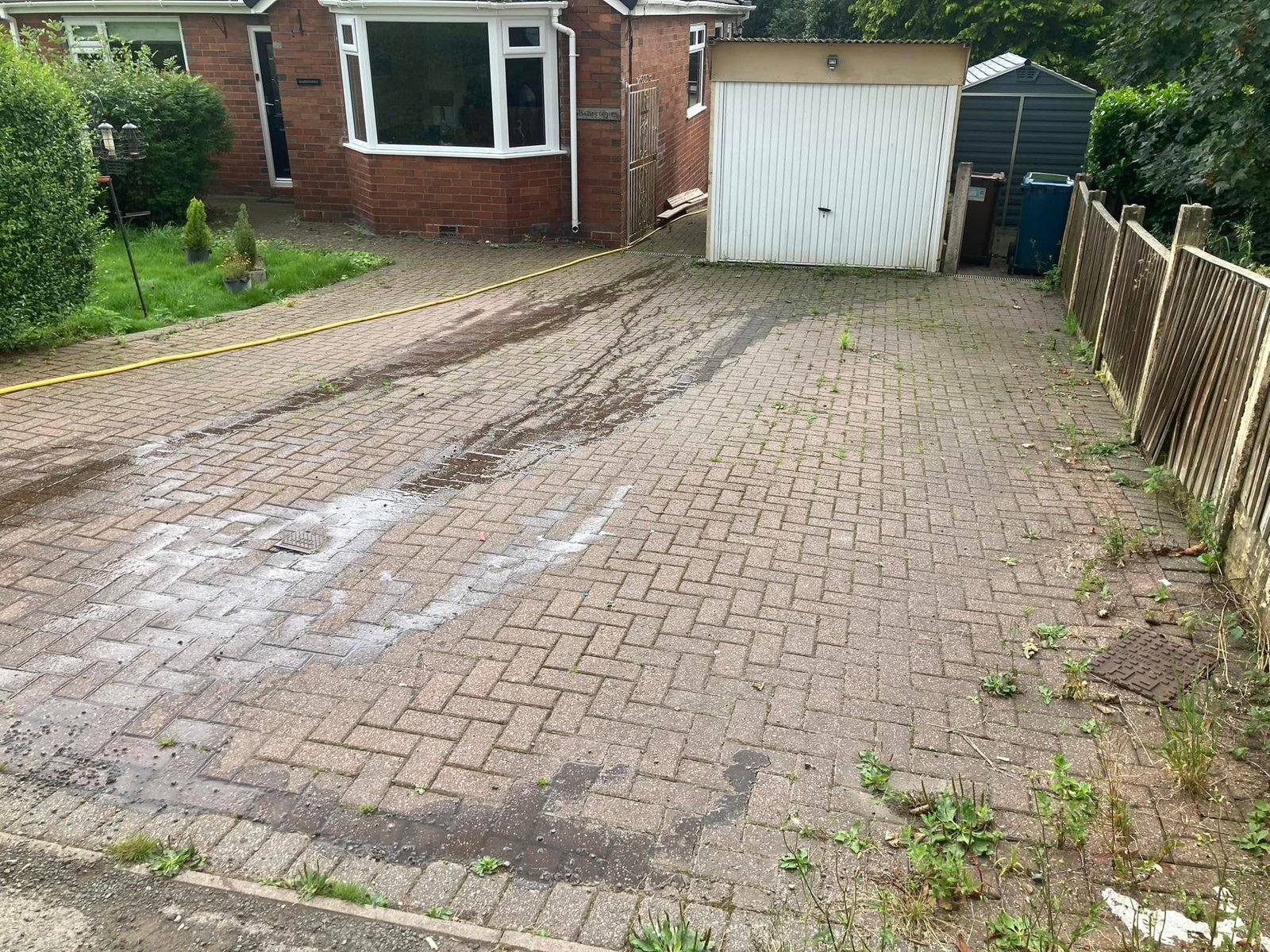
    Driveway cleaning work photographed by Balo Jetwash; illustrative image, not an oil-stain case study

    First, check that the spill is safe to approach

    If you suspect petrol, a large fuel leak, an unknown chemical or any immediate fire risk, do not treat it as an ordinary driveway stain. Keep people away and seek appropriate emergency or specialist advice. The steps below concern a small spill of vehicle oil where it is safe to work.

    Move the vehicle only if safe, switch it off and arrange to fix the source of the leak. Wear suitable gloves and keep children and pets away from the affected area. Do not pour boiling water, solvent or bleach onto the patch.

    First 15 minutes: contain the oil, not the stain

    1. Stop the source. A clean driveway is pointless if the vehicle continues dripping.
    2. Protect nearby gullies. Prevent oil from reaching surface-water drains, channels, soil or planted borders. Never hose it towards a drain.
    3. Absorb free liquid. Use a suitable oil-absorbent product according to its instructions. Work carefully to avoid spreading the spill across clean paving.
    4. Collect the used absorbent. Keep it contained for suitable disposal; do not sweep contaminated material into the road or garden.
    5. Take a photograph. Note when the spill happened, the approximate area affected and the driveway material. This helps if you later ask a cleaner for an assessment.

    Environmental guidance for businesses explains why contaminated wash-water must not enter surface-water drainage. The same prevention principle is sensible at home: see the government’s pollution-prevention guidance.

    During the first hour: identify your driveway surface

    Oil behaves differently on different materials. Treating every surface with the same degreaser or pressure-washer setting risks causing a second problem.

    Surface What to watch for Practical implication
    Block paving Oil can soak into individual blocks and joints. Do not force contaminated liquid deeper into sand-filled joints; cleaning may later require re-sanding.
    Concrete Porosity, finish and previous sealers vary. Some marks penetrate below the visible surface; aggressive chemicals can alter appearance.
    Tarmac Bitumen-bound material may be sensitive to some solvents and harsh treatment. Avoid strong solvent experiments or concentrated pressure that could soften, mark or disturb the surface.
    Resin-bound surfacing Resin systems and manufacturer guidance differ. Check the installer’s cleaning instructions before applying products or pressure.
    Natural stone Absorbency and chemical sensitivity vary by stone. Identify the stone first; unsuitable acidic or alkaline cleaners may cause damage.

    For a wider overview, read our complete guide to driveway cleaning in Telford. If the surface is tarmac, our tarmac cleaning and damage-prevention guide explains the extra precautions.

    Hours 1–6: avoid the tempting mistakes

    Once the free oil has been absorbed, the remaining dark patch may still be visible. That does not mean you should immediately reach for a high-pressure lance.

    • Do not blast the stain with a narrow jet. You may spread contamination and disturb paving joints or weak surfaces.
    • Do not mix cleaning chemicals. Different products can react or damage the surface. Follow the manufacturer’s instructions for any surface-approved product.
    • Do not assume washing-up liquid makes the problem disappear. A detergent may move oil into contaminated runoff without removing it safely.
    • Do not scrub with wire brushes. These can scratch or mark certain surfaces.
    • Do not promise yourself a perfect finish. Absorbing surface oil quickly reduces the problem but cannot undo oil already absorbed into pores.

    If you are considering a specialist stain remover, check that it is compatible with the exact surface and that you can prevent contaminated runoff. A small inconspicuous test, following the product instructions, is preferable to treating the entire driveway blindly.

    Hours 6–24: decide whether cleaning is appropriate

    When the free liquid is contained and the surface is safe, assess the mark in daylight. A fresh stain may look darker while the surface is wet; compare it once surrounding areas are dry. Photograph it again and note whether the patch is spreading, whether oil continues to drip, and whether any cleaning product has already been used.

    For a small residual mark on a sound surface, careful surface-compatible treatment may be possible. For a larger spill, uncertain liquid, drainage risk, delicate surface or a stain that is spreading, stop DIY attempts and seek appropriate professional advice. Pressure washing should not be the first response to an uncontrolled oil spill.

    What can professional driveway cleaning realistically achieve?

    Professional cleaning can often improve surface contamination, but oil stain removal depends on the oil type, age, depth of penetration, paving material and any previous treatments. Some old or synthetic oil stains cannot be removed completely. Even a fresh spill can leave a shadow after the visible liquid is gone.

    What cannot be promised

    No responsible cleaner can guarantee that every oil mark will vanish. A porous block, concrete slab or weathered surface may retain a darker shadow even after appropriate treatment. The realistic objective is to improve the stain without damaging the driveway or creating contaminated runoff.

    What a professional assessment should check

    The cleaner should identify the surface, the likely type and age of the stain, any previous products used, nearby drainage and the condition of the paving before deciding on treatment. Those checks matter more than simply choosing the most aggressive chemical or pressure setting.

    At Driveway Cleaning Telford, the service is delivered by Balo Jetwash. We assess the material and condition before confirming a method or quotation, use surface-appropriate cleaning and hold £5 million public liability insurance. This is not a guarantee that a particular oil stain will disappear.

    On block paving, cleaning can remove some jointing sand. Where appropriate, kiln-dried re-sanding is included in the quoted cleaning service once the paving is sufficiently dry. See why re-sanding matters after block paving cleaning.

    Where should oil and contaminated absorbent go in Telford?

    Do not pour oil down drains or put unknown oily material straight into ordinary recycling. Telford & Wrekin Council confirms that household engine oil can be taken to its Household Recycling Centres, where it must be poured into the designated oil tank rather than left in containers.

    The council operates centres at Hortonwood and Halesfield. Access is for Telford & Wrekin residents, and certain vehicles need an e-permit. Check the current council site rules before travelling. Oil-soaked pads, sand or other absorbents are not the same as liquid engine oil: ask the council how to dispose of the specific contaminated material. Trade waste is not accepted at household centres.

    Prevention: stop the next stain before it happens

    Repair vehicle leaks promptly. If a vehicle is awaiting repair, a suitable drip tray or absorbent mat can help contain drips, provided it is used and emptied correctly. Avoid letting contaminated rainwater overflow onto the driveway. Routine sweeping also helps you spot new marks rather than discovering them after several weeks.

    Sealing is not a universal cure: suitability varies by surface and product, and a sealer does not make a driveway immune to oil. Ask for the maintenance requirements and limitations before paying for any protective treatment.

    Frequently asked questions about fresh driveway oil stains

    Will a fresh oil stain disappear on its own?

    Some visible oil may weather, but absorbed contamination can leave a lasting mark. Waiting is not a reliable removal method, particularly if more oil is still leaking.

    Should I pressure wash an oil stain immediately?

    No. Contain and absorb free oil first. Pressure washing can spread contaminated water and may damage vulnerable paving.

    Can I use the same oil remover on tarmac and block paving?

    Not automatically. Product compatibility differs, and bitumen-bound tarmac is particularly sensitive to some treatments.

    Does block paving need re-sanding after an oil-stain clean?

    If cleaning has depleted jointing sand, the joints should be replenished once sufficiently dry. The need depends on the cleaning carried out and the condition of the joints.

    How much does professional driveway cleaning cost in Telford?

    Our general guide price is £5 per square metre, with a £100 minimum. This is not a fixed quote for oil-stain removal: specialist treatment, access and the condition of the driveway must be assessed. See our driveway cleaning pricing guide.

    Can Balo Jetwash guarantee complete oil stain removal?

    No. We explain the likely limitations after inspecting the stain and surface. Old, deeply absorbed or synthetic oil marks can remain even after appropriate treatment.

    Need an honest assessment of a driveway stain in Telford?

    If the spill is safely contained but the mark remains, we can assess whether professional driveway cleaning is appropriate and what result is realistic. Please tell us the driveway material, when the stain appeared and what, if anything, has already been applied.

    Visit our Driveway Cleaning Telford service page to arrange an assessment. We inspect before confirming the final quotation, rather than offering a blanket promise about stain removal.
  • Driveway Cleaning Telford: A Complete Guide for Homeowners

    Driveway Cleaning Telford: A Complete Guide for Homeowners

    If your driveway is looking darker, patchy, green around the edges or full of weeds between the joints, professional driveway cleaning in Telford can make a major visual difference without pretending that every stain or worn area can be made perfect.

    This guide explains what professional driveway cleaning actually involves, what affects the result, when block paving needs re-sanding, what you can realistically expect from stubborn stains, and how pricing works. The aim is simple: help you decide whether professional cleaning is worth it for your driveway.

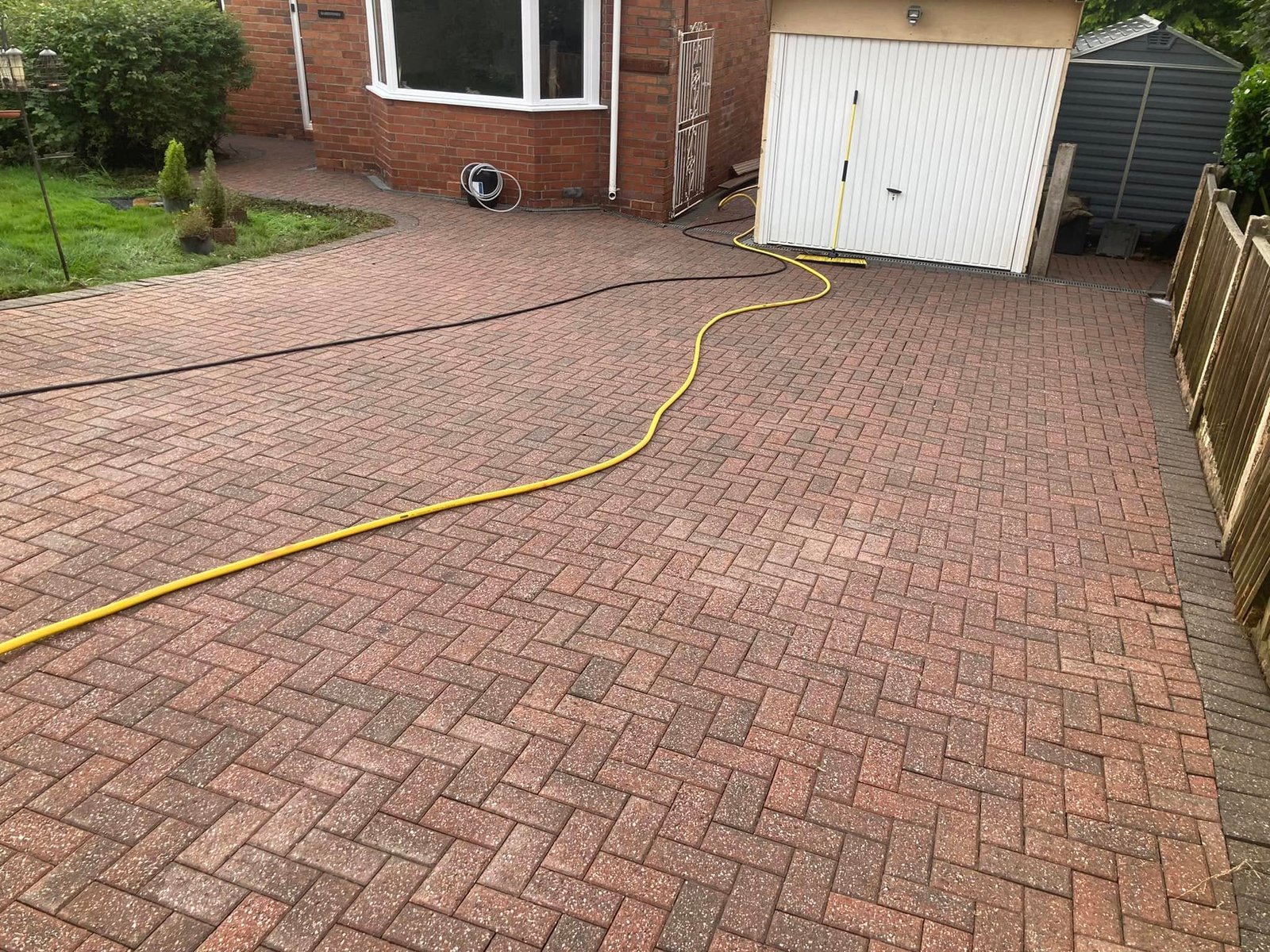
    Professionally cleaned driveway surface by Balo Jetwash

    What does professional driveway cleaning include?

    Good driveway cleaning is more than pointing a pressure washer at the surface. The method should depend on the material, the condition of the driveway and the type of contamination present.

    At Driveway Cleaning Telford, the service is delivered by Balo Jetwash. We start by looking at the driveway in person before confirming the final quotation. That allows us to assess the surface, access, drainage, biological growth, staining and the condition of joints or edges before work starts.

    Depending on the driveway, the process can include:

    • inspection of the driveway and surrounding areas;
    • professional pressure washing on suitable hard surfaces;
    • licensed industrial detergent where appropriate;
    • targeted attention to moss, algae and organic build-up;
    • careful rinsing and clean-up;
    • kiln-dried sand for block paving once the surface is dry and suitable for re-sanding.

    You can see the main service details on our Driveway Cleaning Telford page.

    Why surface type matters

    A common mistake with DIY pressure washing is assuming that every driveway should be cleaned in exactly the same way. It should not. Different materials react differently to water pressure, detergents and repeated cleaning.

    Block paving

    Block paving can collect moss, algae, dirt and weeds in the joints. Pressure washing can remove contamination very effectively, but it can also remove jointing sand. That is why re-sanding is an important part of the process rather than an optional cosmetic extra.

    Once the paving is sufficiently dry, kiln-dried sand can be brushed back into suitable joints. This helps restore the jointing material removed during cleaning and leaves the paving properly finished.

    Tarmac

    Tarmac requires more caution. Excessive pressure, overly aggressive nozzles or concentrating the jet in one area can mark or damage an older surface. The correct approach depends on the condition of the tarmac, so an inspection matters before deciding how it should be cleaned.

    Concrete and other hard surfaces

    Concrete can often tolerate professional pressure washing well, but age, cracks, previous repairs and surface finish all matter. Decorative or more delicate surfaces may need a different approach. This is why a surface-specific assessment is more useful than a one-method-fits-all promise.

    What causes a driveway to look dirty?

    There is rarely one single cause. Most driveways gradually collect several types of contamination at the same time.

    • Moss and algae: often develop in shaded or persistently damp areas.
    • Traffic film: general dirt from tyres, road dust and everyday vehicle use.
    • Weeds: can establish in joints where debris and organic material accumulate.
    • Oil and vehicle fluids: can soak into porous surfaces and become difficult to remove completely.
    • Leaves and organic staining: can leave marks if they remain wet on the surface for long periods.
    • Joint deterioration: particularly on block paving, where missing sand can make the finished surface look untidy even after washing.

    Professional cleaning can remove a large amount of surface contamination, but the honest answer is that some deeply absorbed stains may remain visible.

    Can oil stains be completely removed?

    Not always. This is one of the most important expectations to set before cleaning begins.

    Fresh oil sitting near the surface can sometimes respond better to treatment than an old stain that has soaked deeply into porous paving. Synthetic oils, long-established marks, rust, paint and other embedded contamination may improve without disappearing completely.

    A reputable contractor should explain this before the work, not after it. During the initial inspection, problem areas can be identified and realistic expectations discussed.

    Why re-sanding matters after block paving cleaning

    Pressure washing block paving can remove dirt from the surface and contamination from the joints, but it can also wash out some of the sand between the blocks. Leaving those joints empty is not a proper finish.

    Kiln-dried sand is designed to flow into the narrow joints between dry paving blocks. Re-sanding helps replace material lost during cleaning and gives the block paving a more complete finish. The paving must be dry enough before this stage, so it may not always happen immediately after washing if weather or surface conditions are unsuitable.

    How much does driveway cleaning cost in Telford?

    Our current guide price is £5 per square metre, with a £100 minimum charge. The final quotation is confirmed after seeing the driveway in person.

    Size is important, but it is not the only factor. Surface type, access, staining, drainage, the amount of biological growth and the amount of finishing work can all affect the job. Two driveways with the same square metre area can require very different amounts of work.

    See the current driveway cleaning prices page for the latest guide pricing and what is included.

    DIY pressure washing or professional cleaning?

    A domestic pressure washer can be useful for light maintenance, but the main risk is not simply that it will be slower. Poor technique can create striping, disturb jointing material, damage weaker surfaces or leave one area noticeably cleaner than another.

    The bigger question is whether you understand the surface you are cleaning. More pressure is not automatically better. Correct distance, nozzle choice, movement, treatment and finishing matter as much as raw machine power.

    If the driveway has delicate areas, significant staining, failing joints, poor drainage or an uncertain surface finish, professional assessment is usually the safer starting point.

    How long does driveway cleaning take?

    There is no useful universal answer because a small, lightly soiled driveway is very different from a large block-paved area with heavy growth and lost jointing sand.

    The cleaning itself may be completed in one visit, but block paving can require a return or a later finishing stage if it is not dry enough for kiln-dried sand. Weather, access and the amount of preparation also affect the timing.

    We prefer to inspect first and explain the likely process rather than promise an unrealistic fixed duration before seeing the site.

    What should you do before the cleaning visit?

    Preparation is usually straightforward. A few simple steps make the assessment and cleaning process easier and help avoid surprises on the day.

    1. Move vehicles off the driveway so the whole surface can be assessed and cleaned.
    2. Remove loose items such as bins, plant pots, toys and lightweight furniture.
    3. Point out known stains, especially oil, rust, paint or vehicle-fluid marks.
    4. Mention damaged areas such as loose blocks, crumbling edges or previous repairs.
    5. Check access and make sure gates or parked vehicles will not block the working area.
    6. Tell us about drainage issues if water regularly pools in a particular spot.
    7. Ask about re-sanding if you have block paving, so you know when that stage can be completed.

    If you know about a particular stain, damaged block, loose edging or drainage issue, point it out during the quotation. That information helps set the right expectations before cleaning starts.

    Quick driveway assessment checklist

    Check Why it matters
    Surface type Different materials need different cleaning methods.
    Moss or algae Biological growth may need more than water pressure alone.
    Oil, rust or paint Deep stains may improve without disappearing completely.
    Loose joints or blocks These can affect cleaning and finishing.
    Drainage Poor drainage can slow drying and affect the work sequence.
    Block paving sand Re-sanding may be needed after cleaning.

    What makes a good driveway cleaning quotation?

    A useful quotation should do more than give you a number. It should make clear what surface is being cleaned, what the price includes, whether detergent treatment is appropriate, whether block paving re-sanding is included and what limitations apply to stubborn staining.

    For our Telford service, we inspect the driveway before confirming the final price. That keeps the quotation tied to the actual condition of the surface rather than a guess over the phone.

    Frequently asked questions

    Do you clean block paving driveways in Telford?

    Yes. Block paving is one of the main driveway surfaces we clean. Where appropriate, kiln-dried re-sanding is included once the paving is dry and suitable for it.

    Is detergent included?

    Licensed industrial detergent is included where appropriate for the surface and contamination being treated.

    Can you guarantee every stain will disappear?

    No. Some old oil stains, rust, paint and deeply absorbed marks may improve without disappearing completely. We prefer to explain that honestly before work begins.

    Do I get a fixed quote before the work starts?

    Yes. We inspect the driveway in person and confirm the quotation before the cleaning work begins.

    How do I arrange a quotation?

    Use the contact page or call 07902 932947 to arrange an assessment.

    Need driveway cleaning in Telford?

    If your driveway needs more than a quick rinse, arrange an in-person assessment. We will look at the surface, explain the recommended cleaning method, identify any realistic limitations and confirm the price before work starts.

    Call Balo Jetwash on 07902 932947 or visit our contact page.