Pressure washing block paving does not finish when the surface looks clean. A thorough clean removes dirt, moss and debris, but it can also remove some of the jointing sand between the blocks. That is why re-sanding block paving after pressure washing is an important finishing stage.
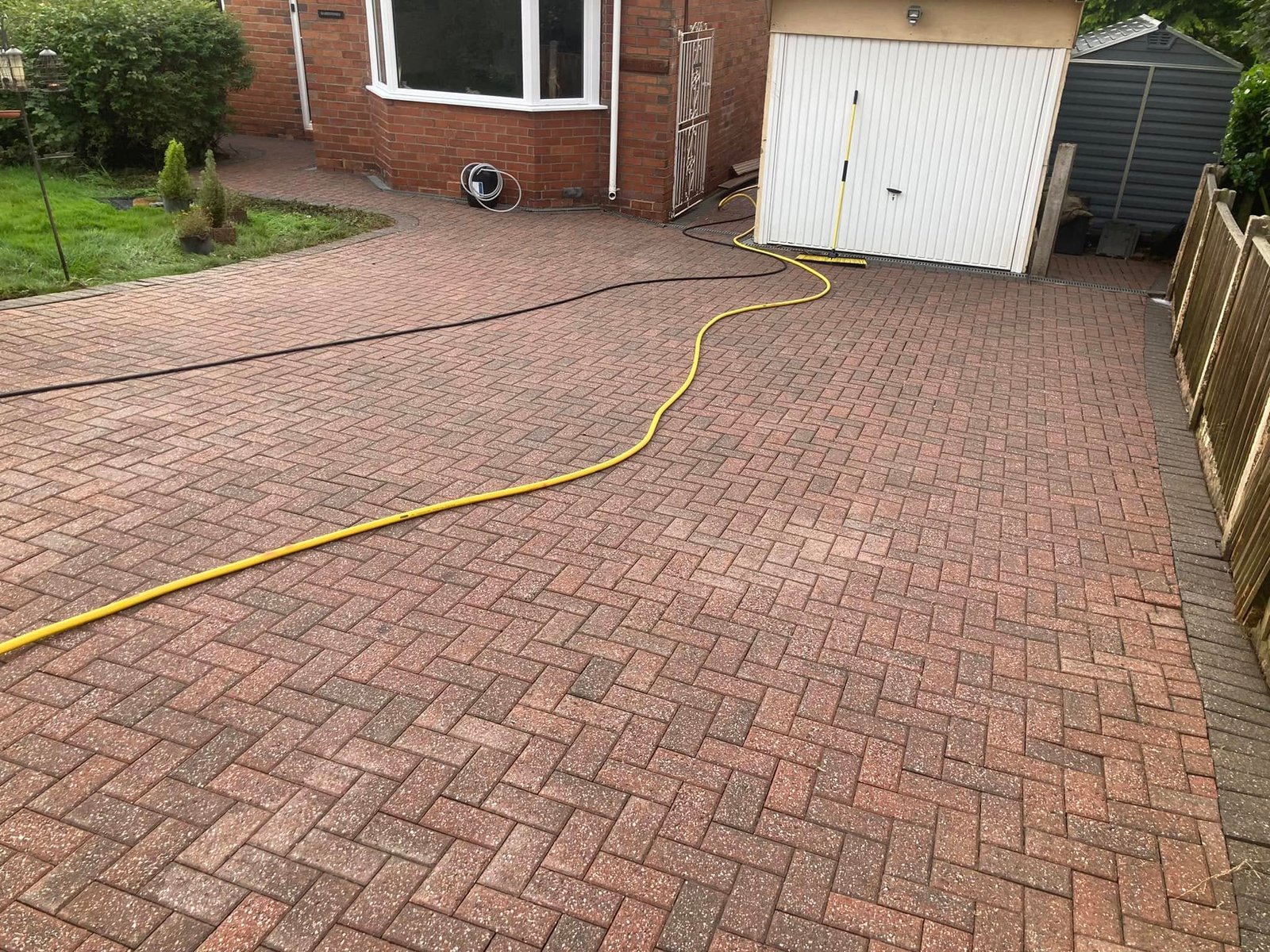
Why does pressure washing remove jointing sand?
Block paving has narrow joints filled with sand. Professional cleaning clears contamination from the face of the blocks and from those joints, so some loose jointing sand inevitably comes out too. This is normal. The important point is to replenish depleted joints once the paving is suitably dry.
What does jointing sand actually do?
Jointing sand is not merely cosmetic. It fills the gaps between individual blocks and forms part of the paving system. Re-sanding replenishes material lost during cleaning. It does not, however, repair a failed sub-base, correct badly sunken paving or fix damaged blocks.
Why use kiln-dried sand?
Kiln-dried jointing sand is fine and extremely dry, allowing it to flow into narrow paving joints. Damp or coarse material will not settle into the joints as effectively. Even the correct sand performs poorly if it is spread over wet paving.
When should block paving be re-sanded?
The blocks and joints need to be sufficiently dry. Sand applied too early can stick to the surface, clump and fail to reach the depth of the joints. Weather, shade, temperature and drainage all affect drying time, so re-sanding may need to be completed later rather than immediately after washing.
A practical re-sanding process
- Clean the paving thoroughly. Remove dirt, moss, weeds and loose material with a method suitable for the surface.
- Rinse and clear the area. Do not leave debris sitting in the joints.
- Allow the paving to dry. The joints must be dry enough for fine sand to flow freely.
- Inspect the joints. Identify unusually wide gaps, loose blocks or damage rather than hiding defects with sand.
- Spread kiln-dried sand. Distribute suitable dry jointing sand across the paving.
- Brush it into the joints. Work the sand across the surface so it settles into the gaps.
- Check the finish. Inspect the joints and deal with excess loose material appropriately.
What happens if block paving is not re-sanded?
A driveway can look clean while still having depleted joints. Leaving them low means the cleaning process has not been properly finished. Re-sanding restores joint material removed during cleaning, but it should not be sold as a cure for structural problems.
Does re-sanding stop weeds coming back?
Not permanently. Properly filled joints leave less open space than empty joints, but seeds and organic debris can arrive from above and weeds can return. Re-sanding is correct maintenance after cleaning, not permanent weed-proofing.
Can you re-sand block paving yourself?
Yes, provided the paving is genuinely dry and suitable jointing sand is used. Timing is often the difficult part. A driveway may look dry on top while retaining moisture deeper in the joints.
DIY re-sanding checklist
| Check | What to look for |
|---|---|
| Paving condition | No obvious loose, badly sunken or damaged blocks needing repair first. |
| Surface dryness | Blocks are dry rather than merely free of standing water. |
| Joint dryness | Moisture is not preventing sand from flowing into the gaps. |
| Sand type | Fine kiln-dried jointing sand suitable for block paving. |
| Weather | A sufficiently dry window to complete the work properly. |
Is re-sanding included with Driveway Cleaning Telford?
For suitable block paving, kiln-dried sand is included as part of our quoted driveway cleaning service once the surface is sufficiently dry. The service is delivered by Balo Jetwash and backed by £5 million public liability insurance.
We inspect the driveway before confirming the final quotation. Current guide pricing is explained on our driveway cleaning prices page.
Re-sanding is one part of a proper clean
Good block paving cleaning is not about maximum pressure. Assessment, surface-appropriate cleaning, treatment where appropriate, clean-up, drying conditions and correct finishing all matter.
Read our complete driveway cleaning guide and our Telford driveway cleaning price guide for more detail.
Frequently asked questions
Do you always need to re-sand after pressure washing block paving?
If cleaning has removed jointing sand and left the joints depleted, they should be replenished.
Can kiln-dried sand be applied while the driveway is wet?
It should be applied when the paving and joints are sufficiently dry. Moisture can make the sand clump and stop it flowing properly.
Will re-sanding fix loose or sunken blocks?
No. It replaces joint material; it is not a repair for settlement, a failed base or damaged paving.
Does re-sanding permanently stop weeds?
No. Seeds, debris and organic growth can return over time.
Where can I arrange block paving cleaning in Telford?
Visit the Driveway Cleaning Telford service page or contact page to arrange an assessment.
Need your block paving cleaned and properly finished?
If your block paving needs professional cleaning, we can assess the surface, explain realistic outcomes and include kiln-dried re-sanding where appropriate.
Before booking, take three quick checks: look for loose or sunken blocks, note any oil or rust staining, and check whether water tends to pool after rain. Mentioning these points during the assessment helps us recommend the right process rather than treating every driveway the same way.
Your next step is simple: use our contact page to arrange an in-person assessment. We inspect the paving before confirming the final quotation, so you know what cleaning and finishing work is proposed before it starts.
Comments
4 responses to “Why Re-Sanding Is Essential After Block Paving Cleaning”
[…] inspect the joint depth and arrange suitable kiln-dried re-sanding where sand has been lost. Our block paving re-sanding guide explains the finishing […]
[…] can be professionally cleaned and correctly re-sanded without receiving any sealer. See our guide to block paving re-sanding for the practical […]
[…] For a broader explanation of why the finishing stage matters, see our guide to re-sanding after block paving cleaning. […]
[…] use ordinary kiln-dried sand, because it could affect how the surface drains. Read our guides to re-sanding after block paving cleaning and choosing kiln-dried jointing […]