Is driveway sealing worth it after cleaning in Telford? Sometimes — but it is not an automatic finishing step, and some driveways are better left unsealed. A sealer may make certain surfaces easier to maintain or alter their appearance. It can also create problems if the wrong product is used, moisture is trapped beneath it or the paving was not designed to be sealed.
Before paying for driveway sealing, identify the material, decide what problem you want the sealer to solve and check the manufacturer’s guidance. This guide explains the difference between cleaning, block paving re-sanding and sealing, including situations where the sensible answer is not to seal.
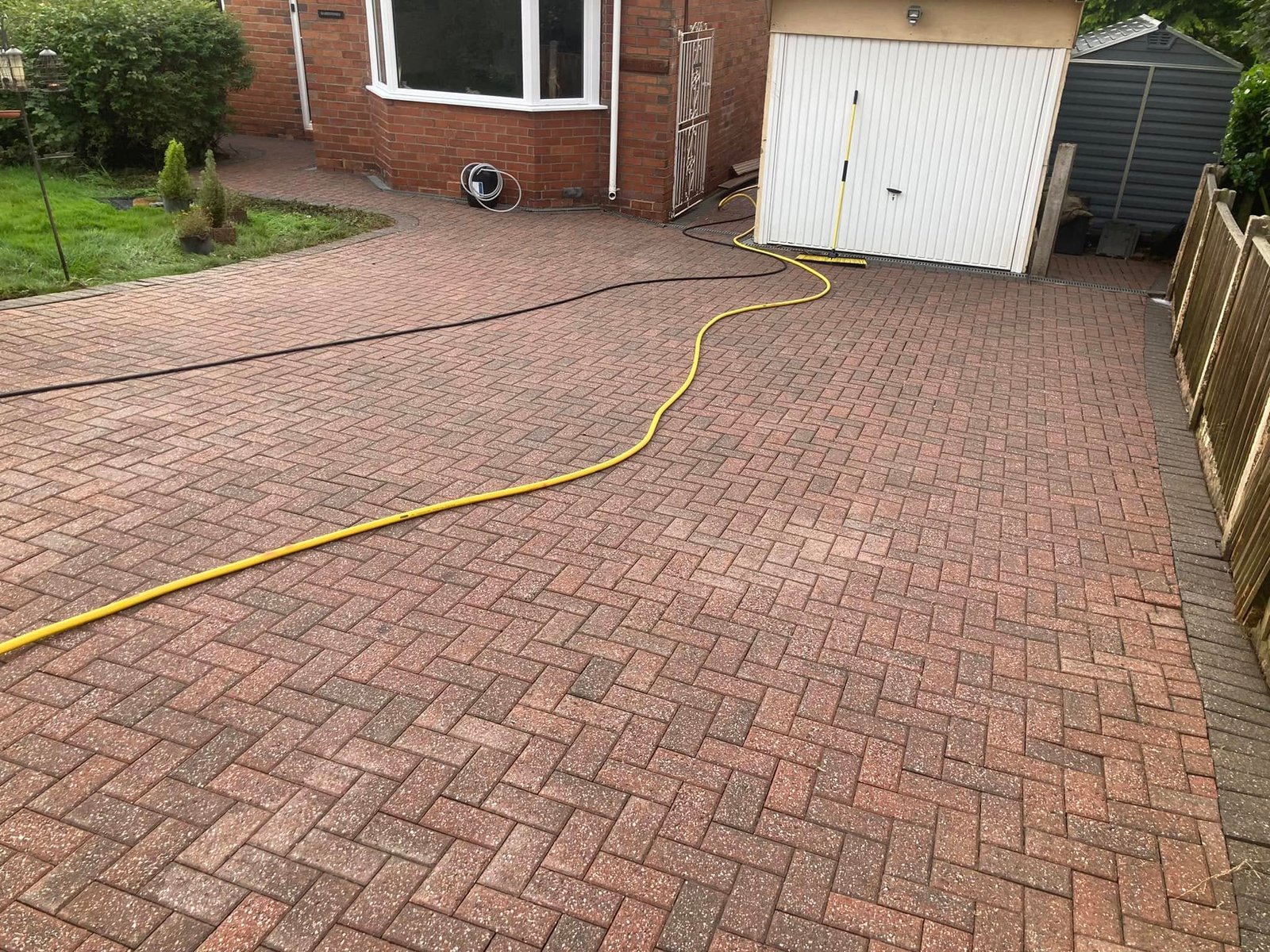
First: cleaning, re-sanding and sealing are three different jobs
These terms are often used together, but they do not mean the same thing:
- Driveway cleaning removes suitable surface dirt, moss, algae and other contamination using a method appropriate to the material.
- Block paving re-sanding replaces lost or depleted jointing sand in conventional sand-jointed block paving after the paving is sufficiently dry. It helps the joints perform as intended.
- Sealing means applying a compatible protective coating or penetrating treatment, depending on the product and surface. It is an optional extra for many types of paving, not a substitute for cleaning or sound joints.
For example, a block-paved driveway can be professionally cleaned and correctly re-sanded without receiving any sealer. See our guide to block paving re-sanding for the practical difference.
Do block paving manufacturers recommend sealing?
Not universally. Marshalls states that sealing its block paving is not necessary, noting that sealants require a clean, dry, dust-free surface and may alter appearance or wear unevenly. That is an important counterpoint to sales claims that every cleaned driveway must be sealed.
Brett Landscaping advises checking the suitability of a sealant with the manufacturer, including possible effects on slip resistance, appearance and ongoing maintenance. The correct answer therefore depends on the exact paving product and the reason for sealing it.
Neither position means all sealers are useless. It means sealing should be a deliberate choice with understood benefits, limitations and maintenance requirements — not a compulsory upsell after pressure washing.
When might driveway sealing be worth considering?
When you want easier removal of future surface dirt
Some compatible treatments can make routine cleaning easier, depending on the paving and the type of contamination. They do not make a driveway self-cleaning. Leaves, grit and biological growth still need attention.
When a particular paving product allows protective treatment
Certain natural stones and concrete products may have manufacturer-approved treatments for specific needs. The important detail is approved for that surface, not merely labelled “driveway sealer”.
When you understand and accept the visual finish
A product may leave a matt, satin, gloss or darker “wet-look” finish. The appearance can vary with the paving and may change as the coating wears. Ask for a small test patch and assess it after curing, not only while wet.
When is sealing a poor idea?
- The paving is still damp after cleaning. Residual moisture can interfere with application and cause whitening or patchy results.
- There are white salt deposits (efflorescence). Sealing too early can trap or highlight visible deposits.
- The driveway is permeable paving. A coating that obstructs joints or pores may interfere with intended drainage; check the system manufacturer first.
- The surface is breaking up, loose or sinking. A sealer does not repair failed bedding, damaged tarmac, loose aggregate or movement.
- The surface already has an unknown coating. Applying another product without identifying the old one risks incompatibility and uneven finish.
- You expect guaranteed oil-stain prevention. Sealing is not a promise that engine oil will never stain, especially if spills are left untreated.
- The finish may become slippery. Check the product’s slip-resistance advice, particularly for slopes and pedestrian routes.
For an example of why surface condition matters before any exterior treatment, read our guide to DIY pressure washing mistakes.
Does the type of driveway change the decision?
| Driveway surface | Sealing decision | What to check first |
|---|---|---|
| Conventional block paving | Often optional; not required simply because it has been cleaned | Manufacturer advice, complete dry joints, efflorescence, existing coatings |
| Permeable block paving | Extra caution; some treatments may affect water infiltration | Whether the exact permeable system permits any coating |
| Natural stone | Varies by stone and finish | Stone identification, porosity, chemical compatibility and colour change |
| Concrete driveway | Depends on the concrete finish and any previous treatment | Cracks, decorative coatings, moisture and manufacturer recommendations |
| Tarmac | Do not assume a block paving sealer is suitable | Condition of the bitumen-bound surface and product-specific guidance |
| Resin-bound surface | Follow the installer’s system guidance rather than applying a generic sealer | Resin compatibility, permeability and signs of loose aggregate |
Unsure what your driveway is made from? Our complete guide to driveway cleaning in Telford explains the main materials and their cleaning considerations.
How long after driveway cleaning can sealing be applied?
There is no reliable universal “24 hours later” rule. The surface, bedding, joints, weather, product and manufacturer’s instructions all affect the drying and curing requirements. A driveway can look dry on top while moisture remains below the surface.
Independent UK paving guidance from Pavingexpert stresses that paving and joints must be thoroughly dry before sealing and explains why residual moisture causes failures. Its broader sealant guidance also advises caution in cool, damp conditions. Treat these as reasons to assess the actual conditions, not as a substitute for the chosen product’s instructions.
Why Telford weather matters
In Telford, as anywhere in the UK, a rainy spell, cool temperatures, overnight dew or shaded areas can extend drying time. A convenient booking date is not proof that a surface is ready. If the required dry-weather window is unavailable, postpone sealing rather than risk a failed finish.
What about re-sanding before sealing?
On conventional sand-jointed block paving, joints must be inspected and replenished where necessary. Kiln-dried sand needs dry paving and joints so it can flow into place. Whether a particular sealer is compatible with that jointing material must then be checked separately. Re-sanding is a finishing and maintenance step; sealing is not a shortcut around it.
Will sealing prevent weeds, moss and oil stains?
Be cautious with blanket guarantees. A suitable product may influence how dirt adheres or how easily some spills are cleaned, but it does not eliminate the conditions that allow moss and algae to return. Shade, moisture, organic debris and drainage still matter.
Similarly, an old or deeply absorbed oil mark may remain visible after cleaning, and sealing over contamination can preserve an unsatisfactory appearance. Some old or synthetic oil stains cannot be removed completely. Deal with the underlying contamination first and ask what result is realistically achievable.
A practical decision checklist before spending money
Use these questions when comparing a sealing quotation or deciding whether to leave a cleaned driveway unsealed:
- What exactly is the surface? Get the product name or installation details if possible.
- What is the goal? Easier maintenance, a different finish or a specific approved protection? If you cannot name a benefit, you may not need the treatment.
- Does the manufacturer permit it? This matters especially for permeable and resin-bound systems.
- Is the surface sound and clean? Cracks, failed edges, loose blocks and stains need separate attention.
- Are the joints complete? Conventional block paving may need kiln-dried re-sanding before any compatible treatment.
- Is the surface genuinely dry? Check the product’s requirements, not just the forecast headline.
- What are the downsides? Ask about colour change, slip resistance, uneven wear, reapplication and future removal.
- Can you see a test patch? Judge the cured result before agreeing to the full driveway.
Simple decision: if the paving is clean and sound, the manufacturer does not recommend sealing, or the benefit is unclear, leaving it unsealed is a reasonable choice. If a suitable treatment solves a defined problem, ask for written product information and a realistic maintenance plan before proceeding.
Frequently asked questions about driveway sealing in Telford
Do I need to seal block paving after pressure washing?
No. Cleaning and correct joint maintenance can be completed without sealing. Whether sealing adds value depends on the specific blocks, product guidance and your maintenance goals.
Should I re-sand block paving before sealing?
Conventional block paving joints should be checked and replenished with suitable jointing sand where needed once dry. Then confirm that any proposed sealer is compatible with the paving and jointing system.
Can sealing make a driveway slippery?
Some coatings can change slip resistance. Ask for the manufacturer’s information and consider slopes, steps and pedestrian routes before choosing a finish.
Can a driveway be sealed straight after cleaning?
Do not assume so. The paving and joints may retain moisture after the surface looks dry. Follow the product’s specified drying and weather requirements.
Will sealing stop oil stains completely?
No sealer should be treated as a guarantee. Clean up fresh spills promptly, and remember that old or synthetic oil marks may not be fully removable.
Does Balo Jetwash include sealing with driveway cleaning?
Our standard driveway cleaning information covers surface-appropriate cleaning and, where required for conventional block paving, kiln-dried re-sanding. Do not assume sealing is included. Any proposed additional treatment would need to be discussed and confirmed separately.
Need a driveway cleaning assessment in Telford?
Driveway Cleaning Telford is delivered by Balo Jetwash. We assess the material and condition before confirming a cleaning quotation, use surface-specific methods and carry £5 million public liability insurance. For conventional block paving, our cleaning service includes appropriate kiln-dried re-sanding where required and once conditions allow.
We will not suggest that a coating can repair failed paving or guarantee the removal of every stain. If your immediate need is a proper clean rather than an optional sealer, visit our Driveway Cleaning Telford service page to arrange an assessment. Our general cleaning guide price is £5 per square metre with a £100 minimum; the final quotation follows a site visit. Sealing, if separately discussed, is not covered by that general cleaning guide price.
Comments
One response to “Driveway Sealing Telford: When Is It Worth It After Cleaning?”
[…] Do not assume that a glossy finish offers better grip. If you are considering a sealer, read our guide to whether driveway sealing is worth it after cleaning and check the product’s slip-resistance […]