Kiln-Dried Sand for Block Paving: What Telford Homeowners Need to Know
Why is kiln-dried sand used for block paving? On conventional sand-jointed block driveways, the joints between the blocks are part of the paving system. A suitable dry jointing sand can be brushed into those gaps after cleaning to replace material lost through wear, weeds or pressure washing. It is not a decorative extra: incomplete joints can make a cleaned driveway an unfinished job.
If you are having block paving cleaned in Telford, the important questions are which sand is suitable, how dry the paving must be, how full the joints should be, and what happens if the weather turns wet. This guide focuses on the jointing material and the finishing process rather than repeating a general guide to pressure washing.
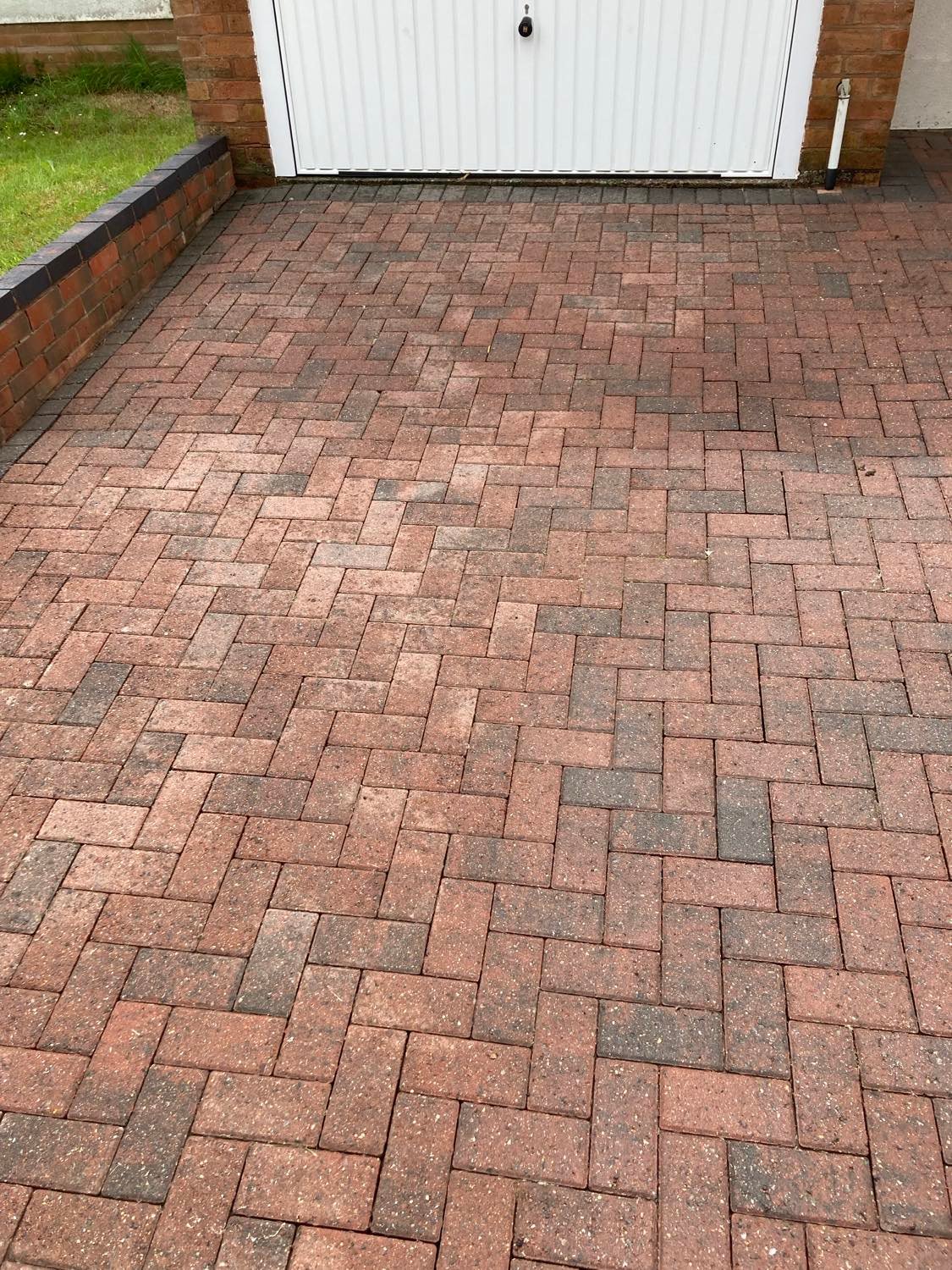
What exactly is kiln-dried jointing sand?
Kiln-dried sand is sand that has been dried so it can flow freely into narrow paving joints. It is normally sold as a fine jointing material for suitable concrete block paving. Its purpose is different from the coarse sand used beneath paving or in mortar mixes. A damp bag of sand may clump and bridge across the top of a narrow joint instead of filling it properly.
The phrase kiln-dried describes the drying process; it does not mean that any sand with that label is suitable for every driveway. Always follow the paving manufacturer’s guidance about grading and jointing. Some systems use specialist aggregates or proprietary jointing products.
Why block paving joints need the correct material
Conventional block paving is designed as an interlocking surface. Jointing sand helps transfer load between neighbouring blocks and supports the performance of the pavement as a whole. The joints also need to be maintained: weeds, erosion, heavy traffic and cleaning can reduce the amount of sand in them over time.
Sand does not fix an unstable foundation, sunken blocks or poor drainage. If individual blocks are rocking or the paving has ruts, the problem may require lifting and repairing part of the surface rather than simply adding more sand.
Kiln-dried sand versus other materials
| Material | Typical use | Why it may or may not suit driveway joints |
|---|---|---|
| Kiln-dried block-paving jointing sand | Dry brushing into compatible, narrow joints | Flows into dry joints when the grading suits the blocks |
| Builders’ sand | Mortar and general building mixes | Often too damp or unsuitable in grading for narrow dry-jointed paving |
| Sharp sand | Bedding and other construction applications | Not a direct substitute for the specified fine jointing sand |
| Polymeric or resin jointing products | Specific paving systems and applications | Require their own installation instructions; not interchangeable with ordinary kiln-dried sand |
| Permeable-paving jointing aggregate | Permeable block-paving systems | May use a specified open-graded aggregate to maintain water infiltration |
Important: a permeable block-paved driveway should not automatically be filled with ordinary kiln-dried sand. The jointing material is part of how the system handles rainwater. Check the installer or manufacturer’s specification before changing it.
When should block paving be re-sanded after cleaning?
Only once the paving and joints are sufficiently dry
For conventional dry-sand jointing, the blocks and joints need to be dry enough for the sand to run down rather than stick to damp surfaces. This is why the finishing stage may need to wait after pressure washing. A driveway that looks dry from a distance can still hold moisture in shaded joints.
In Telford, rain, dew, cooler weather and shade can delay drying. A responsible cleaner should explain a weather-related delay rather than brush sand across wet blocks just to finish the appointment.
After loose contamination and old debris have been removed
Re-sanding should follow appropriate cleaning and removal of loose debris. It is not a substitute for dealing with moss or weeds in the joints, and sand should not be used to conceal loose or failed paving.
How is kiln-dried sand applied correctly?
The precise method should follow the paving manufacturer’s instructions, but the basic sequence for a suitable conventional block-paved driveway is straightforward:
- Inspect the paving. Look for loose blocks, uneven areas, damaged edges and joints that may need repairs.
- Clean using a suitable method. Avoid unnecessarily aggressive pressure that could damage the blocks or wash away more joint material than needed.
- Allow the surface to dry. Check the joints, not just the top of the blocks.
- Use the specified dry jointing sand. Brush it across the surface so it drops into the joints.
- Work methodically. Check edges, corners and areas where the joints have been depleted.
- Remove loose excess material. Do not leave piles of sand on the surface or wash freshly applied sand out of the joints.
- Inspect the finish. Check that the joints are consistently filled to the appropriate level for that paving system.
Some installation or reinstatement specifications call for additional compaction and topping up. That is not something to improvise with a domestic machine on an older driveway; the correct approach depends on the blocks, bedding and current condition.
How much kiln-dried sand does a driveway need?
There is no trustworthy fixed “one bag per X square metres” rule for every existing driveway. The amount depends on block dimensions, joint width and depth, how much sand remains after cleaning, and whether the joints were already depleted. A driveway with nearly full joints needs much less material than one with extensive missing jointing sand.
If a contractor quotes for re-sanding, ask whether the allowance covers topping up the joints after cleaning and whether a second visit might be needed if wet weather prevents the sand from being applied on the cleaning day. The point is a properly finished surface, not a guessed bag count.
What can go wrong with re-sanding?
- Applying sand while the joints are damp: material can clump or sit on top instead of filling the gaps.
- Using an unsuitable grade: sand may not enter narrow joints or may not match the paving system.
- Ignoring structural movement: sand cannot correct loose blocks, failed edging or a sinking sub-base.
- Using ordinary sand on permeable paving: the wrong material can interfere with drainage performance.
- Leaving joints noticeably low: the paving may still need proper finishing or maintenance.
- Pressure washing immediately after re-sanding: this can simply remove the newly added material.
For a broader explanation of why the finishing stage matters, see our guide to re-sanding after block paving cleaning.
Does re-sanding stop weeds or moss permanently?
No. Filling joints appropriately can remove some of the open space where debris collects, but it does not make a driveway weed-proof. Seeds can settle from above, and moss or algae may return where the paving remains damp and shaded. Regular sweeping and clearing leaves are still useful.
Re-sanding also should not be confused with sealing. Sealing is a separate, optional treatment for compatible paving; it is not necessary merely because the driveway has been cleaned and re-sanded. Our driveway sealing guide
When is professional re-sanding worth paying for?
It can be sensible to have re-sanding included as part of a professional block paving clean when joints are likely to lose material. That keeps the cleaning and finishing stages within the same scope of work. It is particularly helpful when you want the contractor to inspect the paving before cleaning and explain any areas where sand alone will not solve the problem.
At Driveway Cleaning Telford, delivered by Balo Jetwash, we assess the material and condition before giving a final quotation. Our conventional block-paving cleaning service includes suitable kiln-dried re-sanding where required, once the surface is dry enough. We carry £5 million public liability insurance and use surface-specific cleaning methods.
If the driveway has unstable blocks, drainage problems or a specialised permeable system, we will not pretend that brushing in ordinary sand is a complete repair. For a wider look at surface types and cleaning methods, read our Telford homeowner’s driveway cleaning guide.
Frequently asked questions about kiln-dried sand
Is kiln-dried sand essential after every driveway clean?
Not for every surface. It is relevant to compatible conventional sand-jointed block paving where joints have lost material. Tarmac, resin-bound and other driveway systems have different requirements.
Can I put kiln-dried sand into wet block paving?
For dry-brushed jointing, wait until the blocks and joints are sufficiently dry. Wet joints can prevent the sand from settling properly.
Is kiln-dried sand the same as builders’ sand?
No. Builders’ sand is commonly used in mortar and other construction work; it is not a direct substitute for the fine, dry material specified for conventional block paving joints.
Will re-sanding make loose paving blocks stable?
It can help maintain joints in a sound paving system, but it cannot repair a failed foundation, sunken areas or broken edge restraints.
Can I use it on permeable block paving?
Not unless the paving manufacturer’s specification explicitly calls for that material. Many permeable systems require a different jointing aggregate.
How soon can I use my driveway after re-sanding?
Follow the contractor’s and paving manufacturer’s advice. Ordinary dry jointing sand is different from curing resin-based products, but any required compaction, topping-up or other work should be completed first.
Need block paving cleaning and re-sanding in Telford?
We can assess whether your driveway needs cleaning, joint maintenance or a separate repair. We will explain any limits before starting, including the fact that deeply absorbed or synthetic oil stains may not disappear completely. Visit our driveway cleaning service in Telford to arrange a site assessment and quotation.