Is a slippery driveway in Telford a safety risk? It can be, especially when a regularly used walking route becomes slick after rain. Green algae, moss, wet leaves, oil residue and standing water can all affect grip. The key is not how green the driveway looks: it is whether someone can walk from the pavement to the front door, car or bins without an avoidable risk of slipping.
A driveway can also be hazardous for a different reason: uneven blocks, a sunken drain cover or a broken edge create trip risks rather than slip risks. Cleaning may help with surface contamination, but it cannot repair a damaged base or poor drainage. This guide explains what to check, when to act and what a sensible professional cleaning assessment should cover.
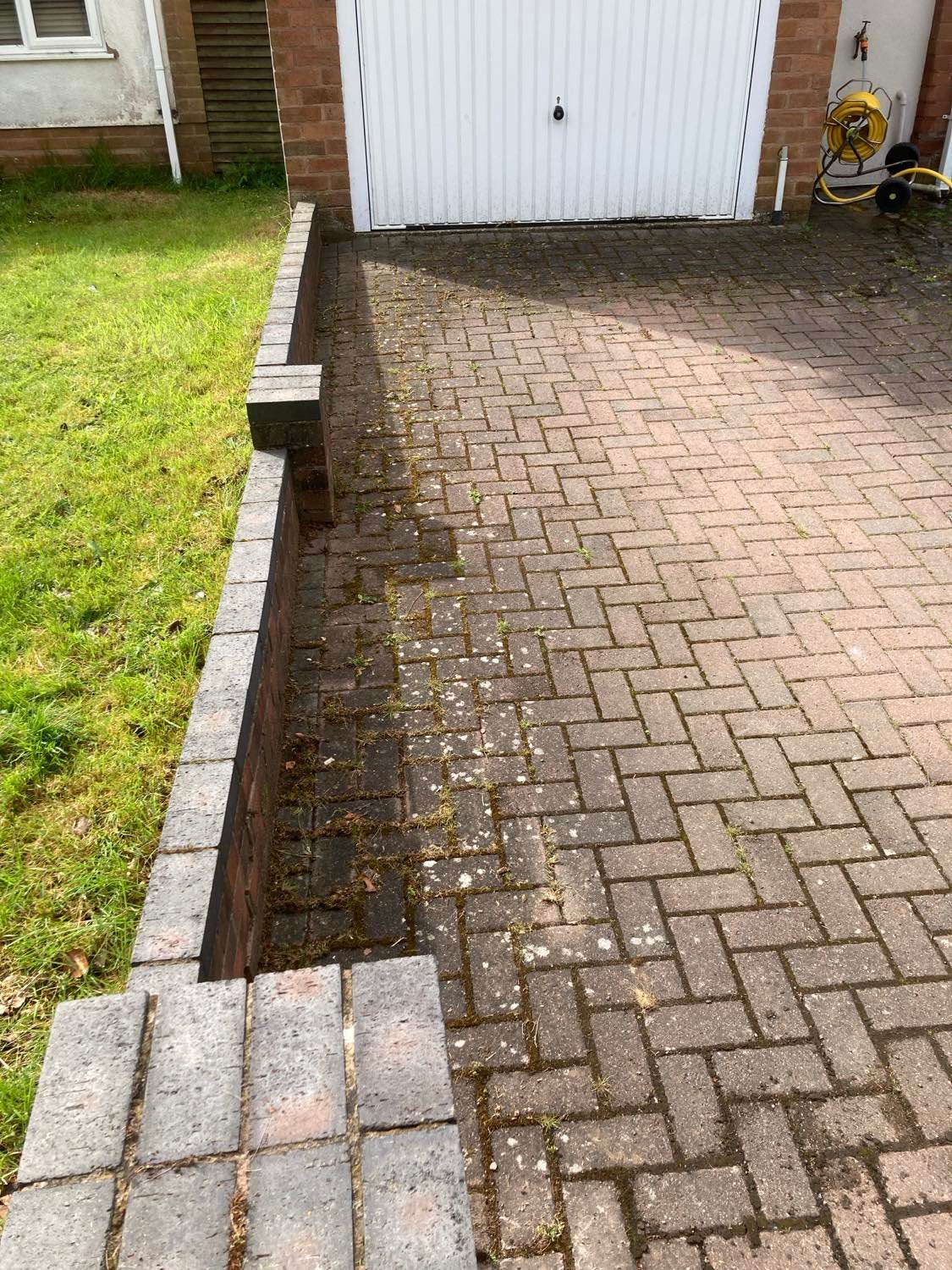
When does a slippery driveway become a real safety concern?
Take a problem seriously when it affects the route people actually use. A small patch of algae in an unused corner is different from a slick area directly outside the front door or beside the driver’s door. A sloping driveway, steps leading from the drive or an area used in poor light can increase the consequences of a slip.
The Royal Horticultural Society (RHS) explains that algae, mosses and related growths can make paths, drives and steps slippery, particularly in damp conditions. That does not mean every green patch is an emergency. It does mean growth on a frequently used walking route deserves attention.
Do not deliberately walk across a suspicious patch to “test” it. Look at the surface from a safe position and, if necessary, choose another route until it can be dealt with.
Five signs that you should act rather than wait
- Someone has already slipped or nearly slipped. A near miss is useful warning information, even if nobody was hurt.
- The main walking route is slick after ordinary rainfall. The problem is not limited to an exceptional icy day.
- Green or dark biological growth covers a sloped or shaded section. Thin algae films can be less obvious than thick moss.
- Water repeatedly pools in the same place. The underlying drainage issue may continue to encourage contamination after cleaning.
- Uneven or loose paving sits alongside the slippery area. Someone avoiding a slick patch could step onto an unstable block instead.
Particular care is sensible if children, older visitors or anyone with limited mobility regularly uses the driveway. This is about managing an observable hazard, not claiming that every homeowner has a specific workplace-style legal duty.
What makes driveways slippery in Telford?
Algae and moss on shaded paving
Moisture, shade and organic debris encourage growth. Algae may appear as a thin green film on concrete, block paving, stone or tarmac. Moss tends to be more visible around joints and edges. The RHS notes that improving drainage, reducing shade and clearing debris can discourage regrowth, although it may return if the underlying conditions remain.
Wet leaves, mud and grit
Autumn leaves can hold moisture against paving, and mud tracked from tyres or nearby beds may reduce grip. Regular sweeping is a useful first step when the surface is sound and the material can be swept without damage. Keep drains and channels clear too.
Oil, grease and vehicle fluids
A leaking vehicle can leave contamination in a place where people step out of the car. Remove or contain fresh contamination safely and seek suitable surface-specific treatment. Deeply absorbed or old synthetic oil stains may not disappear completely, even after professional cleaning. A stain that remains visible is not automatically proof of continuing slipperiness; assess the actual surface condition separately.
Standing water, frost and ice
Cleaning will not fix a driveway with an incorrect fall, blocked drainage or a failed sub-base. Frost and ice also need a weather-specific response: pressure washing is not a substitute for safe winter access arrangements.
Surface coatings and wear
Some sealed or smooth surfaces may behave differently when wet. Do not assume that a glossy finish offers better grip. If you are considering a sealer, read our guide to whether driveway sealing is worth it after cleaning and check the product’s slip-resistance information.
A practical urgency guide for homeowners
| What you notice | What to do | What cleaning can achieve |
|---|---|---|
| Loose dry leaves on sound paving | Sweep and check the surface after rainfall | A full professional wash may not be needed |
| Thin algae film on a main pedestrian route | Use an alternative route if unsafe; arrange suitable treatment promptly | Appropriate cleaning can remove surface growth, but regrowth is possible |
| Slippery slope or steps, or a recent near miss | Keep people away from the affected section and prioritise assessment | Cleaning may help if contamination is the cause; grip and surface condition still matter |
| Repeated puddling and green growth | Investigate drainage as well as contamination | Cleaning alone will not correct water pooling |
| Sunken, rocking or broken blocks | Arrange repair assessment and avoid the unstable area | Pressure washing cannot repair the paving structure |
| Frost or ice | Manage winter access; avoid unsafe areas | Routine driveway washing is not an ice treatment |
This table is a practical homeowner guide, not a formal slip-resistance test. If the safety of a particular surface is uncertain, a competent specialist may need to assess it rather than relying on appearance alone.
What should you do today if your driveway feels unsafe?
- Keep people off the affected route. Where possible, use a safe alternative path. A warning alone is less effective than preventing access to the hazard.
- Check the cause without stepping onto it. Look for algae, leaves, fluid residue, pooled water, damaged paving or ice.
- Remove simple loose debris if safe. Sweep leaves or loose dirt from a stable, accessible area; do not put yourself at risk to reach it.
- Do not apply random chemicals. Some cleaners or coatings can damage the surface, harm planting or leave a residue.
- Arrange the correct remedy. Contamination may need cleaning; damaged paving needs repair; drainage faults need investigation.
The UK’s Health and Safety Executive explains that cleaning can reduce contamination-related slips but may itself create temporary hazards while surfaces are wet. Its workplace guidance is a useful safety principle, although it is not a statement of specific legal requirements for a private domestic driveway.
Can pressure washing make a slippery driveway safer?
Sometimes, when removable contamination is the problem. Cleaning can remove suitable moss, algae and surface dirt from sound paving. It does not guarantee a particular level of slip resistance, prevent all future growth or resolve structural defects. The method must match the material.
Block paving
Block paving may collect moss and weeds in joints. High-pressure cleaning can remove jointing sand as well as dirt, so conventional sand-jointed block paving may need kiln-dried re-sanding once the paving is sufficiently dry. Re-sanding is not a slip-resistance guarantee, but it is an important part of finishing a properly cleaned block-paved driveway. Read why re-sanding matters after block paving cleaning.
Tarmac
Older or weakened tarmac can be damaged by aggressive pressure. Loose aggregate, cracking or crumbling edges need assessing before any wash. Surface-specific cleaning is preferable to applying maximum pressure indiscriminately.
Concrete and natural stone
Concrete finishes vary, and some natural stones are softer or more porous than they appear. The wrong nozzle, pressure or chemical can mark the surface. A small, inconspicuous test and manufacturer guidance are sensible safeguards.
Resin-bound surfaces
Resin-bound driveways need methods compatible with the installed system. Avoid assuming that generic driveway chemicals, high pressure or a coating are suitable. If stones are loose or the resin is failing, cleaning is not a structural repair.
Why does the slippery patch keep returning?
Repeated regrowth often means the environment has not changed: shade remains, leaves keep falling, water collects or joints stay damp. A professional clean can reset the surface condition, but it cannot remove the need for routine maintenance. In practice, a sensible plan may combine sweeping, clearing drainage channels, checking for vehicle leaks and occasional deeper cleaning when genuinely required.
If you are unsure whether a full wash is necessary, see how often a driveway really needs cleaning. The answer should depend on condition rather than a fixed annual sales schedule.
Frequently asked questions
Is green algae on a driveway dangerous?
It can create a slip risk, especially when wet and on routes people use. The location, surface, slope and presence of previous slips matter more than colour alone.
Does moss always mean I need pressure washing?
No. Small amounts may be managed through suitable routine maintenance. Widespread growth on a walking route may justify a professional assessment, but the correct method depends on the surface.
Will driveway cleaning stop someone slipping?
No contractor should promise that. Cleaning can remove certain contaminants, but grip also depends on the paving material, condition, slope, weather and footwear.
Can a pressure washer damage block paving?
Yes. An unsuitable jet or technique can disturb jointing sand or damage vulnerable areas. Correct finishing may include re-sanding once the joints are dry.
What if the driveway is still slippery after cleaning?
Do not keep repeating aggressive pressure washing. Check for remaining contamination, unsuitable coatings, worn texture, drainage faults or other surface issues. A specialist assessment may be needed.
Is a slippery driveway the same as an uneven driveway?
No. Slipperiness is primarily a loss-of-grip concern; uneven or loose paving creates a trip hazard. Both can be present at once, and cleaning only addresses some of the causes.
Need an assessment of a slippery driveway in Telford?
Driveway Cleaning Telford is delivered by Balo Jetwash. We assess the driveway’s material and visible condition before quoting, use surface-specific cleaning methods and carry £5 million public liability insurance. For conventional block paving, suitable kiln-dried re-sanding is included where required once conditions allow.
We will explain when cleaning is appropriate and when a drainage or paving repair issue needs a different solution. We cannot guarantee that cleaning will eliminate every slip risk or remove every stain. To discuss the condition of your driveway, visit our driveway cleaning service in Telford and arrange an assessment.