How often does a driveway really need cleaning?
How often should you clean a driveway in Telford? For most homes, there is no sensible one-size-fits-all timetable. A lightly used, open driveway may only need a thorough professional clean every few years, while a shaded or heavily used surface can need attention sooner. The right interval depends on the surface, how quickly moss and algae return, vehicle use, drainage, surrounding trees and what condition you want the driveway to stay in.
The useful rule is not “clean it every X months”. It is to clean when there is a clear maintenance reason, before contamination becomes harder to manage or the surface becomes unnecessarily slippery or untidy.
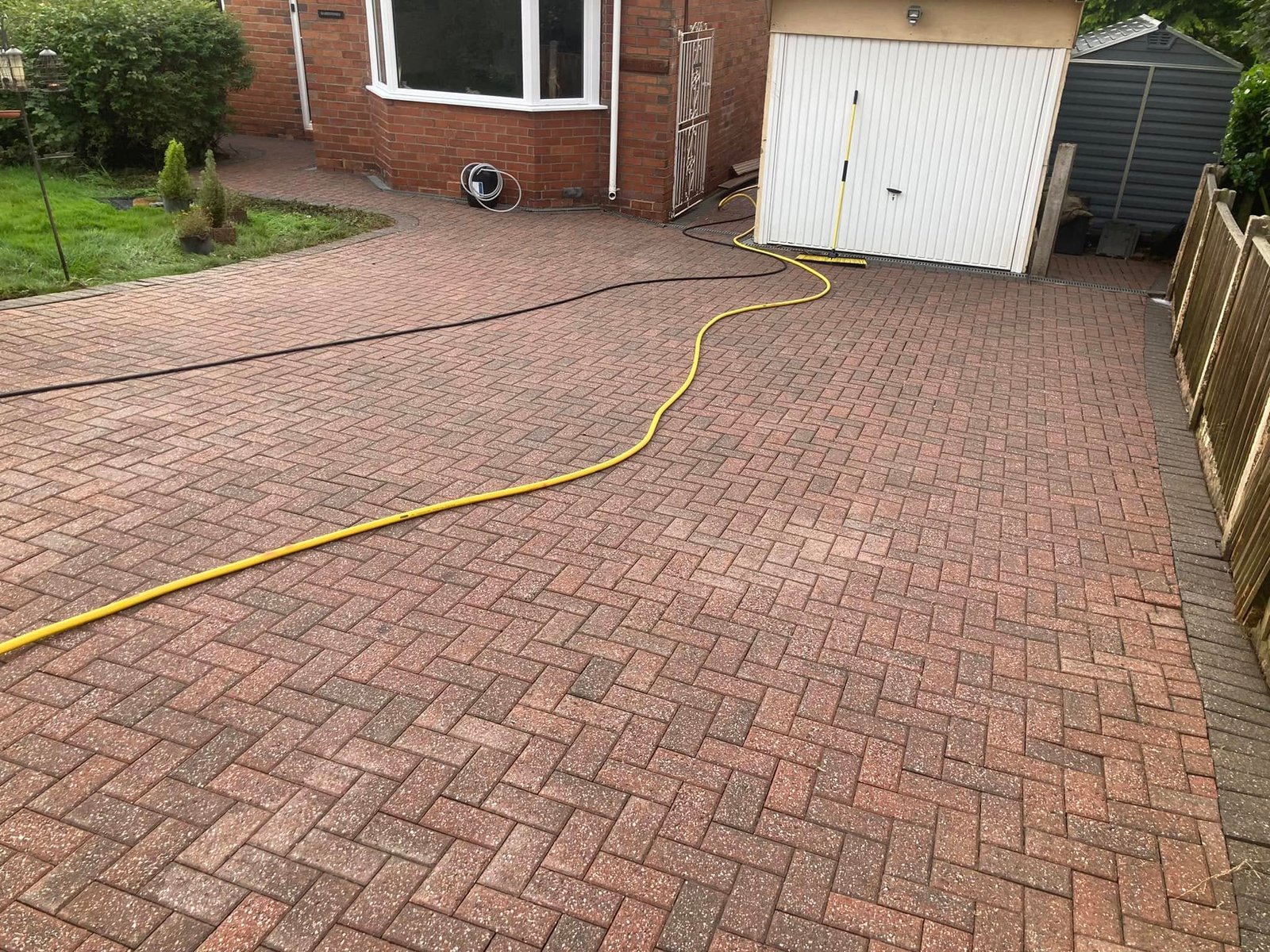
How often should you clean a driveway in Telford?
Two driveways on the same street can age very differently. One may stay relatively clean because it is open, drains well and receives plenty of daylight. Another can become green or dark more quickly because it stays damp, sits under trees or collects organic debris.
That is why a calendar-only approach is weak. Cleaning too often can be unnecessary, while leaving contamination for too long can make the job more involved. The better approach is to look at the actual condition of the surface.
Signs your driveway may be ready for cleaning
- Moss or algae is spreading. Green growth is one of the clearest signs that the surface needs attention.
- The driveway looks significantly darker than it used to. General traffic film, dirt and organic contamination build gradually.
- Weeds are becoming established in block paving joints. Cleaning and correct finishing may be needed rather than simply pulling the visible growth.
- The surface feels slippery when wet. Biological growth can create a genuine usability issue, especially on shaded areas.
- Leaves and debris are repeatedly collecting in the same zones. These areas often stay damp for longer.
- Old cleaning has left block paving joints depleted. The surface may need proper re-sanding after the next clean.
- You are preparing the property for sale, maintenance or exterior improvement. Appearance can be a practical reason to clean even if the surface is not heavily contaminated.
How surface type changes the answer
The cleaning interval should reflect the material. Different driveway surfaces react differently to pressure, biological growth and repeated maintenance.
| Surface | What usually drives the timing | Important caution |
|---|---|---|
| Block paving | Moss, weeds, dark joints, general dirt | Cleaning can remove jointing sand, so re-sanding may be needed afterwards |
| Tarmac | Surface dirt, moss, algae, traffic film | Older or weak tarmac should not be aggressively pressure washed |
| Concrete | Dirt, tyre marks, organic growth | Cracks, old repairs and decorative finishes need assessing first |
| Resin-bound | Organic debris and surface contamination | Follow the specific system or installer guidance |
| Natural stone | Moss, algae, darkening and staining | Some stones are sensitive to unsuitable chemicals or overly aggressive cleaning |
For a broader breakdown of different driveway materials, see our complete driveway cleaning guide for Telford homeowners.
What makes a driveway need cleaning sooner?
Shade and slow drying
Areas that remain damp for longer can encourage moss and algae to return sooner than exposed, fast-drying areas. This does not mean every shaded driveway needs frequent pressure washing; it means you should watch those sections more closely.
Trees and organic debris
Leaves, seeds and general organic matter can collect on the surface and in paving joints. Regular sweeping can slow the build-up and may extend the time between deeper cleans.
Heavy vehicle use
Cars bring road dirt, tyre contamination and occasional fluid marks onto the driveway. A driveway used by several vehicles every day may look tired sooner than one with light use.
Poor drainage or standing water
Cleaning can remove surface contamination, but it cannot repair a drainage problem. If water regularly pools in one area, that underlying issue may contribute to faster regrowth and should be treated as a separate problem.
Previous cleaning quality
A rushed clean can leave contamination in corners, edges or joints. On block paving, failing to replace lost jointing sand also means the job has not been properly finished.
Can you clean a driveway too often?
Yes. More cleaning is not automatically better. Repeated aggressive pressure washing can be unnecessary and, on vulnerable surfaces, may cause wear or expose existing weakness. Tarmac, aged concrete, damaged paving and some decorative surfaces deserve particular caution.
Professional cleaning should be based on condition and material, not a sales target. If a driveway is still clean, stable and safe, there is no benefit in washing it simply because a certain number of months has passed.
That is especially important with tarmac driveway cleaning, where excessive pressure can make an older surface worse rather than better.
What maintenance can extend the time between cleans?
- Sweep regularly. Remove leaves, soil and debris before they stay wet and break down on the surface.
- Deal with vehicle leaks early. Fresh oil or fluid marks are easier to manage than long-established staining.
- Keep drainage channels clear. Surface water should be able to move away as intended.
- Pull obvious weeds before they mature. This will not replace proper joint maintenance, but it can reduce visual deterioration.
- Check block paving joints. Low or empty joints should not be ignored after cleaning.
- Avoid random chemical treatments. The wrong product can mark or damage some driveway materials.
If you have block paving, read our guide on why re-sanding matters after pressure washing.
A simple condition-based cleaning schedule
Instead of choosing a rigid date, use a quick inspection every few months. You do not need specialist equipment. Walk the driveway and check the following:
| Question | If the answer is yes |
|---|---|
| Is moss or algae becoming widespread? | Consider a deeper clean or professional assessment |
| Is the surface slippery when wet? | Do not ignore it; assess the cause and appropriate treatment |
| Are block paving joints visibly low? | Plan for correct joint maintenance and re-sanding where needed |
| Are there fresh vehicle-fluid marks? | Deal with them early rather than waiting for the next full clean |
| Is water pooling repeatedly? | Investigate drainage rather than expecting cleaning to fix it |
| Is the driveway still clean and stable? | There may be no reason to clean it yet |
What about seasonal driveway cleaning?
Spring and early autumn are popular times to inspect exterior surfaces, but the season itself is less important than the condition of the driveway and the weather window available for the work.
For block paving, dry conditions matter after cleaning because kiln-dried sand needs sufficiently dry joints. If the paving remains wet, re-sanding may need to be completed later. A professional contractor should explain this rather than forcing the finishing stage in unsuitable conditions.
Cleaning frequency by driveway surface
How often should block paving be professionally cleaned?
There is no universal annual rule. If the blocks remain clean, joints are stable and moss or weeds are limited, an annual deep clean may be unnecessary. If the paving is shaded, heavily used or repeatedly affected by biological growth, it may need attention sooner.
The important distinction is between routine maintenance and full pressure washing. Sweeping, clearing debris and dealing with isolated problems can often delay the need for a full clean.
How often should tarmac be cleaned?
Tarmac should be cleaned only when there is a genuine need and the surface is in suitable condition. Older tarmac can contain loose aggregate, cracks, repairs or fragile edges. These should be checked before pressure washing.
Cleaning can improve suitable surface dirt, moss and algae, but it cannot restore faded colour or repair structural deterioration. If the tarmac is breaking up, repair may be more appropriate than cleaning.
What does professional assessment add?
A useful assessment answers four questions: what material is the driveway, what contamination is present, what condition is the surface in, and what result is realistically achievable?
Driveway Cleaning Telford is operated by Balo Jetwash. We use surface-specific cleaning methods, carry £5 million public liability insurance and inspect the driveway before confirming the final quotation. We also explain limitations rather than promising that every mark will disappear.
For current pricing information, see our driveway cleaning prices in Telford.
Frequently asked questions
Should I have my driveway pressure washed every year?
Not automatically. If the driveway is still clean, stable and safe, annual pressure washing may be unnecessary. Condition should determine the timing.
Does moss mean the driveway needs cleaning?
Widespread moss or algae is a strong sign that maintenance is due, especially if the surface is becoming slippery. The appropriate method still depends on the driveway material.
Will professional cleaning stop moss coming back?
No cleaning method can guarantee that biological growth will never return. Shade, moisture, debris and drainage all influence regrowth.
Does block paving need re-sanding every time it is pressure washed?
If pressure washing removes jointing sand and leaves the joints depleted, suitable kiln-dried sand should be replaced once the paving is dry enough.
Can you clean a driveway too frequently?
Yes. Unnecessary or aggressive repeated cleaning can create wear, particularly on weaker or ageing surfaces.
How do I know whether my driveway needs cleaning now?
Look for widespread biological growth, slippery areas, heavy dirt, weeds, depleted joints or a clear decline in appearance. If you are unsure, an in-person assessment is more useful than following a rigid calendar.
Related driveway cleaning guides
- Complete guide to driveway cleaning in Telford
- Why re-sanding matters after block paving cleaning
- Tarmac driveway cleaning: how to avoid surface damage
- What determines driveway cleaning prices in Telford?
Need an honest driveway assessment in Telford?
If you are unsure whether your driveway actually needs cleaning, we can inspect the surface and explain what is worth doing and what is not. We do not recommend cleaning simply because a certain amount of time has passed.
Visit the Driveway Cleaning Telford service page or contact us to arrange an assessment. We confirm the quotation before work begins.