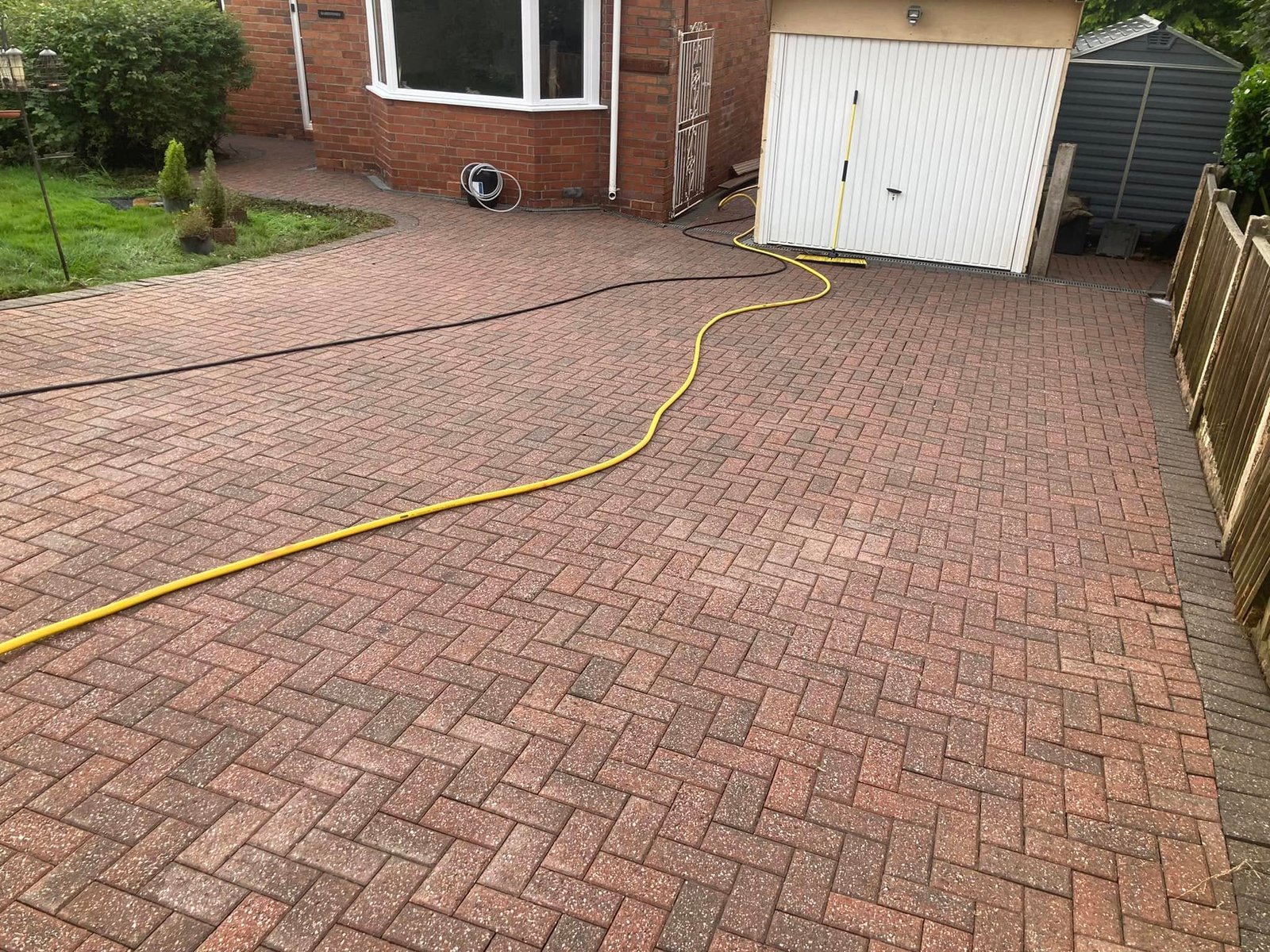
Tag: Block Paving

  • Fresh Oil Stain on Your Driveway? What to Do in the First 24 Hours

    Fresh Oil Stain on Your Driveway? What to Do in the First 24 Hours

    Fresh Oil Stain on Your Driveway? What to Do in the First 24 Hours

    A fresh oil stain on a driveway is easier to manage before the liquid spreads or soaks into the surface. The first priority is not pressure washing: it is to stop the leak, keep oil out of drains and absorb what you safely can. The right next step depends on whether your driveway is block paving, concrete, tarmac or resin-bound surfacing.

    This practical guide is for homeowners in Telford dealing with a small, recent vehicle-oil spill. It explains what to do during the first 24 hours, when to stop DIY treatment and why even professional cleaning cannot guarantee complete removal.
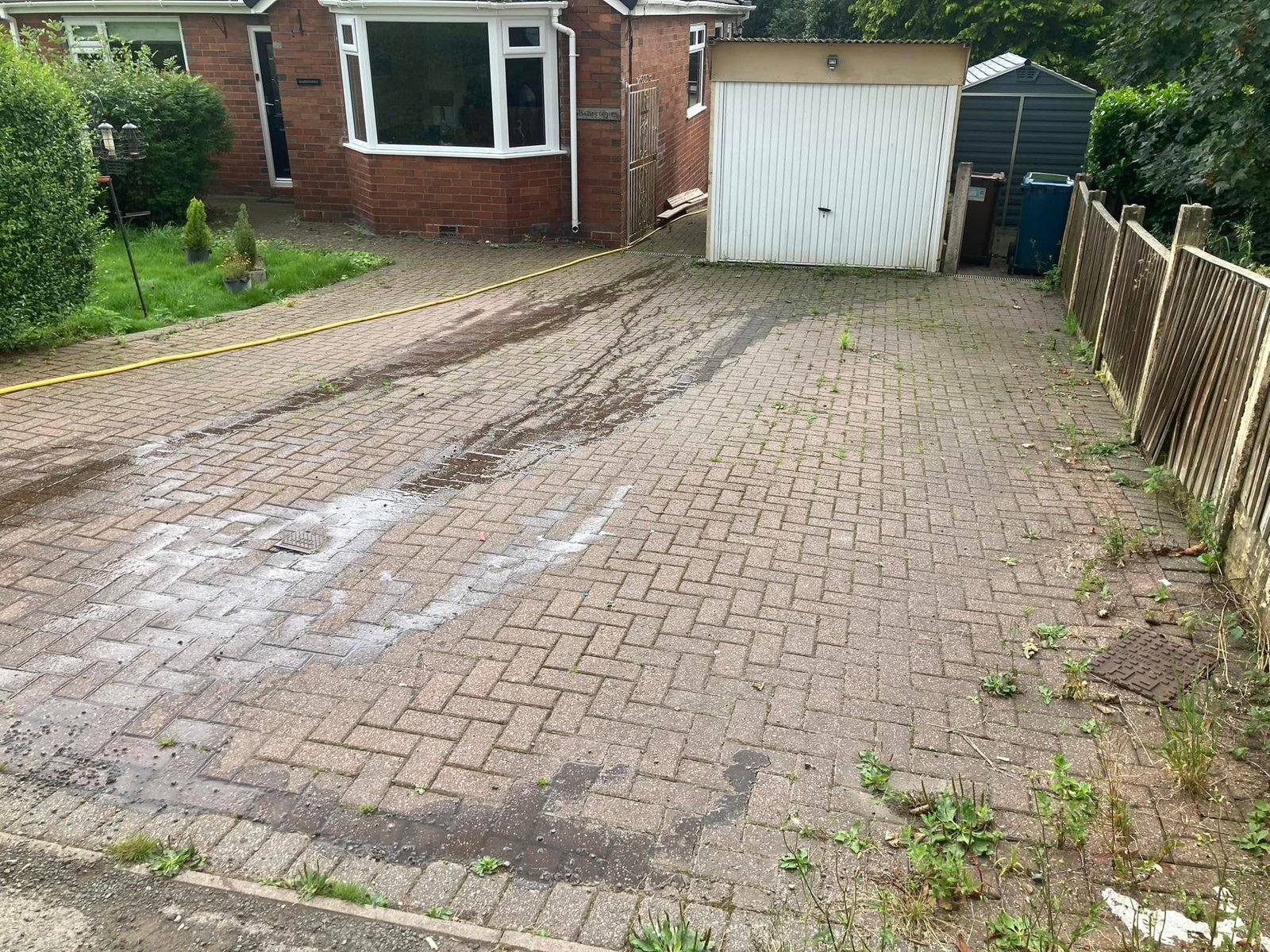
    Driveway cleaning work photographed by Balo Jetwash; illustrative image, not an oil-stain case study

    First, check that the spill is safe to approach

    If you suspect petrol, a large fuel leak, an unknown chemical or any immediate fire risk, do not treat it as an ordinary driveway stain. Keep people away and seek appropriate emergency or specialist advice. The steps below concern a small spill of vehicle oil where it is safe to work.

    Move the vehicle only if safe, switch it off and arrange to fix the source of the leak. Wear suitable gloves and keep children and pets away from the affected area. Do not pour boiling water, solvent or bleach onto the patch.

    First 15 minutes: contain the oil, not the stain

    1. Stop the source. A clean driveway is pointless if the vehicle continues dripping.
    2. Protect nearby gullies. Prevent oil from reaching surface-water drains, channels, soil or planted borders. Never hose it towards a drain.
    3. Absorb free liquid. Use a suitable oil-absorbent product according to its instructions. Work carefully to avoid spreading the spill across clean paving.
    4. Collect the used absorbent. Keep it contained for suitable disposal; do not sweep contaminated material into the road or garden.
    5. Take a photograph. Note when the spill happened, the approximate area affected and the driveway material. This helps if you later ask a cleaner for an assessment.

    Environmental guidance for businesses explains why contaminated wash-water must not enter surface-water drainage. The same prevention principle is sensible at home: see the government’s pollution-prevention guidance.

    During the first hour: identify your driveway surface

    Oil behaves differently on different materials. Treating every surface with the same degreaser or pressure-washer setting risks causing a second problem.

    Surface What to watch for Practical implication
    Block paving Oil can soak into individual blocks and joints. Do not force contaminated liquid deeper into sand-filled joints; cleaning may later require re-sanding.
    Concrete Porosity, finish and previous sealers vary. Some marks penetrate below the visible surface; aggressive chemicals can alter appearance.
    Tarmac Bitumen-bound material may be sensitive to some solvents and harsh treatment. Avoid strong solvent experiments or concentrated pressure that could soften, mark or disturb the surface.
    Resin-bound surfacing Resin systems and manufacturer guidance differ. Check the installer’s cleaning instructions before applying products or pressure.
    Natural stone Absorbency and chemical sensitivity vary by stone. Identify the stone first; unsuitable acidic or alkaline cleaners may cause damage.

    For a wider overview, read our complete guide to driveway cleaning in Telford. If the surface is tarmac, our tarmac cleaning and damage-prevention guide explains the extra precautions.

    Hours 1–6: avoid the tempting mistakes

    Once the free oil has been absorbed, the remaining dark patch may still be visible. That does not mean you should immediately reach for a high-pressure lance.

    • Do not blast the stain with a narrow jet. You may spread contamination and disturb paving joints or weak surfaces.
    • Do not mix cleaning chemicals. Different products can react or damage the surface. Follow the manufacturer’s instructions for any surface-approved product.
    • Do not assume washing-up liquid makes the problem disappear. A detergent may move oil into contaminated runoff without removing it safely.
    • Do not scrub with wire brushes. These can scratch or mark certain surfaces.
    • Do not promise yourself a perfect finish. Absorbing surface oil quickly reduces the problem but cannot undo oil already absorbed into pores.

    If you are considering a specialist stain remover, check that it is compatible with the exact surface and that you can prevent contaminated runoff. A small inconspicuous test, following the product instructions, is preferable to treating the entire driveway blindly.

    Hours 6–24: decide whether cleaning is appropriate

    When the free liquid is contained and the surface is safe, assess the mark in daylight. A fresh stain may look darker while the surface is wet; compare it once surrounding areas are dry. Photograph it again and note whether the patch is spreading, whether oil continues to drip, and whether any cleaning product has already been used.

    For a small residual mark on a sound surface, careful surface-compatible treatment may be possible. For a larger spill, uncertain liquid, drainage risk, delicate surface or a stain that is spreading, stop DIY attempts and seek appropriate professional advice. Pressure washing should not be the first response to an uncontrolled oil spill.

    What can professional driveway cleaning realistically achieve?

    Professional cleaning can often improve surface contamination, but oil stain removal depends on the oil type, age, depth of penetration, paving material and any previous treatments. Some old or synthetic oil stains cannot be removed completely. Even a fresh spill can leave a shadow after the visible liquid is gone.

    What cannot be promised

    No responsible cleaner can guarantee that every oil mark will vanish. A porous block, concrete slab or weathered surface may retain a darker shadow even after appropriate treatment. The realistic objective is to improve the stain without damaging the driveway or creating contaminated runoff.

    What a professional assessment should check

    The cleaner should identify the surface, the likely type and age of the stain, any previous products used, nearby drainage and the condition of the paving before deciding on treatment. Those checks matter more than simply choosing the most aggressive chemical or pressure setting.

    At Driveway Cleaning Telford, the service is delivered by Balo Jetwash. We assess the material and condition before confirming a method or quotation, use surface-appropriate cleaning and hold £5 million public liability insurance. This is not a guarantee that a particular oil stain will disappear.

    On block paving, cleaning can remove some jointing sand. Where appropriate, kiln-dried re-sanding is included in the quoted cleaning service once the paving is sufficiently dry. See why re-sanding matters after block paving cleaning.

    Where should oil and contaminated absorbent go in Telford?

    Do not pour oil down drains or put unknown oily material straight into ordinary recycling. Telford & Wrekin Council confirms that household engine oil can be taken to its Household Recycling Centres, where it must be poured into the designated oil tank rather than left in containers.

    The council operates centres at Hortonwood and Halesfield. Access is for Telford & Wrekin residents, and certain vehicles need an e-permit. Check the current council site rules before travelling. Oil-soaked pads, sand or other absorbents are not the same as liquid engine oil: ask the council how to dispose of the specific contaminated material. Trade waste is not accepted at household centres.

    Prevention: stop the next stain before it happens

    Repair vehicle leaks promptly. If a vehicle is awaiting repair, a suitable drip tray or absorbent mat can help contain drips, provided it is used and emptied correctly. Avoid letting contaminated rainwater overflow onto the driveway. Routine sweeping also helps you spot new marks rather than discovering them after several weeks.

    Sealing is not a universal cure: suitability varies by surface and product, and a sealer does not make a driveway immune to oil. Ask for the maintenance requirements and limitations before paying for any protective treatment.

    Frequently asked questions about fresh driveway oil stains

    Will a fresh oil stain disappear on its own?

    Some visible oil may weather, but absorbed contamination can leave a lasting mark. Waiting is not a reliable removal method, particularly if more oil is still leaking.

    Should I pressure wash an oil stain immediately?

    No. Contain and absorb free oil first. Pressure washing can spread contaminated water and may damage vulnerable paving.

    Can I use the same oil remover on tarmac and block paving?

    Not automatically. Product compatibility differs, and bitumen-bound tarmac is particularly sensitive to some treatments.

    Does block paving need re-sanding after an oil-stain clean?

    If cleaning has depleted jointing sand, the joints should be replenished once sufficiently dry. The need depends on the cleaning carried out and the condition of the joints.

    How much does professional driveway cleaning cost in Telford?

    Our general guide price is £5 per square metre, with a £100 minimum. This is not a fixed quote for oil-stain removal: specialist treatment, access and the condition of the driveway must be assessed. See our driveway cleaning pricing guide.

    Can Balo Jetwash guarantee complete oil stain removal?

    No. We explain the likely limitations after inspecting the stain and surface. Old, deeply absorbed or synthetic oil marks can remain even after appropriate treatment.

    Need an honest assessment of a driveway stain in Telford?

    If the spill is safely contained but the mark remains, we can assess whether professional driveway cleaning is appropriate and what result is realistic. Please tell us the driveway material, when the stain appeared and what, if anything, has already been applied.

    Visit our Driveway Cleaning Telford service page to arrange an assessment. We inspect before confirming the final quotation, rather than offering a blanket promise about stain removal.
  • Slippery Driveway Telford: When Does It Become a Real Safety Risk?

    Slippery Driveway Telford: When Does It Become a Real Safety Risk?

    Is a slippery driveway in Telford a safety risk? It can be, especially when a regularly used walking route becomes slick after rain. Green algae, moss, wet leaves, oil residue and standing water can all affect grip. The key is not how green the driveway looks: it is whether someone can walk from the pavement to the front door, car or bins without an avoidable risk of slipping.

    A driveway can also be hazardous for a different reason: uneven blocks, a sunken drain cover or a broken edge create trip risks rather than slip risks. Cleaning may help with surface contamination, but it cannot repair a damaged base or poor drainage. This guide explains what to check, when to act and what a sensible professional cleaning assessment should cover.

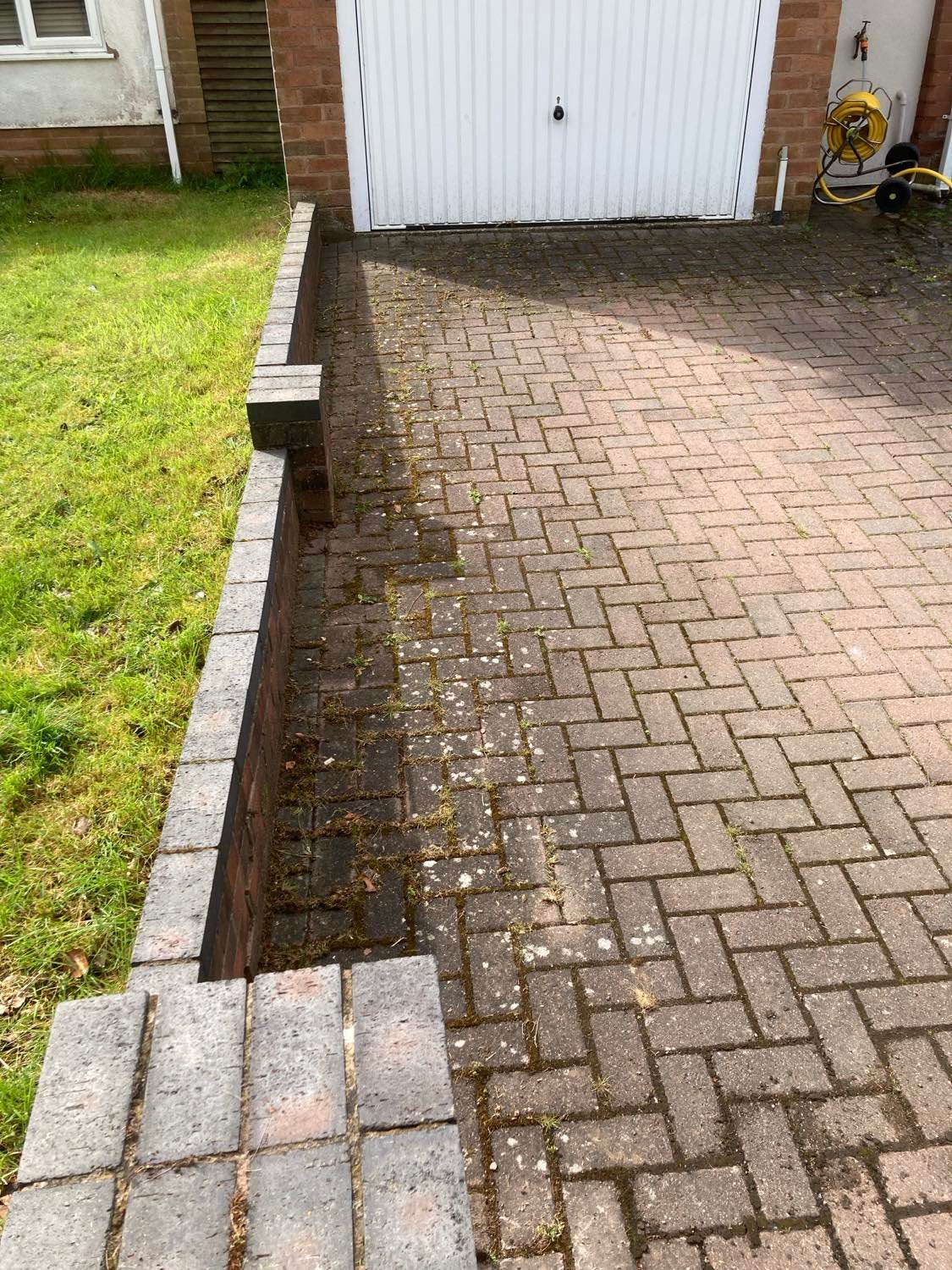
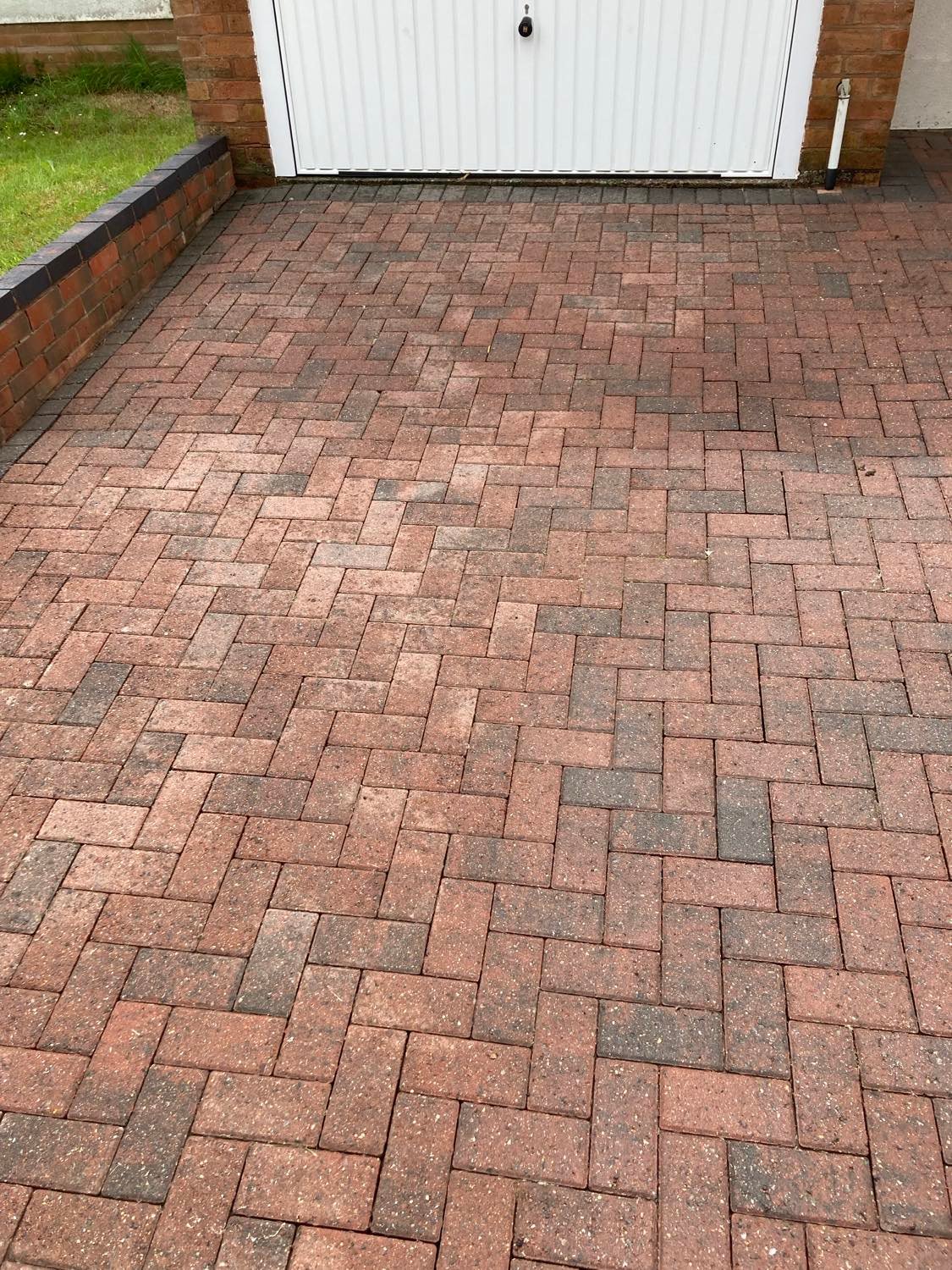
    Block paving cleaning work photographed by Balo Jetwash

    When does a slippery driveway become a real safety concern?

    Take a problem seriously when it affects the route people actually use. A small patch of algae in an unused corner is different from a slick area directly outside the front door or beside the driver’s door. A sloping driveway, steps leading from the drive or an area used in poor light can increase the consequences of a slip.

    The Royal Horticultural Society (RHS) explains that algae, mosses and related growths can make paths, drives and steps slippery, particularly in damp conditions. That does not mean every green patch is an emergency. It does mean growth on a frequently used walking route deserves attention.

    Do not deliberately walk across a suspicious patch to “test” it. Look at the surface from a safe position and, if necessary, choose another route until it can be dealt with.

    Five signs that you should act rather than wait

    1. Someone has already slipped or nearly slipped. A near miss is useful warning information, even if nobody was hurt.
    2. The main walking route is slick after ordinary rainfall. The problem is not limited to an exceptional icy day.
    3. Green or dark biological growth covers a sloped or shaded section. Thin algae films can be less obvious than thick moss.
    4. Water repeatedly pools in the same place. The underlying drainage issue may continue to encourage contamination after cleaning.
    5. Uneven or loose paving sits alongside the slippery area. Someone avoiding a slick patch could step onto an unstable block instead.

    Particular care is sensible if children, older visitors or anyone with limited mobility regularly uses the driveway. This is about managing an observable hazard, not claiming that every homeowner has a specific workplace-style legal duty.

    What makes driveways slippery in Telford?

    Algae and moss on shaded paving

    Moisture, shade and organic debris encourage growth. Algae may appear as a thin green film on concrete, block paving, stone or tarmac. Moss tends to be more visible around joints and edges. The RHS notes that improving drainage, reducing shade and clearing debris can discourage regrowth, although it may return if the underlying conditions remain.

    Wet leaves, mud and grit

    Autumn leaves can hold moisture against paving, and mud tracked from tyres or nearby beds may reduce grip. Regular sweeping is a useful first step when the surface is sound and the material can be swept without damage. Keep drains and channels clear too.

    Oil, grease and vehicle fluids

    A leaking vehicle can leave contamination in a place where people step out of the car. Remove or contain fresh contamination safely and seek suitable surface-specific treatment. Deeply absorbed or old synthetic oil stains may not disappear completely, even after professional cleaning. A stain that remains visible is not automatically proof of continuing slipperiness; assess the actual surface condition separately.

    Standing water, frost and ice

    Cleaning will not fix a driveway with an incorrect fall, blocked drainage or a failed sub-base. Frost and ice also need a weather-specific response: pressure washing is not a substitute for safe winter access arrangements.

    Surface coatings and wear

    Some sealed or smooth surfaces may behave differently when wet. Do not assume that a glossy finish offers better grip. If you are considering a sealer, read our guide to whether driveway sealing is worth it after cleaning and check the product’s slip-resistance information.

    A practical urgency guide for homeowners

    What you notice What to do What cleaning can achieve
    Loose dry leaves on sound paving Sweep and check the surface after rainfall A full professional wash may not be needed
    Thin algae film on a main pedestrian route Use an alternative route if unsafe; arrange suitable treatment promptly Appropriate cleaning can remove surface growth, but regrowth is possible
    Slippery slope or steps, or a recent near miss Keep people away from the affected section and prioritise assessment Cleaning may help if contamination is the cause; grip and surface condition still matter
    Repeated puddling and green growth Investigate drainage as well as contamination Cleaning alone will not correct water pooling
    Sunken, rocking or broken blocks Arrange repair assessment and avoid the unstable area Pressure washing cannot repair the paving structure
    Frost or ice Manage winter access; avoid unsafe areas Routine driveway washing is not an ice treatment

    This table is a practical homeowner guide, not a formal slip-resistance test. If the safety of a particular surface is uncertain, a competent specialist may need to assess it rather than relying on appearance alone.

    What should you do today if your driveway feels unsafe?

    1. Keep people off the affected route. Where possible, use a safe alternative path. A warning alone is less effective than preventing access to the hazard.
    2. Check the cause without stepping onto it. Look for algae, leaves, fluid residue, pooled water, damaged paving or ice.
    3. Remove simple loose debris if safe. Sweep leaves or loose dirt from a stable, accessible area; do not put yourself at risk to reach it.
    4. Do not apply random chemicals. Some cleaners or coatings can damage the surface, harm planting or leave a residue.
    5. Arrange the correct remedy. Contamination may need cleaning; damaged paving needs repair; drainage faults need investigation.

    The UK’s Health and Safety Executive explains that cleaning can reduce contamination-related slips but may itself create temporary hazards while surfaces are wet. Its workplace guidance is a useful safety principle, although it is not a statement of specific legal requirements for a private domestic driveway.

    Can pressure washing make a slippery driveway safer?

    Sometimes, when removable contamination is the problem. Cleaning can remove suitable moss, algae and surface dirt from sound paving. It does not guarantee a particular level of slip resistance, prevent all future growth or resolve structural defects. The method must match the material.

    Block paving

    Block paving may collect moss and weeds in joints. High-pressure cleaning can remove jointing sand as well as dirt, so conventional sand-jointed block paving may need kiln-dried re-sanding once the paving is sufficiently dry. Re-sanding is not a slip-resistance guarantee, but it is an important part of finishing a properly cleaned block-paved driveway. Read why re-sanding matters after block paving cleaning.

    Tarmac

    Older or weakened tarmac can be damaged by aggressive pressure. Loose aggregate, cracking or crumbling edges need assessing before any wash. Surface-specific cleaning is preferable to applying maximum pressure indiscriminately.

    Concrete and natural stone

    Concrete finishes vary, and some natural stones are softer or more porous than they appear. The wrong nozzle, pressure or chemical can mark the surface. A small, inconspicuous test and manufacturer guidance are sensible safeguards.

    Resin-bound surfaces

    Resin-bound driveways need methods compatible with the installed system. Avoid assuming that generic driveway chemicals, high pressure or a coating are suitable. If stones are loose or the resin is failing, cleaning is not a structural repair.

    Why does the slippery patch keep returning?

    Repeated regrowth often means the environment has not changed: shade remains, leaves keep falling, water collects or joints stay damp. A professional clean can reset the surface condition, but it cannot remove the need for routine maintenance. In practice, a sensible plan may combine sweeping, clearing drainage channels, checking for vehicle leaks and occasional deeper cleaning when genuinely required.

    If you are unsure whether a full wash is necessary, see how often a driveway really needs cleaning. The answer should depend on condition rather than a fixed annual sales schedule.

    Frequently asked questions

    Is green algae on a driveway dangerous?

    It can create a slip risk, especially when wet and on routes people use. The location, surface, slope and presence of previous slips matter more than colour alone.

    Does moss always mean I need pressure washing?

    No. Small amounts may be managed through suitable routine maintenance. Widespread growth on a walking route may justify a professional assessment, but the correct method depends on the surface.

    Will driveway cleaning stop someone slipping?

    No contractor should promise that. Cleaning can remove certain contaminants, but grip also depends on the paving material, condition, slope, weather and footwear.

    Can a pressure washer damage block paving?

    Yes. An unsuitable jet or technique can disturb jointing sand or damage vulnerable areas. Correct finishing may include re-sanding once the joints are dry.

    What if the driveway is still slippery after cleaning?

    Do not keep repeating aggressive pressure washing. Check for remaining contamination, unsuitable coatings, worn texture, drainage faults or other surface issues. A specialist assessment may be needed.

    Is a slippery driveway the same as an uneven driveway?

    No. Slipperiness is primarily a loss-of-grip concern; uneven or loose paving creates a trip hazard. Both can be present at once, and cleaning only addresses some of the causes.

    Need an assessment of a slippery driveway in Telford?

    Driveway Cleaning Telford is delivered by Balo Jetwash. We assess the driveway’s material and visible condition before quoting, use surface-specific cleaning methods and carry £5 million public liability insurance. For conventional block paving, suitable kiln-dried re-sanding is included where required once conditions allow.

    We will explain when cleaning is appropriate and when a drainage or paving repair issue needs a different solution. We cannot guarantee that cleaning will eliminate every slip risk or remove every stain. To discuss the condition of your driveway, visit our driveway cleaning service in Telford and arrange an assessment.

  • Kiln-Dried Sand for Block Paving: What Telford Homeowners Need to Know

    Kiln-Dried Sand for Block Paving: What Telford Homeowners Need to Know

    Kiln-Dried Sand for Block Paving: What Telford Homeowners Need to Know

    Why is kiln-dried sand used for block paving? On conventional sand-jointed block driveways, the joints between the blocks are part of the paving system. A suitable dry jointing sand can be brushed into those gaps after cleaning to replace material lost through wear, weeds or pressure washing. It is not a decorative extra: incomplete joints can make a cleaned driveway an unfinished job.

    If you are having block paving cleaned in Telford, the important questions are which sand is suitable, how dry the paving must be, how full the joints should be, and what happens if the weather turns wet. This guide focuses on the jointing material and the finishing process rather than repeating a general guide to pressure washing.

    Cleaned block paving photographed by Balo Jetwash

    What exactly is kiln-dried jointing sand?

    Kiln-dried sand is sand that has been dried so it can flow freely into narrow paving joints. It is normally sold as a fine jointing material for suitable concrete block paving. Its purpose is different from the coarse sand used beneath paving or in mortar mixes. A damp bag of sand may clump and bridge across the top of a narrow joint instead of filling it properly.

    The phrase kiln-dried describes the drying process; it does not mean that any sand with that label is suitable for every driveway. Always follow the paving manufacturer’s guidance about grading and jointing. Some systems use specialist aggregates or proprietary jointing products.

    Why block paving joints need the correct material

    Conventional block paving is designed as an interlocking surface. Jointing sand helps transfer load between neighbouring blocks and supports the performance of the pavement as a whole. The joints also need to be maintained: weeds, erosion, heavy traffic and cleaning can reduce the amount of sand in them over time.

    Sand does not fix an unstable foundation, sunken blocks or poor drainage. If individual blocks are rocking or the paving has ruts, the problem may require lifting and repairing part of the surface rather than simply adding more sand.

    Kiln-dried sand versus other materials

    Material Typical use Why it may or may not suit driveway joints
    Kiln-dried block-paving jointing sand Dry brushing into compatible, narrow joints Flows into dry joints when the grading suits the blocks
    Builders’ sand Mortar and general building mixes Often too damp or unsuitable in grading for narrow dry-jointed paving
    Sharp sand Bedding and other construction applications Not a direct substitute for the specified fine jointing sand
    Polymeric or resin jointing products Specific paving systems and applications Require their own installation instructions; not interchangeable with ordinary kiln-dried sand
    Permeable-paving jointing aggregate Permeable block-paving systems May use a specified open-graded aggregate to maintain water infiltration

    Important: a permeable block-paved driveway should not automatically be filled with ordinary kiln-dried sand. The jointing material is part of how the system handles rainwater. Check the installer or manufacturer’s specification before changing it.

    When should block paving be re-sanded after cleaning?

    Only once the paving and joints are sufficiently dry

    For conventional dry-sand jointing, the blocks and joints need to be dry enough for the sand to run down rather than stick to damp surfaces. This is why the finishing stage may need to wait after pressure washing. A driveway that looks dry from a distance can still hold moisture in shaded joints.

    In Telford, rain, dew, cooler weather and shade can delay drying. A responsible cleaner should explain a weather-related delay rather than brush sand across wet blocks just to finish the appointment.

    After loose contamination and old debris have been removed

    Re-sanding should follow appropriate cleaning and removal of loose debris. It is not a substitute for dealing with moss or weeds in the joints, and sand should not be used to conceal loose or failed paving.

    How is kiln-dried sand applied correctly?

    The precise method should follow the paving manufacturer’s instructions, but the basic sequence for a suitable conventional block-paved driveway is straightforward:

    1. Inspect the paving. Look for loose blocks, uneven areas, damaged edges and joints that may need repairs.
    2. Clean using a suitable method. Avoid unnecessarily aggressive pressure that could damage the blocks or wash away more joint material than needed.
    3. Allow the surface to dry. Check the joints, not just the top of the blocks.
    4. Use the specified dry jointing sand. Brush it across the surface so it drops into the joints.
    5. Work methodically. Check edges, corners and areas where the joints have been depleted.
    6. Remove loose excess material. Do not leave piles of sand on the surface or wash freshly applied sand out of the joints.
    7. Inspect the finish. Check that the joints are consistently filled to the appropriate level for that paving system.

    Some installation or reinstatement specifications call for additional compaction and topping up. That is not something to improvise with a domestic machine on an older driveway; the correct approach depends on the blocks, bedding and current condition.

    How much kiln-dried sand does a driveway need?

    There is no trustworthy fixed “one bag per X square metres” rule for every existing driveway. The amount depends on block dimensions, joint width and depth, how much sand remains after cleaning, and whether the joints were already depleted. A driveway with nearly full joints needs much less material than one with extensive missing jointing sand.

    If a contractor quotes for re-sanding, ask whether the allowance covers topping up the joints after cleaning and whether a second visit might be needed if wet weather prevents the sand from being applied on the cleaning day. The point is a properly finished surface, not a guessed bag count.

    What can go wrong with re-sanding?

    • Applying sand while the joints are damp: material can clump or sit on top instead of filling the gaps.
    • Using an unsuitable grade: sand may not enter narrow joints or may not match the paving system.
    • Ignoring structural movement: sand cannot correct loose blocks, failed edging or a sinking sub-base.
    • Using ordinary sand on permeable paving: the wrong material can interfere with drainage performance.
    • Leaving joints noticeably low: the paving may still need proper finishing or maintenance.
    • Pressure washing immediately after re-sanding: this can simply remove the newly added material.

    For a broader explanation of why the finishing stage matters, see our guide to re-sanding after block paving cleaning.

    Does re-sanding stop weeds or moss permanently?

    No. Filling joints appropriately can remove some of the open space where debris collects, but it does not make a driveway weed-proof. Seeds can settle from above, and moss or algae may return where the paving remains damp and shaded. Regular sweeping and clearing leaves are still useful.

    Re-sanding also should not be confused with sealing. Sealing is a separate, optional treatment for compatible paving; it is not necessary merely because the driveway has been cleaned and re-sanded. Our driveway sealing guide

    When is professional re-sanding worth paying for?

    It can be sensible to have re-sanding included as part of a professional block paving clean when joints are likely to lose material. That keeps the cleaning and finishing stages within the same scope of work. It is particularly helpful when you want the contractor to inspect the paving before cleaning and explain any areas where sand alone will not solve the problem.

    At Driveway Cleaning Telford, delivered by Balo Jetwash, we assess the material and condition before giving a final quotation. Our conventional block-paving cleaning service includes suitable kiln-dried re-sanding where required, once the surface is dry enough. We carry £5 million public liability insurance and use surface-specific cleaning methods.

    If the driveway has unstable blocks, drainage problems or a specialised permeable system, we will not pretend that brushing in ordinary sand is a complete repair. For a wider look at surface types and cleaning methods, read our Telford homeowner’s driveway cleaning guide.

    Frequently asked questions about kiln-dried sand

    Is kiln-dried sand essential after every driveway clean?

    Not for every surface. It is relevant to compatible conventional sand-jointed block paving where joints have lost material. Tarmac, resin-bound and other driveway systems have different requirements.

    Can I put kiln-dried sand into wet block paving?

    For dry-brushed jointing, wait until the blocks and joints are sufficiently dry. Wet joints can prevent the sand from settling properly.

    Is kiln-dried sand the same as builders’ sand?

    No. Builders’ sand is commonly used in mortar and other construction work; it is not a direct substitute for the fine, dry material specified for conventional block paving joints.

    Will re-sanding make loose paving blocks stable?

    It can help maintain joints in a sound paving system, but it cannot repair a failed foundation, sunken areas or broken edge restraints.

    Can I use it on permeable block paving?

    Not unless the paving manufacturer’s specification explicitly calls for that material. Many permeable systems require a different jointing aggregate.

    How soon can I use my driveway after re-sanding?

    Follow the contractor’s and paving manufacturer’s advice. Ordinary dry jointing sand is different from curing resin-based products, but any required compaction, topping-up or other work should be completed first.

    Need block paving cleaning and re-sanding in Telford?

    We can assess whether your driveway needs cleaning, joint maintenance or a separate repair. We will explain any limits before starting, including the fact that deeply absorbed or synthetic oil stains may not disappear completely. Visit our driveway cleaning service in Telford to arrange a site assessment and quotation.

  • Driveway Sealing Telford: When Is It Worth It After Cleaning?

    Driveway Sealing Telford: When Is It Worth It After Cleaning?

    Is driveway sealing worth it after cleaning in Telford? Sometimes — but it is not an automatic finishing step, and some driveways are better left unsealed. A sealer may make certain surfaces easier to maintain or alter their appearance. It can also create problems if the wrong product is used, moisture is trapped beneath it or the paving was not designed to be sealed.

    Before paying for driveway sealing, identify the material, decide what problem you want the sealer to solve and check the manufacturer’s guidance. This guide explains the difference between cleaning, block paving re-sanding and sealing, including situations where the sensible answer is not to seal.

    Driveway surface after cleaning by Balo Jetwash; the photograph does not show a sealing treatment

    First: cleaning, re-sanding and sealing are three different jobs

    These terms are often used together, but they do not mean the same thing:

    1. Driveway cleaning removes suitable surface dirt, moss, algae and other contamination using a method appropriate to the material.
    2. Block paving re-sanding replaces lost or depleted jointing sand in conventional sand-jointed block paving after the paving is sufficiently dry. It helps the joints perform as intended.
    3. Sealing means applying a compatible protective coating or penetrating treatment, depending on the product and surface. It is an optional extra for many types of paving, not a substitute for cleaning or sound joints.

    For example, a block-paved driveway can be professionally cleaned and correctly re-sanded without receiving any sealer. See our guide to block paving re-sanding for the practical difference.

    Do block paving manufacturers recommend sealing?

    Not universally. Marshalls states that sealing its block paving is not necessary, noting that sealants require a clean, dry, dust-free surface and may alter appearance or wear unevenly. That is an important counterpoint to sales claims that every cleaned driveway must be sealed.

    Brett Landscaping advises checking the suitability of a sealant with the manufacturer, including possible effects on slip resistance, appearance and ongoing maintenance. The correct answer therefore depends on the exact paving product and the reason for sealing it.

    Neither position means all sealers are useless. It means sealing should be a deliberate choice with understood benefits, limitations and maintenance requirements — not a compulsory upsell after pressure washing.

    When might driveway sealing be worth considering?

    When you want easier removal of future surface dirt

    Some compatible treatments can make routine cleaning easier, depending on the paving and the type of contamination. They do not make a driveway self-cleaning. Leaves, grit and biological growth still need attention.

    When a particular paving product allows protective treatment

    Certain natural stones and concrete products may have manufacturer-approved treatments for specific needs. The important detail is approved for that surface, not merely labelled “driveway sealer”.

    When you understand and accept the visual finish

    A product may leave a matt, satin, gloss or darker “wet-look” finish. The appearance can vary with the paving and may change as the coating wears. Ask for a small test patch and assess it after curing, not only while wet.

    When is sealing a poor idea?

    • The paving is still damp after cleaning. Residual moisture can interfere with application and cause whitening or patchy results.
    • There are white salt deposits (efflorescence). Sealing too early can trap or highlight visible deposits.
    • The driveway is permeable paving. A coating that obstructs joints or pores may interfere with intended drainage; check the system manufacturer first.
    • The surface is breaking up, loose or sinking. A sealer does not repair failed bedding, damaged tarmac, loose aggregate or movement.
    • The surface already has an unknown coating. Applying another product without identifying the old one risks incompatibility and uneven finish.
    • You expect guaranteed oil-stain prevention. Sealing is not a promise that engine oil will never stain, especially if spills are left untreated.
    • The finish may become slippery. Check the product’s slip-resistance advice, particularly for slopes and pedestrian routes.

    For an example of why surface condition matters before any exterior treatment, read our guide to DIY pressure washing mistakes.

    Does the type of driveway change the decision?

    Driveway surface Sealing decision What to check first
    Conventional block paving Often optional; not required simply because it has been cleaned Manufacturer advice, complete dry joints, efflorescence, existing coatings
    Permeable block paving Extra caution; some treatments may affect water infiltration Whether the exact permeable system permits any coating
    Natural stone Varies by stone and finish Stone identification, porosity, chemical compatibility and colour change
    Concrete driveway Depends on the concrete finish and any previous treatment Cracks, decorative coatings, moisture and manufacturer recommendations
    Tarmac Do not assume a block paving sealer is suitable Condition of the bitumen-bound surface and product-specific guidance
    Resin-bound surface Follow the installer’s system guidance rather than applying a generic sealer Resin compatibility, permeability and signs of loose aggregate

    Unsure what your driveway is made from? Our complete guide to driveway cleaning in Telford explains the main materials and their cleaning considerations.

    How long after driveway cleaning can sealing be applied?

    There is no reliable universal “24 hours later” rule. The surface, bedding, joints, weather, product and manufacturer’s instructions all affect the drying and curing requirements. A driveway can look dry on top while moisture remains below the surface.

    Independent UK paving guidance from Pavingexpert stresses that paving and joints must be thoroughly dry before sealing and explains why residual moisture causes failures. Its broader sealant guidance also advises caution in cool, damp conditions. Treat these as reasons to assess the actual conditions, not as a substitute for the chosen product’s instructions.

    Why Telford weather matters

    In Telford, as anywhere in the UK, a rainy spell, cool temperatures, overnight dew or shaded areas can extend drying time. A convenient booking date is not proof that a surface is ready. If the required dry-weather window is unavailable, postpone sealing rather than risk a failed finish.

    What about re-sanding before sealing?

    On conventional sand-jointed block paving, joints must be inspected and replenished where necessary. Kiln-dried sand needs dry paving and joints so it can flow into place. Whether a particular sealer is compatible with that jointing material must then be checked separately. Re-sanding is a finishing and maintenance step; sealing is not a shortcut around it.

    Will sealing prevent weeds, moss and oil stains?

    Be cautious with blanket guarantees. A suitable product may influence how dirt adheres or how easily some spills are cleaned, but it does not eliminate the conditions that allow moss and algae to return. Shade, moisture, organic debris and drainage still matter.

    Similarly, an old or deeply absorbed oil mark may remain visible after cleaning, and sealing over contamination can preserve an unsatisfactory appearance. Some old or synthetic oil stains cannot be removed completely. Deal with the underlying contamination first and ask what result is realistically achievable.

    A practical decision checklist before spending money

    Use these questions when comparing a sealing quotation or deciding whether to leave a cleaned driveway unsealed:

    1. What exactly is the surface? Get the product name or installation details if possible.
    2. What is the goal? Easier maintenance, a different finish or a specific approved protection? If you cannot name a benefit, you may not need the treatment.
    3. Does the manufacturer permit it? This matters especially for permeable and resin-bound systems.
    4. Is the surface sound and clean? Cracks, failed edges, loose blocks and stains need separate attention.
    5. Are the joints complete? Conventional block paving may need kiln-dried re-sanding before any compatible treatment.
    6. Is the surface genuinely dry? Check the product’s requirements, not just the forecast headline.
    7. What are the downsides? Ask about colour change, slip resistance, uneven wear, reapplication and future removal.
    8. Can you see a test patch? Judge the cured result before agreeing to the full driveway.

    Simple decision: if the paving is clean and sound, the manufacturer does not recommend sealing, or the benefit is unclear, leaving it unsealed is a reasonable choice. If a suitable treatment solves a defined problem, ask for written product information and a realistic maintenance plan before proceeding.

    Frequently asked questions about driveway sealing in Telford

    Do I need to seal block paving after pressure washing?

    No. Cleaning and correct joint maintenance can be completed without sealing. Whether sealing adds value depends on the specific blocks, product guidance and your maintenance goals.

    Should I re-sand block paving before sealing?

    Conventional block paving joints should be checked and replenished with suitable jointing sand where needed once dry. Then confirm that any proposed sealer is compatible with the paving and jointing system.

    Can sealing make a driveway slippery?

    Some coatings can change slip resistance. Ask for the manufacturer’s information and consider slopes, steps and pedestrian routes before choosing a finish.

    Can a driveway be sealed straight after cleaning?

    Do not assume so. The paving and joints may retain moisture after the surface looks dry. Follow the product’s specified drying and weather requirements.

    Will sealing stop oil stains completely?

    No sealer should be treated as a guarantee. Clean up fresh spills promptly, and remember that old or synthetic oil marks may not be fully removable.

    Does Balo Jetwash include sealing with driveway cleaning?

    Our standard driveway cleaning information covers surface-appropriate cleaning and, where required for conventional block paving, kiln-dried re-sanding. Do not assume sealing is included. Any proposed additional treatment would need to be discussed and confirmed separately.

    Need a driveway cleaning assessment in Telford?

    Driveway Cleaning Telford is delivered by Balo Jetwash. We assess the material and condition before confirming a cleaning quotation, use surface-specific methods and carry £5 million public liability insurance. For conventional block paving, our cleaning service includes appropriate kiln-dried re-sanding where required and once conditions allow.

    We will not suggest that a coating can repair failed paving or guarantee the removal of every stain. If your immediate need is a proper clean rather than an optional sealer, visit our Driveway Cleaning Telford service page to arrange an assessment. Our general cleaning guide price is £5 per square metre with a £100 minimum; the final quotation follows a site visit. Sealing, if separately discussed, is not covered by that general cleaning guide price.

  • 10 DIY Pressure Washing Mistakes That Can Damage Your Driveway

    10 DIY Pressure Washing Mistakes That Can Damage Your Driveway

    DIY pressure washing driveway mistakes can be expensive. A domestic pressure washer may remove loose dirt from a sound surface, but the wrong nozzle, unsuitable cleaner or poor finishing can leave permanent marks. This guide explains ten avoidable problems for homeowners in Telford, including block paving, tarmac, concrete, resin-bound driveways and natural stone.

    It is not a claim that every driveway needs professional cleaning. The useful question is whether the material and its condition are suitable for the method you intend to use. If you cannot identify the surface or spot signs of damage, stop before applying pressure.

    Driveway cleaning work photographed by Balo Jetwash

    Before switching on: check the surface, joints and drainage

    Walk the entire driveway while it is dry. Look for loose stones, cracks, old repairs, weak edges, low joints, drains and nearby planting. The risk changes with the material:

    Surface Main DIY risk When to stop
    Block paving Blowing jointing sand out or marking blocks Loose or sunken blocks; unstable edges
    Tarmac Dislodging aggregate or marking bitumen-bound material Crumbling, cracking or visibly loose aggregate
    Concrete Etching weak or decorative finishes Flaking, spalling or unknown coating
    Resin-bound Dislodging aggregate or affecting the resin Loose stones or unclear manufacturer instructions
    Natural stone Surface erosion or chemical staining Soft, flaky or unidentified stone

    These are general warning signs, not universal pressure settings. There is no single safe PSI for every driveway: age, surface condition, nozzle, distance and water flow all matter.

    A five-minute go/no-go checklist

    Before doing anything with a pressure washer, use this quick decision check. If you cannot answer one of the questions, postpone the wash until you have reliable guidance.

    1. Identify the material: is it block paving, tarmac, concrete, resin or natural stone?
    2. Inspect the weakest point: check edges, cracks, old repairs, loose stones and the condition of block paving joints.
    3. Locate drainage: identify nearby gullies and how you will prevent contaminated water entering them.
    4. Check product instructions: confirm that the proposed cleaning method and any detergent suit the surface.
    5. Plan the finish: for conventional block paving, decide how depleted joints will be re-sanded once dry.

    Go: the surface is sound, the method is compatible and you can control runoff. Pause: the material is unknown, joints are unstable, runoff cannot be controlled or the surface is visibly failing. This is a practical screening check, not a guarantee of safe pressure washing.

    10 DIY pressure washing mistakes worth avoiding

    1. Treating every driveway material as if it were concrete

    Block paving has sand-filled joints. Tarmac is bitumen-bound. Resin-bound driveways rely on a resin-and-aggregate system. Natural stone varies considerably in porosity and strength. A method suitable for one surface may damage another.

    Better approach: identify the material and follow its manufacturer or installer guidance. If you are unsure whether a driveway is resin-bound or resin-bonded, or whether stone has a protective finish, do not guess.

    2. Using a narrow, concentrated jet to remove stubborn dirt

    A narrow jet concentrates force into a small area. Holding it close or stationary can leave lines, disturb aggregate, expose weak concrete or damage joints. A more powerful machine does not automatically produce a better clean.

    Better approach: avoid aggressive nozzles on vulnerable surfaces. Use a controlled method appropriate to the material and stop if you see fresh marks, loose particles or surface changes.

    3. Skipping a small test patch

    A cleaner or water jet can alter the appearance of a surface even when it seems sound. Decorative concrete, old sealers and some natural stones may react differently from an ordinary paving slab.

    Better approach: test the proposed method on a small, inconspicuous area and assess it after drying. The paving manufacturer Marshalls advises trial cleaning and care with power washing.

    4. Pointing the lance directly into block paving joints

    Pressure can wash out jointing sand. Those joints are part of how conventional block paving works, not simply a cosmetic gap. A driveway may look cleaner immediately after washing while being left with depleted joints.

    Better approach: avoid deliberately blasting along joints. After cleaning, inspect the joint depth and arrange suitable kiln-dried re-sanding where sand has been lost. Our block paving re-sanding guide explains the finishing stage.

    5. Pressure washing damaged tarmac or weak edges

    Loose aggregate, crumbling edges and old patch repairs are warnings that the surface may not withstand concentrated water pressure. Washing cannot repair a failed tarmac driveway, and aggressive cleaning may make defects worse.

    Better approach: inspect for loose material and consider repair before cleaning. For more detail, read our tarmac driveway cleaning precautions.

    6. Applying a chemical because it says “heavy-duty”

    Strong chemicals are not interchangeable. Products unsuitable for a particular stone, sealer, resin system or bitumen-bound surface may cause staining or deterioration. Mixing products can create additional hazards.

    Better approach: check the product label and surface compatibility, follow dilution and protective-equipment instructions, and never mix cleaning chemicals. A small test area matters here as much as it does for pressure.

    7. Trying to blast an oil stain away with water alone

    Oil is different from ordinary dirt. High-pressure water can spread contaminated liquid without removing oil already absorbed into porous paving. Old or synthetic oil stains may remain visible even after appropriate professional treatment.

    Better approach: first stop the leak, prevent oil reaching drains and contain any free liquid safely. Do not promise yourself a complete stain removal. Where specialist treatment is needed, it should be matched to the material and managed so contaminated runoff is not spread.

    8. Washing dirty runoff into a road gully

    A nearby drain is not automatically a safe disposal point. Surface-water drains may discharge directly to the environment. Water carrying detergents, oil or other contamination should not simply be directed into them.

    Better approach: identify where runoff can go before starting, and stop if you cannot manage it safely. The Environment Agency’s pollution-prevention guidance for businesses explains the difference between surface-water and foul drainage; householders should also avoid polluting drains.

    9. Forgetting doors, air bricks, plants and neighbouring property

    Spray can carry dirty water and debris onto walls, painted surfaces, windows, vehicles and planting. It can also enter vulnerable openings or create a slippery route for anyone walking nearby.

    Better approach: clear the work area, protect vulnerable features, keep people and pets away, and avoid spraying towards openings or neighbouring property. If you cannot control overspray, stop.

    10. Finishing the wash but not finishing the driveway

    On conventional block paving, pressure washing may remove jointing sand. Brushing kiln-dried sand onto wet paving is not a proper shortcut: damp joints can prevent it flowing into place. Equally, re-sanding does not fix sunken blocks or failed foundations.

    Better approach: let the surface and joints dry sufficiently, then replenish suitable jointing sand where needed. Inspect edges and low joints before declaring the work complete. Other surfaces do not automatically need re-sanding.

    What should you do if pressure washing starts causing damage?

    Stop immediately. Continuing with a gentler setting is not necessarily enough if the surface has already started breaking up. Allow the area to dry, photograph the condition and decide whether it needs a paving or surfacing repair rather than another clean.

    What you notice Possible concern Practical next step
    New pale lines or etched patches Surface marking Stop and reassess the method
    Loose grit on tarmac or resin Aggregate being disturbed Stop; seek material-specific advice
    Empty block paving joints Loss of jointing sand Plan re-sanding once sufficiently dry
    Water collecting near a doorway Runoff or drainage issue Stop and protect the property
    Oil spreading beyond the original mark Contaminated runoff Contain safely; do not wash into drains

    When does professional driveway cleaning make sense in Telford?

    If the driveway is sound, lightly dirty and you understand the surface, routine sweeping and careful maintenance may be enough. Professional cleaning is more useful when the surface is heavily contaminated, there are different materials to manage, access is difficult or the finish requires proper block paving re-sanding.

    At Driveway Cleaning Telford, the work is delivered by Balo Jetwash. We inspect the driveway before confirming a quotation, use surface-specific cleaning methods and hold £5 million public liability insurance. For conventional block paving, suitable kiln-dried re-sanding is included where required as part of the cleaning service once conditions allow.

    Our general driveway cleaning guide price is £5 per square metre with a £100 minimum; the final quote follows a site assessment. That price is not a promise that every stain can be removed or that a damaged surface can be restored by washing.

    For an overview of our approach to different surfaces, see the complete driveway cleaning guide for homeowners.

    Frequently asked questions

    Can a domestic pressure washer damage block paving?

    Yes. Excessive pressure or poor technique can mark blocks and remove jointing sand. The risk depends on the block condition, nozzle and method.

    Is tarmac safe to pressure wash?

    Sometimes, but damaged or weak tarmac is particularly vulnerable. Loose aggregate and crumbling edges should be assessed before any washing.

    Does every driveway need kiln-dried sand after cleaning?

    No. Re-sanding is relevant to conventional sand-jointed block paving when the joints need replenishing. Tarmac, resin-bound and concrete surfaces do not use the same finishing method.

    Will pressure washing remove old oil stains completely?

    Not reliably. Oil type, age, depth and surface porosity all affect the result. Some old or synthetic oil marks cannot be fully removed.

    Should I use the highest pressure to save time?

    No. Cleaning should be matched to the surface. Increasing pressure can cause damage without solving the underlying staining problem.

    How can I get a driveway cleaning quote in Telford?

    We inspect the material, access, condition and staining before giving a final price. You can start from our Driveway Cleaning Telford service page.

    Not sure whether your driveway is safe to clean?

    Tell us the surface type, approximate size, any loose or damaged areas and what you want to improve. We will explain whether cleaning is appropriate, what finishing work is needed and which stains or defects may remain. The goal is a properly assessed clean, not a promise that water pressure can repair everything.

  • How Often Should You Clean a Driveway in Telford?

    How Often Should You Clean a Driveway in Telford?

    How often does a driveway really need cleaning?

    How often should you clean a driveway in Telford? For most homes, there is no sensible one-size-fits-all timetable. A lightly used, open driveway may only need a thorough professional clean every few years, while a shaded or heavily used surface can need attention sooner. The right interval depends on the surface, how quickly moss and algae return, vehicle use, drainage, surrounding trees and what condition you want the driveway to stay in.

    The useful rule is not “clean it every X months”. It is to clean when there is a clear maintenance reason, before contamination becomes harder to manage or the surface becomes unnecessarily slippery or untidy.

    Professionally cleaned driveway surface by Balo Jetwash

    How often should you clean a driveway in Telford?

    Two driveways on the same street can age very differently. One may stay relatively clean because it is open, drains well and receives plenty of daylight. Another can become green or dark more quickly because it stays damp, sits under trees or collects organic debris.

    That is why a calendar-only approach is weak. Cleaning too often can be unnecessary, while leaving contamination for too long can make the job more involved. The better approach is to look at the actual condition of the surface.

    Signs your driveway may be ready for cleaning

    • Moss or algae is spreading. Green growth is one of the clearest signs that the surface needs attention.
    • The driveway looks significantly darker than it used to. General traffic film, dirt and organic contamination build gradually.
    • Weeds are becoming established in block paving joints. Cleaning and correct finishing may be needed rather than simply pulling the visible growth.
    • The surface feels slippery when wet. Biological growth can create a genuine usability issue, especially on shaded areas.
    • Leaves and debris are repeatedly collecting in the same zones. These areas often stay damp for longer.
    • Old cleaning has left block paving joints depleted. The surface may need proper re-sanding after the next clean.
    • You are preparing the property for sale, maintenance or exterior improvement. Appearance can be a practical reason to clean even if the surface is not heavily contaminated.

    How surface type changes the answer

    The cleaning interval should reflect the material. Different driveway surfaces react differently to pressure, biological growth and repeated maintenance.

    Surface What usually drives the timing Important caution
    Block paving Moss, weeds, dark joints, general dirt Cleaning can remove jointing sand, so re-sanding may be needed afterwards
    Tarmac Surface dirt, moss, algae, traffic film Older or weak tarmac should not be aggressively pressure washed
    Concrete Dirt, tyre marks, organic growth Cracks, old repairs and decorative finishes need assessing first
    Resin-bound Organic debris and surface contamination Follow the specific system or installer guidance
    Natural stone Moss, algae, darkening and staining Some stones are sensitive to unsuitable chemicals or overly aggressive cleaning

    For a broader breakdown of different driveway materials, see our complete driveway cleaning guide for Telford homeowners.

    What makes a driveway need cleaning sooner?

    Shade and slow drying

    Areas that remain damp for longer can encourage moss and algae to return sooner than exposed, fast-drying areas. This does not mean every shaded driveway needs frequent pressure washing; it means you should watch those sections more closely.

    Trees and organic debris

    Leaves, seeds and general organic matter can collect on the surface and in paving joints. Regular sweeping can slow the build-up and may extend the time between deeper cleans.

    Heavy vehicle use

    Cars bring road dirt, tyre contamination and occasional fluid marks onto the driveway. A driveway used by several vehicles every day may look tired sooner than one with light use.

    Poor drainage or standing water

    Cleaning can remove surface contamination, but it cannot repair a drainage problem. If water regularly pools in one area, that underlying issue may contribute to faster regrowth and should be treated as a separate problem.

    Previous cleaning quality

    A rushed clean can leave contamination in corners, edges or joints. On block paving, failing to replace lost jointing sand also means the job has not been properly finished.

    Can you clean a driveway too often?

    Yes. More cleaning is not automatically better. Repeated aggressive pressure washing can be unnecessary and, on vulnerable surfaces, may cause wear or expose existing weakness. Tarmac, aged concrete, damaged paving and some decorative surfaces deserve particular caution.

    Professional cleaning should be based on condition and material, not a sales target. If a driveway is still clean, stable and safe, there is no benefit in washing it simply because a certain number of months has passed.

    That is especially important with tarmac driveway cleaning, where excessive pressure can make an older surface worse rather than better.

    What maintenance can extend the time between cleans?

    1. Sweep regularly. Remove leaves, soil and debris before they stay wet and break down on the surface.
    2. Deal with vehicle leaks early. Fresh oil or fluid marks are easier to manage than long-established staining.
    3. Keep drainage channels clear. Surface water should be able to move away as intended.
    4. Pull obvious weeds before they mature. This will not replace proper joint maintenance, but it can reduce visual deterioration.
    5. Check block paving joints. Low or empty joints should not be ignored after cleaning.
    6. Avoid random chemical treatments. The wrong product can mark or damage some driveway materials.

    If you have block paving, read our guide on why re-sanding matters after pressure washing.

    A simple condition-based cleaning schedule

    Instead of choosing a rigid date, use a quick inspection every few months. You do not need specialist equipment. Walk the driveway and check the following:

    Question If the answer is yes
    Is moss or algae becoming widespread? Consider a deeper clean or professional assessment
    Is the surface slippery when wet? Do not ignore it; assess the cause and appropriate treatment
    Are block paving joints visibly low? Plan for correct joint maintenance and re-sanding where needed
    Are there fresh vehicle-fluid marks? Deal with them early rather than waiting for the next full clean
    Is water pooling repeatedly? Investigate drainage rather than expecting cleaning to fix it
    Is the driveway still clean and stable? There may be no reason to clean it yet

    What about seasonal driveway cleaning?

    Spring and early autumn are popular times to inspect exterior surfaces, but the season itself is less important than the condition of the driveway and the weather window available for the work.

    For block paving, dry conditions matter after cleaning because kiln-dried sand needs sufficiently dry joints. If the paving remains wet, re-sanding may need to be completed later. A professional contractor should explain this rather than forcing the finishing stage in unsuitable conditions.

    Cleaning frequency by driveway surface

    How often should block paving be professionally cleaned?

    There is no universal annual rule. If the blocks remain clean, joints are stable and moss or weeds are limited, an annual deep clean may be unnecessary. If the paving is shaded, heavily used or repeatedly affected by biological growth, it may need attention sooner.

    The important distinction is between routine maintenance and full pressure washing. Sweeping, clearing debris and dealing with isolated problems can often delay the need for a full clean.

    How often should tarmac be cleaned?

    Tarmac should be cleaned only when there is a genuine need and the surface is in suitable condition. Older tarmac can contain loose aggregate, cracks, repairs or fragile edges. These should be checked before pressure washing.

    Cleaning can improve suitable surface dirt, moss and algae, but it cannot restore faded colour or repair structural deterioration. If the tarmac is breaking up, repair may be more appropriate than cleaning.

    What does professional assessment add?

    A useful assessment answers four questions: what material is the driveway, what contamination is present, what condition is the surface in, and what result is realistically achievable?

    Driveway Cleaning Telford is operated by Balo Jetwash. We use surface-specific cleaning methods, carry £5 million public liability insurance and inspect the driveway before confirming the final quotation. We also explain limitations rather than promising that every mark will disappear.

    For current pricing information, see our driveway cleaning prices in Telford.

    Frequently asked questions

    Should I have my driveway pressure washed every year?

    Not automatically. If the driveway is still clean, stable and safe, annual pressure washing may be unnecessary. Condition should determine the timing.

    Does moss mean the driveway needs cleaning?

    Widespread moss or algae is a strong sign that maintenance is due, especially if the surface is becoming slippery. The appropriate method still depends on the driveway material.

    Will professional cleaning stop moss coming back?

    No cleaning method can guarantee that biological growth will never return. Shade, moisture, debris and drainage all influence regrowth.

    Does block paving need re-sanding every time it is pressure washed?

    If pressure washing removes jointing sand and leaves the joints depleted, suitable kiln-dried sand should be replaced once the paving is dry enough.

    Can you clean a driveway too frequently?

    Yes. Unnecessary or aggressive repeated cleaning can create wear, particularly on weaker or ageing surfaces.

    How do I know whether my driveway needs cleaning now?

    Look for widespread biological growth, slippery areas, heavy dirt, weeds, depleted joints or a clear decline in appearance. If you are unsure, an in-person assessment is more useful than following a rigid calendar.

    Related driveway cleaning guides

    Need an honest driveway assessment in Telford?

    If you are unsure whether your driveway actually needs cleaning, we can inspect the surface and explain what is worth doing and what is not. We do not recommend cleaning simply because a certain amount of time has passed.

    Visit the Driveway Cleaning Telford service page or contact us to arrange an assessment. We confirm the quotation before work begins.

  • Why Re-Sanding Is Essential After Block Paving Cleaning

    Why Re-Sanding Is Essential After Block Paving Cleaning

    Pressure washing block paving does not finish when the surface looks clean. A thorough clean removes dirt, moss and debris, but it can also remove some of the jointing sand between the blocks. That is why re-sanding block paving after pressure washing is an important finishing stage.

    Cleaned block paving driveway surface by Balo Jetwash

    Why does pressure washing remove jointing sand?

    Block paving has narrow joints filled with sand. Professional cleaning clears contamination from the face of the blocks and from those joints, so some loose jointing sand inevitably comes out too. This is normal. The important point is to replenish depleted joints once the paving is suitably dry.

    What does jointing sand actually do?

    Jointing sand is not merely cosmetic. It fills the gaps between individual blocks and forms part of the paving system. Re-sanding replenishes material lost during cleaning. It does not, however, repair a failed sub-base, correct badly sunken paving or fix damaged blocks.

    Why use kiln-dried sand?

    Kiln-dried jointing sand is fine and extremely dry, allowing it to flow into narrow paving joints. Damp or coarse material will not settle into the joints as effectively. Even the correct sand performs poorly if it is spread over wet paving.

    When should block paving be re-sanded?

    The blocks and joints need to be sufficiently dry. Sand applied too early can stick to the surface, clump and fail to reach the depth of the joints. Weather, shade, temperature and drainage all affect drying time, so re-sanding may need to be completed later rather than immediately after washing.

    A practical re-sanding process

    1. Clean the paving thoroughly. Remove dirt, moss, weeds and loose material with a method suitable for the surface.
    2. Rinse and clear the area. Do not leave debris sitting in the joints.
    3. Allow the paving to dry. The joints must be dry enough for fine sand to flow freely.
    4. Inspect the joints. Identify unusually wide gaps, loose blocks or damage rather than hiding defects with sand.
    5. Spread kiln-dried sand. Distribute suitable dry jointing sand across the paving.
    6. Brush it into the joints. Work the sand across the surface so it settles into the gaps.
    7. Check the finish. Inspect the joints and deal with excess loose material appropriately.

    What happens if block paving is not re-sanded?

    A driveway can look clean while still having depleted joints. Leaving them low means the cleaning process has not been properly finished. Re-sanding restores joint material removed during cleaning, but it should not be sold as a cure for structural problems.

    Does re-sanding stop weeds coming back?

    Not permanently. Properly filled joints leave less open space than empty joints, but seeds and organic debris can arrive from above and weeds can return. Re-sanding is correct maintenance after cleaning, not permanent weed-proofing.

    Can you re-sand block paving yourself?

    Yes, provided the paving is genuinely dry and suitable jointing sand is used. Timing is often the difficult part. A driveway may look dry on top while retaining moisture deeper in the joints.

    DIY re-sanding checklist

    Check What to look for
    Paving condition No obvious loose, badly sunken or damaged blocks needing repair first.
    Surface dryness Blocks are dry rather than merely free of standing water.
    Joint dryness Moisture is not preventing sand from flowing into the gaps.
    Sand type Fine kiln-dried jointing sand suitable for block paving.
    Weather A sufficiently dry window to complete the work properly.

    Is re-sanding included with Driveway Cleaning Telford?

    For suitable block paving, kiln-dried sand is included as part of our quoted driveway cleaning service once the surface is sufficiently dry. The service is delivered by Balo Jetwash and backed by £5 million public liability insurance.

    We inspect the driveway before confirming the final quotation. Current guide pricing is explained on our driveway cleaning prices page.

    Re-sanding is one part of a proper clean

    Good block paving cleaning is not about maximum pressure. Assessment, surface-appropriate cleaning, treatment where appropriate, clean-up, drying conditions and correct finishing all matter.

    Read our complete driveway cleaning guide and our Telford driveway cleaning price guide for more detail.

    Frequently asked questions

    Do you always need to re-sand after pressure washing block paving?

    If cleaning has removed jointing sand and left the joints depleted, they should be replenished.

    Can kiln-dried sand be applied while the driveway is wet?

    It should be applied when the paving and joints are sufficiently dry. Moisture can make the sand clump and stop it flowing properly.

    Will re-sanding fix loose or sunken blocks?

    No. It replaces joint material; it is not a repair for settlement, a failed base or damaged paving.

    Does re-sanding permanently stop weeds?

    No. Seeds, debris and organic growth can return over time.

    Where can I arrange block paving cleaning in Telford?

    Visit the Driveway Cleaning Telford service page or contact page to arrange an assessment.

    Need your block paving cleaned and properly finished?

    If your block paving needs professional cleaning, we can assess the surface, explain realistic outcomes and include kiln-dried re-sanding where appropriate.

    Before booking, take three quick checks: look for loose or sunken blocks, note any oil or rust staining, and check whether water tends to pool after rain. Mentioning these points during the assessment helps us recommend the right process rather than treating every driveway the same way.

    Your next step is simple: use our contact page to arrange an in-person assessment. We inspect the paving before confirming the final quotation, so you know what cleaning and finishing work is proposed before it starts.

  • Driveway Cleaning Telford: A Complete Guide for Homeowners

    Driveway Cleaning Telford: A Complete Guide for Homeowners

    If your driveway is looking darker, patchy, green around the edges or full of weeds between the joints, professional driveway cleaning in Telford can make a major visual difference without pretending that every stain or worn area can be made perfect.

    This guide explains what professional driveway cleaning actually involves, what affects the result, when block paving needs re-sanding, what you can realistically expect from stubborn stains, and how pricing works. The aim is simple: help you decide whether professional cleaning is worth it for your driveway.

    Professionally cleaned driveway surface by Balo Jetwash

    What does professional driveway cleaning include?

    Good driveway cleaning is more than pointing a pressure washer at the surface. The method should depend on the material, the condition of the driveway and the type of contamination present.

    At Driveway Cleaning Telford, the service is delivered by Balo Jetwash. We start by looking at the driveway in person before confirming the final quotation. That allows us to assess the surface, access, drainage, biological growth, staining and the condition of joints or edges before work starts.

    Depending on the driveway, the process can include:

    • inspection of the driveway and surrounding areas;
    • professional pressure washing on suitable hard surfaces;
    • licensed industrial detergent where appropriate;
    • targeted attention to moss, algae and organic build-up;
    • careful rinsing and clean-up;
    • kiln-dried sand for block paving once the surface is dry and suitable for re-sanding.

    You can see the main service details on our Driveway Cleaning Telford page.

    Why surface type matters

    A common mistake with DIY pressure washing is assuming that every driveway should be cleaned in exactly the same way. It should not. Different materials react differently to water pressure, detergents and repeated cleaning.

    Block paving

    Block paving can collect moss, algae, dirt and weeds in the joints. Pressure washing can remove contamination very effectively, but it can also remove jointing sand. That is why re-sanding is an important part of the process rather than an optional cosmetic extra.

    Once the paving is sufficiently dry, kiln-dried sand can be brushed back into suitable joints. This helps restore the jointing material removed during cleaning and leaves the paving properly finished.

    Tarmac

    Tarmac requires more caution. Excessive pressure, overly aggressive nozzles or concentrating the jet in one area can mark or damage an older surface. The correct approach depends on the condition of the tarmac, so an inspection matters before deciding how it should be cleaned.

    Concrete and other hard surfaces

    Concrete can often tolerate professional pressure washing well, but age, cracks, previous repairs and surface finish all matter. Decorative or more delicate surfaces may need a different approach. This is why a surface-specific assessment is more useful than a one-method-fits-all promise.

    What causes a driveway to look dirty?

    There is rarely one single cause. Most driveways gradually collect several types of contamination at the same time.

    • Moss and algae: often develop in shaded or persistently damp areas.
    • Traffic film: general dirt from tyres, road dust and everyday vehicle use.
    • Weeds: can establish in joints where debris and organic material accumulate.
    • Oil and vehicle fluids: can soak into porous surfaces and become difficult to remove completely.
    • Leaves and organic staining: can leave marks if they remain wet on the surface for long periods.
    • Joint deterioration: particularly on block paving, where missing sand can make the finished surface look untidy even after washing.

    Professional cleaning can remove a large amount of surface contamination, but the honest answer is that some deeply absorbed stains may remain visible.

    Can oil stains be completely removed?

    Not always. This is one of the most important expectations to set before cleaning begins.

    Fresh oil sitting near the surface can sometimes respond better to treatment than an old stain that has soaked deeply into porous paving. Synthetic oils, long-established marks, rust, paint and other embedded contamination may improve without disappearing completely.

    A reputable contractor should explain this before the work, not after it. During the initial inspection, problem areas can be identified and realistic expectations discussed.

    Why re-sanding matters after block paving cleaning

    Pressure washing block paving can remove dirt from the surface and contamination from the joints, but it can also wash out some of the sand between the blocks. Leaving those joints empty is not a proper finish.

    Kiln-dried sand is designed to flow into the narrow joints between dry paving blocks. Re-sanding helps replace material lost during cleaning and gives the block paving a more complete finish. The paving must be dry enough before this stage, so it may not always happen immediately after washing if weather or surface conditions are unsuitable.

    How much does driveway cleaning cost in Telford?

    Our current guide price is £5 per square metre, with a £100 minimum charge. The final quotation is confirmed after seeing the driveway in person.

    Size is important, but it is not the only factor. Surface type, access, staining, drainage, the amount of biological growth and the amount of finishing work can all affect the job. Two driveways with the same square metre area can require very different amounts of work.

    See the current driveway cleaning prices page for the latest guide pricing and what is included.

    DIY pressure washing or professional cleaning?

    A domestic pressure washer can be useful for light maintenance, but the main risk is not simply that it will be slower. Poor technique can create striping, disturb jointing material, damage weaker surfaces or leave one area noticeably cleaner than another.

    The bigger question is whether you understand the surface you are cleaning. More pressure is not automatically better. Correct distance, nozzle choice, movement, treatment and finishing matter as much as raw machine power.

    If the driveway has delicate areas, significant staining, failing joints, poor drainage or an uncertain surface finish, professional assessment is usually the safer starting point.

    How long does driveway cleaning take?

    There is no useful universal answer because a small, lightly soiled driveway is very different from a large block-paved area with heavy growth and lost jointing sand.

    The cleaning itself may be completed in one visit, but block paving can require a return or a later finishing stage if it is not dry enough for kiln-dried sand. Weather, access and the amount of preparation also affect the timing.

    We prefer to inspect first and explain the likely process rather than promise an unrealistic fixed duration before seeing the site.

    What should you do before the cleaning visit?

    Preparation is usually straightforward. A few simple steps make the assessment and cleaning process easier and help avoid surprises on the day.

    1. Move vehicles off the driveway so the whole surface can be assessed and cleaned.
    2. Remove loose items such as bins, plant pots, toys and lightweight furniture.
    3. Point out known stains, especially oil, rust, paint or vehicle-fluid marks.
    4. Mention damaged areas such as loose blocks, crumbling edges or previous repairs.
    5. Check access and make sure gates or parked vehicles will not block the working area.
    6. Tell us about drainage issues if water regularly pools in a particular spot.
    7. Ask about re-sanding if you have block paving, so you know when that stage can be completed.

    If you know about a particular stain, damaged block, loose edging or drainage issue, point it out during the quotation. That information helps set the right expectations before cleaning starts.

    Quick driveway assessment checklist

    Check Why it matters
    Surface type Different materials need different cleaning methods.
    Moss or algae Biological growth may need more than water pressure alone.
    Oil, rust or paint Deep stains may improve without disappearing completely.
    Loose joints or blocks These can affect cleaning and finishing.
    Drainage Poor drainage can slow drying and affect the work sequence.
    Block paving sand Re-sanding may be needed after cleaning.

    What makes a good driveway cleaning quotation?

    A useful quotation should do more than give you a number. It should make clear what surface is being cleaned, what the price includes, whether detergent treatment is appropriate, whether block paving re-sanding is included and what limitations apply to stubborn staining.

    For our Telford service, we inspect the driveway before confirming the final price. That keeps the quotation tied to the actual condition of the surface rather than a guess over the phone.

    Frequently asked questions

    Do you clean block paving driveways in Telford?

    Yes. Block paving is one of the main driveway surfaces we clean. Where appropriate, kiln-dried re-sanding is included once the paving is dry and suitable for it.

    Is detergent included?

    Licensed industrial detergent is included where appropriate for the surface and contamination being treated.

    Can you guarantee every stain will disappear?

    No. Some old oil stains, rust, paint and deeply absorbed marks may improve without disappearing completely. We prefer to explain that honestly before work begins.

    Do I get a fixed quote before the work starts?

    Yes. We inspect the driveway in person and confirm the quotation before the cleaning work begins.

    How do I arrange a quotation?

    Use the contact page or call 07902 932947 to arrange an assessment.

    Need driveway cleaning in Telford?

    If your driveway needs more than a quick rinse, arrange an in-person assessment. We will look at the surface, explain the recommended cleaning method, identify any realistic limitations and confirm the price before work starts.

    Call Balo Jetwash on 07902 932947 or visit our contact page.