DIY pressure washing driveway mistakes can be expensive. A domestic pressure washer may remove loose dirt from a sound surface, but the wrong nozzle, unsuitable cleaner or poor finishing can leave permanent marks. This guide explains ten avoidable problems for homeowners in Telford, including block paving, tarmac, concrete, resin-bound driveways and natural stone.
It is not a claim that every driveway needs professional cleaning. The useful question is whether the material and its condition are suitable for the method you intend to use. If you cannot identify the surface or spot signs of damage, stop before applying pressure.
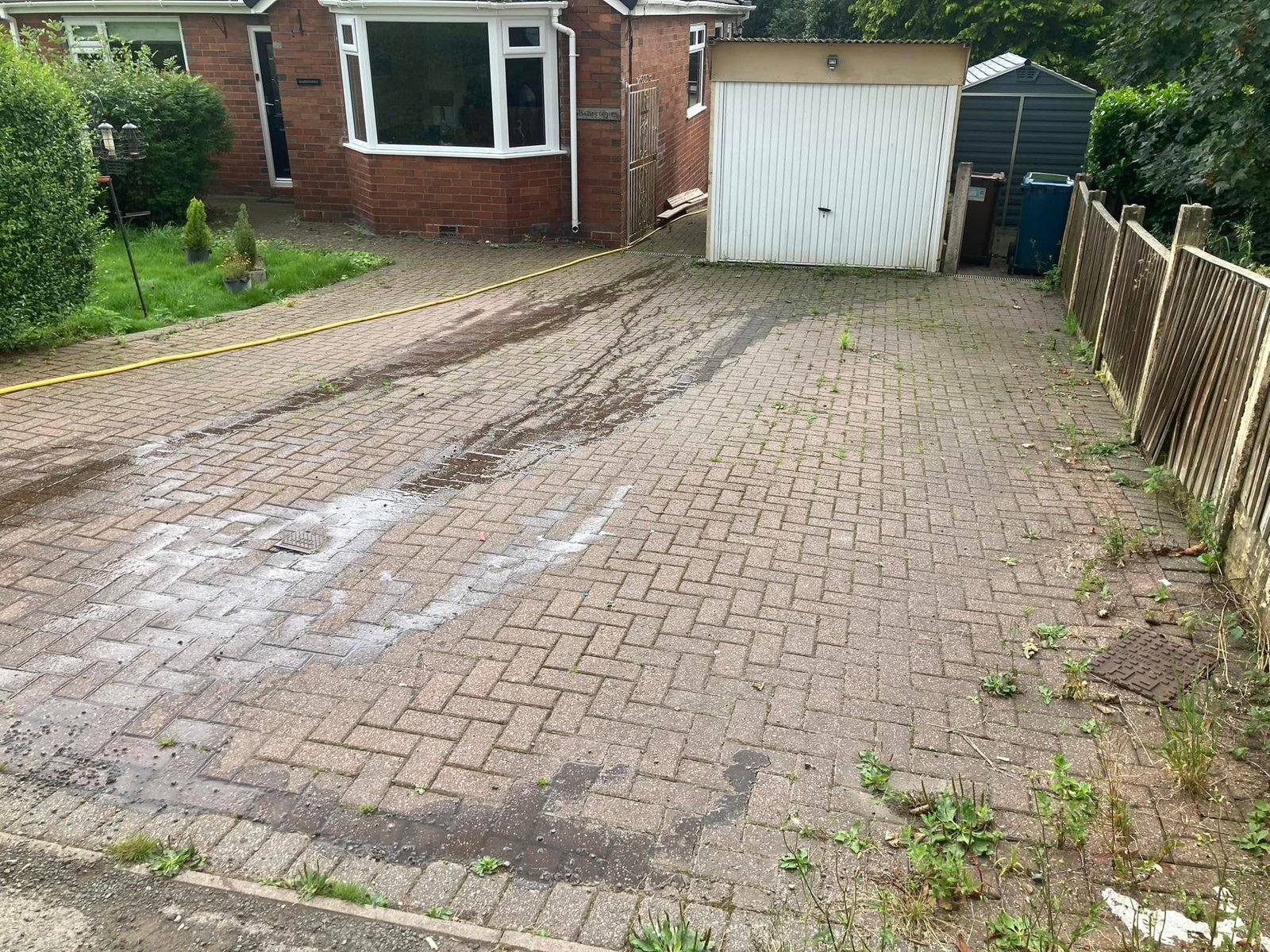
Before switching on: check the surface, joints and drainage
Walk the entire driveway while it is dry. Look for loose stones, cracks, old repairs, weak edges, low joints, drains and nearby planting. The risk changes with the material:
| Surface | Main DIY risk | When to stop |
|---|---|---|
| Block paving | Blowing jointing sand out or marking blocks | Loose or sunken blocks; unstable edges |
| Tarmac | Dislodging aggregate or marking bitumen-bound material | Crumbling, cracking or visibly loose aggregate |
| Concrete | Etching weak or decorative finishes | Flaking, spalling or unknown coating |
| Resin-bound | Dislodging aggregate or affecting the resin | Loose stones or unclear manufacturer instructions |
| Natural stone | Surface erosion or chemical staining | Soft, flaky or unidentified stone |
These are general warning signs, not universal pressure settings. There is no single safe PSI for every driveway: age, surface condition, nozzle, distance and water flow all matter.
A five-minute go/no-go checklist
Before doing anything with a pressure washer, use this quick decision check. If you cannot answer one of the questions, postpone the wash until you have reliable guidance.
- Identify the material: is it block paving, tarmac, concrete, resin or natural stone?
- Inspect the weakest point: check edges, cracks, old repairs, loose stones and the condition of block paving joints.
- Locate drainage: identify nearby gullies and how you will prevent contaminated water entering them.
- Check product instructions: confirm that the proposed cleaning method and any detergent suit the surface.
- Plan the finish: for conventional block paving, decide how depleted joints will be re-sanded once dry.
Go: the surface is sound, the method is compatible and you can control runoff. Pause: the material is unknown, joints are unstable, runoff cannot be controlled or the surface is visibly failing. This is a practical screening check, not a guarantee of safe pressure washing.
10 DIY pressure washing mistakes worth avoiding
1. Treating every driveway material as if it were concrete
Block paving has sand-filled joints. Tarmac is bitumen-bound. Resin-bound driveways rely on a resin-and-aggregate system. Natural stone varies considerably in porosity and strength. A method suitable for one surface may damage another.
Better approach: identify the material and follow its manufacturer or installer guidance. If you are unsure whether a driveway is resin-bound or resin-bonded, or whether stone has a protective finish, do not guess.
2. Using a narrow, concentrated jet to remove stubborn dirt
A narrow jet concentrates force into a small area. Holding it close or stationary can leave lines, disturb aggregate, expose weak concrete or damage joints. A more powerful machine does not automatically produce a better clean.
Better approach: avoid aggressive nozzles on vulnerable surfaces. Use a controlled method appropriate to the material and stop if you see fresh marks, loose particles or surface changes.
3. Skipping a small test patch
A cleaner or water jet can alter the appearance of a surface even when it seems sound. Decorative concrete, old sealers and some natural stones may react differently from an ordinary paving slab.
Better approach: test the proposed method on a small, inconspicuous area and assess it after drying. The paving manufacturer Marshalls advises trial cleaning and care with power washing.
4. Pointing the lance directly into block paving joints
Pressure can wash out jointing sand. Those joints are part of how conventional block paving works, not simply a cosmetic gap. A driveway may look cleaner immediately after washing while being left with depleted joints.
Better approach: avoid deliberately blasting along joints. After cleaning, inspect the joint depth and arrange suitable kiln-dried re-sanding where sand has been lost. Our block paving re-sanding guide explains the finishing stage.
5. Pressure washing damaged tarmac or weak edges
Loose aggregate, crumbling edges and old patch repairs are warnings that the surface may not withstand concentrated water pressure. Washing cannot repair a failed tarmac driveway, and aggressive cleaning may make defects worse.
Better approach: inspect for loose material and consider repair before cleaning. For more detail, read our tarmac driveway cleaning precautions.
6. Applying a chemical because it says “heavy-duty”
Strong chemicals are not interchangeable. Products unsuitable for a particular stone, sealer, resin system or bitumen-bound surface may cause staining or deterioration. Mixing products can create additional hazards.
Better approach: check the product label and surface compatibility, follow dilution and protective-equipment instructions, and never mix cleaning chemicals. A small test area matters here as much as it does for pressure.
7. Trying to blast an oil stain away with water alone
Oil is different from ordinary dirt. High-pressure water can spread contaminated liquid without removing oil already absorbed into porous paving. Old or synthetic oil stains may remain visible even after appropriate professional treatment.
Better approach: first stop the leak, prevent oil reaching drains and contain any free liquid safely. Do not promise yourself a complete stain removal. Where specialist treatment is needed, it should be matched to the material and managed so contaminated runoff is not spread.
8. Washing dirty runoff into a road gully
A nearby drain is not automatically a safe disposal point. Surface-water drains may discharge directly to the environment. Water carrying detergents, oil or other contamination should not simply be directed into them.
Better approach: identify where runoff can go before starting, and stop if you cannot manage it safely. The Environment Agency’s pollution-prevention guidance for businesses explains the difference between surface-water and foul drainage; householders should also avoid polluting drains.
9. Forgetting doors, air bricks, plants and neighbouring property
Spray can carry dirty water and debris onto walls, painted surfaces, windows, vehicles and planting. It can also enter vulnerable openings or create a slippery route for anyone walking nearby.
Better approach: clear the work area, protect vulnerable features, keep people and pets away, and avoid spraying towards openings or neighbouring property. If you cannot control overspray, stop.
10. Finishing the wash but not finishing the driveway
On conventional block paving, pressure washing may remove jointing sand. Brushing kiln-dried sand onto wet paving is not a proper shortcut: damp joints can prevent it flowing into place. Equally, re-sanding does not fix sunken blocks or failed foundations.
Better approach: let the surface and joints dry sufficiently, then replenish suitable jointing sand where needed. Inspect edges and low joints before declaring the work complete. Other surfaces do not automatically need re-sanding.
What should you do if pressure washing starts causing damage?
Stop immediately. Continuing with a gentler setting is not necessarily enough if the surface has already started breaking up. Allow the area to dry, photograph the condition and decide whether it needs a paving or surfacing repair rather than another clean.
| What you notice | Possible concern | Practical next step |
|---|---|---|
| New pale lines or etched patches | Surface marking | Stop and reassess the method |
| Loose grit on tarmac or resin | Aggregate being disturbed | Stop; seek material-specific advice |
| Empty block paving joints | Loss of jointing sand | Plan re-sanding once sufficiently dry |
| Water collecting near a doorway | Runoff or drainage issue | Stop and protect the property |
| Oil spreading beyond the original mark | Contaminated runoff | Contain safely; do not wash into drains |
When does professional driveway cleaning make sense in Telford?
If the driveway is sound, lightly dirty and you understand the surface, routine sweeping and careful maintenance may be enough. Professional cleaning is more useful when the surface is heavily contaminated, there are different materials to manage, access is difficult or the finish requires proper block paving re-sanding.
At Driveway Cleaning Telford, the work is delivered by Balo Jetwash. We inspect the driveway before confirming a quotation, use surface-specific cleaning methods and hold £5 million public liability insurance. For conventional block paving, suitable kiln-dried re-sanding is included where required as part of the cleaning service once conditions allow.
Our general driveway cleaning guide price is £5 per square metre with a £100 minimum; the final quote follows a site assessment. That price is not a promise that every stain can be removed or that a damaged surface can be restored by washing.
For an overview of our approach to different surfaces, see the complete driveway cleaning guide for homeowners.
Frequently asked questions
Can a domestic pressure washer damage block paving?
Yes. Excessive pressure or poor technique can mark blocks and remove jointing sand. The risk depends on the block condition, nozzle and method.
Is tarmac safe to pressure wash?
Sometimes, but damaged or weak tarmac is particularly vulnerable. Loose aggregate and crumbling edges should be assessed before any washing.
Does every driveway need kiln-dried sand after cleaning?
No. Re-sanding is relevant to conventional sand-jointed block paving when the joints need replenishing. Tarmac, resin-bound and concrete surfaces do not use the same finishing method.
Will pressure washing remove old oil stains completely?
Not reliably. Oil type, age, depth and surface porosity all affect the result. Some old or synthetic oil marks cannot be fully removed.
Should I use the highest pressure to save time?
No. Cleaning should be matched to the surface. Increasing pressure can cause damage without solving the underlying staining problem.
How can I get a driveway cleaning quote in Telford?
We inspect the material, access, condition and staining before giving a final price. You can start from our Driveway Cleaning Telford service page.
Not sure whether your driveway is safe to clean?
Tell us the surface type, approximate size, any loose or damaged areas and what you want to improve. We will explain whether cleaning is appropriate, what finishing work is needed and which stains or defects may remain. The goal is a properly assessed clean, not a promise that water pressure can repair everything.