Tag: Driveway Maintenance

  • Driveway Sealing Telford: When Is It Worth It After Cleaning?

    Driveway Sealing Telford: When Is It Worth It After Cleaning?

    Is driveway sealing worth it after cleaning in Telford? Sometimes — but it is not an automatic finishing step, and some driveways are better left unsealed. A sealer may make certain surfaces easier to maintain or alter their appearance. It can also create problems if the wrong product is used, moisture is trapped beneath it or the paving was not designed to be sealed.

    Before paying for driveway sealing, identify the material, decide what problem you want the sealer to solve and check the manufacturer’s guidance. This guide explains the difference between cleaning, block paving re-sanding and sealing, including situations where the sensible answer is not to seal.
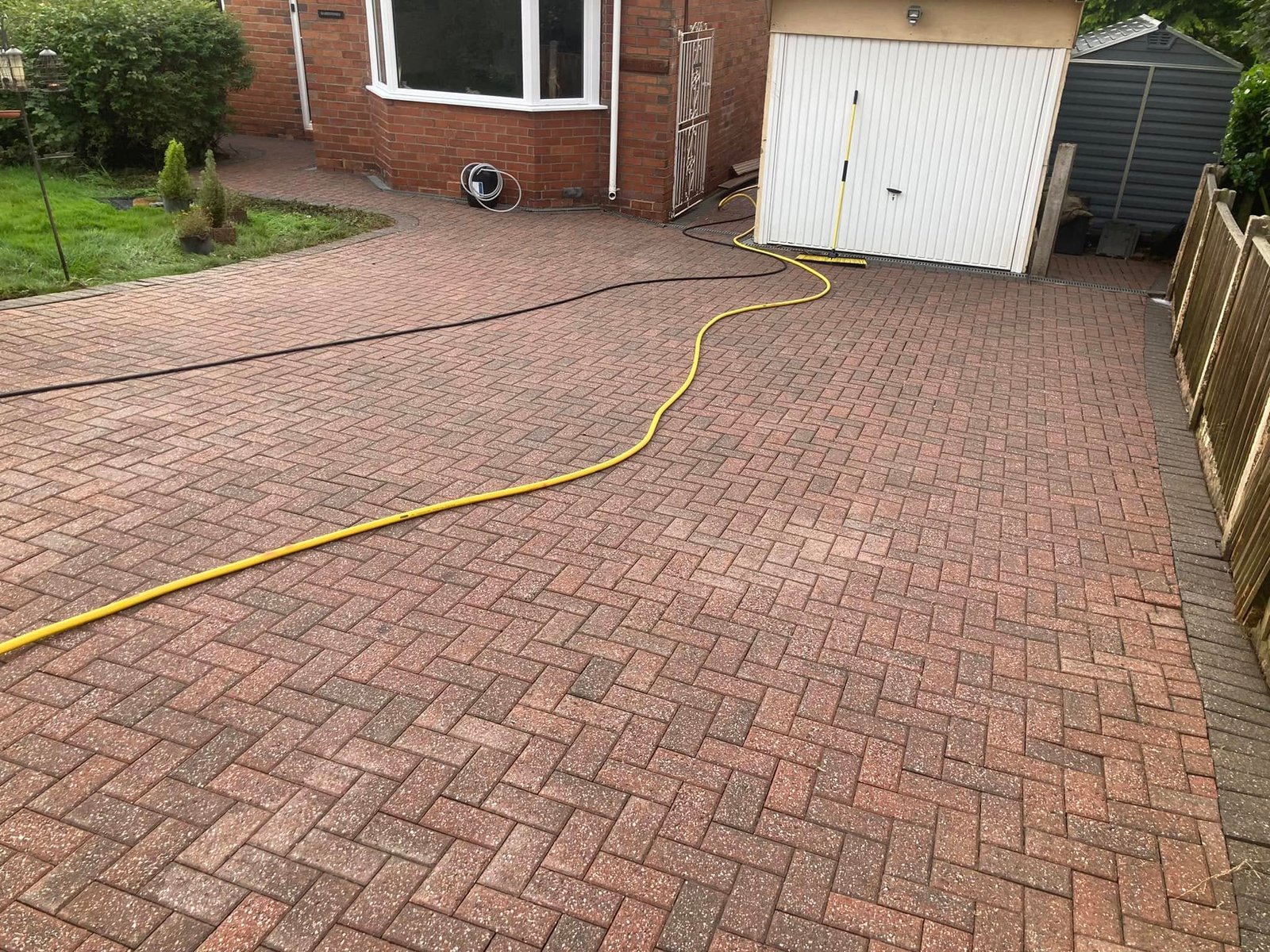
    Driveway surface after cleaning by Balo Jetwash; the photograph does not show a sealing treatment

    First: cleaning, re-sanding and sealing are three different jobs

    These terms are often used together, but they do not mean the same thing:

    1. Driveway cleaning removes suitable surface dirt, moss, algae and other contamination using a method appropriate to the material.
    2. Block paving re-sanding replaces lost or depleted jointing sand in conventional sand-jointed block paving after the paving is sufficiently dry. It helps the joints perform as intended.
    3. Sealing means applying a compatible protective coating or penetrating treatment, depending on the product and surface. It is an optional extra for many types of paving, not a substitute for cleaning or sound joints.

    For example, a block-paved driveway can be professionally cleaned and correctly re-sanded without receiving any sealer. See our guide to block paving re-sanding for the practical difference.

    Do block paving manufacturers recommend sealing?

    Not universally. Marshalls states that sealing its block paving is not necessary, noting that sealants require a clean, dry, dust-free surface and may alter appearance or wear unevenly. That is an important counterpoint to sales claims that every cleaned driveway must be sealed.

    Brett Landscaping advises checking the suitability of a sealant with the manufacturer, including possible effects on slip resistance, appearance and ongoing maintenance. The correct answer therefore depends on the exact paving product and the reason for sealing it.

    Neither position means all sealers are useless. It means sealing should be a deliberate choice with understood benefits, limitations and maintenance requirements — not a compulsory upsell after pressure washing.

    When might driveway sealing be worth considering?

    When you want easier removal of future surface dirt

    Some compatible treatments can make routine cleaning easier, depending on the paving and the type of contamination. They do not make a driveway self-cleaning. Leaves, grit and biological growth still need attention.

    When a particular paving product allows protective treatment

    Certain natural stones and concrete products may have manufacturer-approved treatments for specific needs. The important detail is approved for that surface, not merely labelled “driveway sealer”.

    When you understand and accept the visual finish

    A product may leave a matt, satin, gloss or darker “wet-look” finish. The appearance can vary with the paving and may change as the coating wears. Ask for a small test patch and assess it after curing, not only while wet.

    When is sealing a poor idea?

    • The paving is still damp after cleaning. Residual moisture can interfere with application and cause whitening or patchy results.
    • There are white salt deposits (efflorescence). Sealing too early can trap or highlight visible deposits.
    • The driveway is permeable paving. A coating that obstructs joints or pores may interfere with intended drainage; check the system manufacturer first.
    • The surface is breaking up, loose or sinking. A sealer does not repair failed bedding, damaged tarmac, loose aggregate or movement.
    • The surface already has an unknown coating. Applying another product without identifying the old one risks incompatibility and uneven finish.
    • You expect guaranteed oil-stain prevention. Sealing is not a promise that engine oil will never stain, especially if spills are left untreated.
    • The finish may become slippery. Check the product’s slip-resistance advice, particularly for slopes and pedestrian routes.

    For an example of why surface condition matters before any exterior treatment, read our guide to DIY pressure washing mistakes.

    Does the type of driveway change the decision?

    Driveway surface Sealing decision What to check first
    Conventional block paving Often optional; not required simply because it has been cleaned Manufacturer advice, complete dry joints, efflorescence, existing coatings
    Permeable block paving Extra caution; some treatments may affect water infiltration Whether the exact permeable system permits any coating
    Natural stone Varies by stone and finish Stone identification, porosity, chemical compatibility and colour change
    Concrete driveway Depends on the concrete finish and any previous treatment Cracks, decorative coatings, moisture and manufacturer recommendations
    Tarmac Do not assume a block paving sealer is suitable Condition of the bitumen-bound surface and product-specific guidance
    Resin-bound surface Follow the installer’s system guidance rather than applying a generic sealer Resin compatibility, permeability and signs of loose aggregate

    Unsure what your driveway is made from? Our complete guide to driveway cleaning in Telford explains the main materials and their cleaning considerations.

    How long after driveway cleaning can sealing be applied?

    There is no reliable universal “24 hours later” rule. The surface, bedding, joints, weather, product and manufacturer’s instructions all affect the drying and curing requirements. A driveway can look dry on top while moisture remains below the surface.

    Independent UK paving guidance from Pavingexpert stresses that paving and joints must be thoroughly dry before sealing and explains why residual moisture causes failures. Its broader sealant guidance also advises caution in cool, damp conditions. Treat these as reasons to assess the actual conditions, not as a substitute for the chosen product’s instructions.

    Why Telford weather matters

    In Telford, as anywhere in the UK, a rainy spell, cool temperatures, overnight dew or shaded areas can extend drying time. A convenient booking date is not proof that a surface is ready. If the required dry-weather window is unavailable, postpone sealing rather than risk a failed finish.

    What about re-sanding before sealing?

    On conventional sand-jointed block paving, joints must be inspected and replenished where necessary. Kiln-dried sand needs dry paving and joints so it can flow into place. Whether a particular sealer is compatible with that jointing material must then be checked separately. Re-sanding is a finishing and maintenance step; sealing is not a shortcut around it.

    Will sealing prevent weeds, moss and oil stains?

    Be cautious with blanket guarantees. A suitable product may influence how dirt adheres or how easily some spills are cleaned, but it does not eliminate the conditions that allow moss and algae to return. Shade, moisture, organic debris and drainage still matter.

    Similarly, an old or deeply absorbed oil mark may remain visible after cleaning, and sealing over contamination can preserve an unsatisfactory appearance. Some old or synthetic oil stains cannot be removed completely. Deal with the underlying contamination first and ask what result is realistically achievable.

    A practical decision checklist before spending money

    Use these questions when comparing a sealing quotation or deciding whether to leave a cleaned driveway unsealed:

    1. What exactly is the surface? Get the product name or installation details if possible.
    2. What is the goal? Easier maintenance, a different finish or a specific approved protection? If you cannot name a benefit, you may not need the treatment.
    3. Does the manufacturer permit it? This matters especially for permeable and resin-bound systems.
    4. Is the surface sound and clean? Cracks, failed edges, loose blocks and stains need separate attention.
    5. Are the joints complete? Conventional block paving may need kiln-dried re-sanding before any compatible treatment.
    6. Is the surface genuinely dry? Check the product’s requirements, not just the forecast headline.
    7. What are the downsides? Ask about colour change, slip resistance, uneven wear, reapplication and future removal.
    8. Can you see a test patch? Judge the cured result before agreeing to the full driveway.

    Simple decision: if the paving is clean and sound, the manufacturer does not recommend sealing, or the benefit is unclear, leaving it unsealed is a reasonable choice. If a suitable treatment solves a defined problem, ask for written product information and a realistic maintenance plan before proceeding.

    Frequently asked questions about driveway sealing in Telford

    Do I need to seal block paving after pressure washing?

    No. Cleaning and correct joint maintenance can be completed without sealing. Whether sealing adds value depends on the specific blocks, product guidance and your maintenance goals.

    Should I re-sand block paving before sealing?

    Conventional block paving joints should be checked and replenished with suitable jointing sand where needed once dry. Then confirm that any proposed sealer is compatible with the paving and jointing system.

    Can sealing make a driveway slippery?

    Some coatings can change slip resistance. Ask for the manufacturer’s information and consider slopes, steps and pedestrian routes before choosing a finish.

    Can a driveway be sealed straight after cleaning?

    Do not assume so. The paving and joints may retain moisture after the surface looks dry. Follow the product’s specified drying and weather requirements.

    Will sealing stop oil stains completely?

    No sealer should be treated as a guarantee. Clean up fresh spills promptly, and remember that old or synthetic oil marks may not be fully removable.

    Does Balo Jetwash include sealing with driveway cleaning?

    Our standard driveway cleaning information covers surface-appropriate cleaning and, where required for conventional block paving, kiln-dried re-sanding. Do not assume sealing is included. Any proposed additional treatment would need to be discussed and confirmed separately.

    Need a driveway cleaning assessment in Telford?

    Driveway Cleaning Telford is delivered by Balo Jetwash. We assess the material and condition before confirming a cleaning quotation, use surface-specific methods and carry £5 million public liability insurance. For conventional block paving, our cleaning service includes appropriate kiln-dried re-sanding where required and once conditions allow.

    We will not suggest that a coating can repair failed paving or guarantee the removal of every stain. If your immediate need is a proper clean rather than an optional sealer, visit our Driveway Cleaning Telford service page to arrange an assessment. Our general cleaning guide price is £5 per square metre with a £100 minimum; the final quotation follows a site visit. Sealing, if separately discussed, is not covered by that general cleaning guide price.
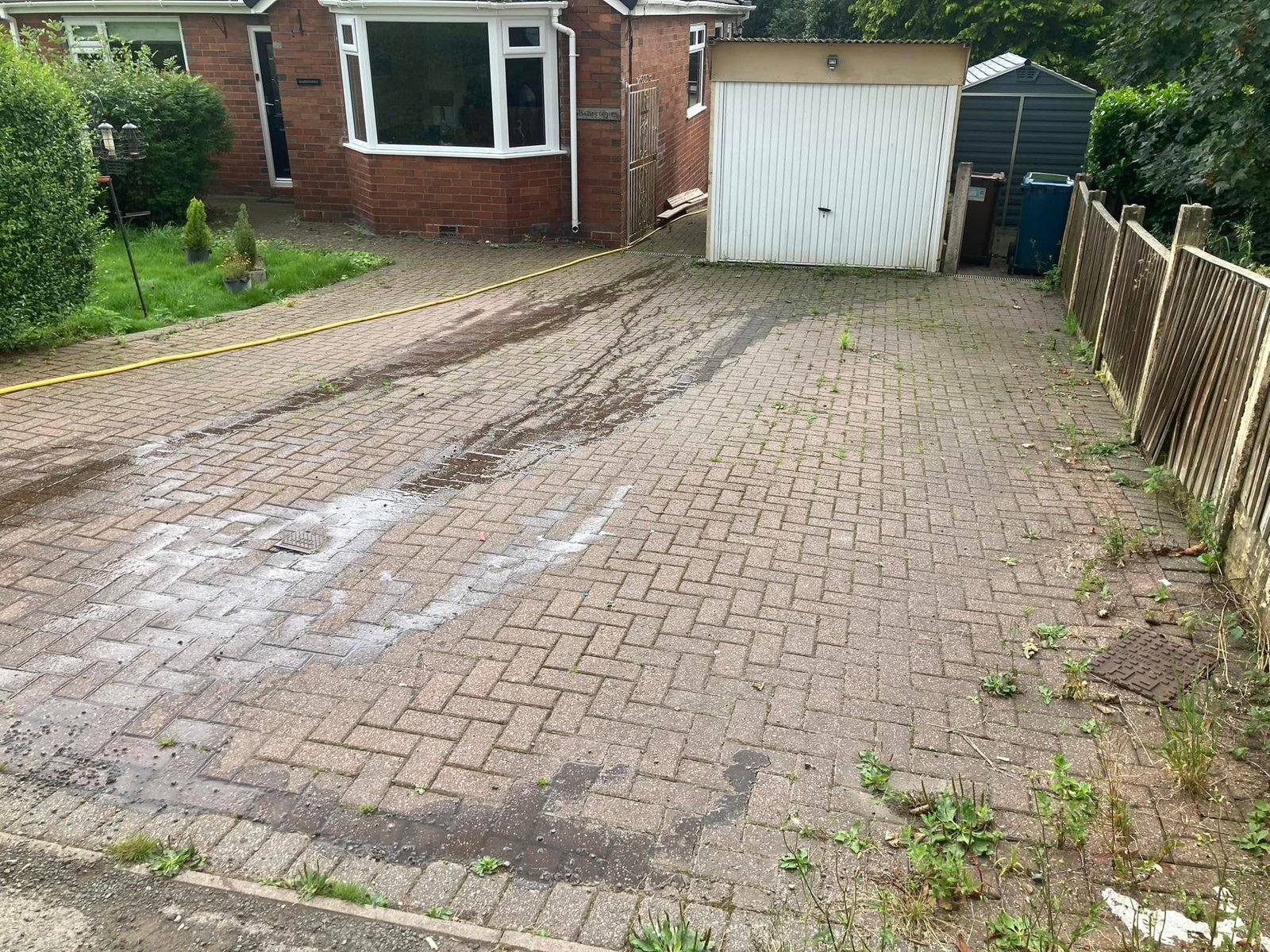
  • 10 DIY Pressure Washing Mistakes That Can Damage Your Driveway

    10 DIY Pressure Washing Mistakes That Can Damage Your Driveway

    DIY pressure washing driveway mistakes can be expensive. A domestic pressure washer may remove loose dirt from a sound surface, but the wrong nozzle, unsuitable cleaner or poor finishing can leave permanent marks. This guide explains ten avoidable problems for homeowners in Telford, including block paving, tarmac, concrete, resin-bound driveways and natural stone.

    It is not a claim that every driveway needs professional cleaning. The useful question is whether the material and its condition are suitable for the method you intend to use. If you cannot identify the surface or spot signs of damage, stop before applying pressure.

    Driveway cleaning work photographed by Balo Jetwash

    Before switching on: check the surface, joints and drainage

    Walk the entire driveway while it is dry. Look for loose stones, cracks, old repairs, weak edges, low joints, drains and nearby planting. The risk changes with the material:

    Surface Main DIY risk When to stop
    Block paving Blowing jointing sand out or marking blocks Loose or sunken blocks; unstable edges
    Tarmac Dislodging aggregate or marking bitumen-bound material Crumbling, cracking or visibly loose aggregate
    Concrete Etching weak or decorative finishes Flaking, spalling or unknown coating
    Resin-bound Dislodging aggregate or affecting the resin Loose stones or unclear manufacturer instructions
    Natural stone Surface erosion or chemical staining Soft, flaky or unidentified stone

    These are general warning signs, not universal pressure settings. There is no single safe PSI for every driveway: age, surface condition, nozzle, distance and water flow all matter.

    A five-minute go/no-go checklist

    Before doing anything with a pressure washer, use this quick decision check. If you cannot answer one of the questions, postpone the wash until you have reliable guidance.

    1. Identify the material: is it block paving, tarmac, concrete, resin or natural stone?
    2. Inspect the weakest point: check edges, cracks, old repairs, loose stones and the condition of block paving joints.
    3. Locate drainage: identify nearby gullies and how you will prevent contaminated water entering them.
    4. Check product instructions: confirm that the proposed cleaning method and any detergent suit the surface.
    5. Plan the finish: for conventional block paving, decide how depleted joints will be re-sanded once dry.

    Go: the surface is sound, the method is compatible and you can control runoff. Pause: the material is unknown, joints are unstable, runoff cannot be controlled or the surface is visibly failing. This is a practical screening check, not a guarantee of safe pressure washing.

    10 DIY pressure washing mistakes worth avoiding

    1. Treating every driveway material as if it were concrete

    Block paving has sand-filled joints. Tarmac is bitumen-bound. Resin-bound driveways rely on a resin-and-aggregate system. Natural stone varies considerably in porosity and strength. A method suitable for one surface may damage another.

    Better approach: identify the material and follow its manufacturer or installer guidance. If you are unsure whether a driveway is resin-bound or resin-bonded, or whether stone has a protective finish, do not guess.

    2. Using a narrow, concentrated jet to remove stubborn dirt

    A narrow jet concentrates force into a small area. Holding it close or stationary can leave lines, disturb aggregate, expose weak concrete or damage joints. A more powerful machine does not automatically produce a better clean.

    Better approach: avoid aggressive nozzles on vulnerable surfaces. Use a controlled method appropriate to the material and stop if you see fresh marks, loose particles or surface changes.

    3. Skipping a small test patch

    A cleaner or water jet can alter the appearance of a surface even when it seems sound. Decorative concrete, old sealers and some natural stones may react differently from an ordinary paving slab.

    Better approach: test the proposed method on a small, inconspicuous area and assess it after drying. The paving manufacturer Marshalls advises trial cleaning and care with power washing.

    4. Pointing the lance directly into block paving joints

    Pressure can wash out jointing sand. Those joints are part of how conventional block paving works, not simply a cosmetic gap. A driveway may look cleaner immediately after washing while being left with depleted joints.

    Better approach: avoid deliberately blasting along joints. After cleaning, inspect the joint depth and arrange suitable kiln-dried re-sanding where sand has been lost. Our block paving re-sanding guide explains the finishing stage.

    5. Pressure washing damaged tarmac or weak edges

    Loose aggregate, crumbling edges and old patch repairs are warnings that the surface may not withstand concentrated water pressure. Washing cannot repair a failed tarmac driveway, and aggressive cleaning may make defects worse.

    Better approach: inspect for loose material and consider repair before cleaning. For more detail, read our tarmac driveway cleaning precautions.

    6. Applying a chemical because it says “heavy-duty”

    Strong chemicals are not interchangeable. Products unsuitable for a particular stone, sealer, resin system or bitumen-bound surface may cause staining or deterioration. Mixing products can create additional hazards.

    Better approach: check the product label and surface compatibility, follow dilution and protective-equipment instructions, and never mix cleaning chemicals. A small test area matters here as much as it does for pressure.

    7. Trying to blast an oil stain away with water alone

    Oil is different from ordinary dirt. High-pressure water can spread contaminated liquid without removing oil already absorbed into porous paving. Old or synthetic oil stains may remain visible even after appropriate professional treatment.

    Better approach: first stop the leak, prevent oil reaching drains and contain any free liquid safely. Do not promise yourself a complete stain removal. Where specialist treatment is needed, it should be matched to the material and managed so contaminated runoff is not spread.

    8. Washing dirty runoff into a road gully

    A nearby drain is not automatically a safe disposal point. Surface-water drains may discharge directly to the environment. Water carrying detergents, oil or other contamination should not simply be directed into them.

    Better approach: identify where runoff can go before starting, and stop if you cannot manage it safely. The Environment Agency’s pollution-prevention guidance for businesses explains the difference between surface-water and foul drainage; householders should also avoid polluting drains.

    9. Forgetting doors, air bricks, plants and neighbouring property

    Spray can carry dirty water and debris onto walls, painted surfaces, windows, vehicles and planting. It can also enter vulnerable openings or create a slippery route for anyone walking nearby.

    Better approach: clear the work area, protect vulnerable features, keep people and pets away, and avoid spraying towards openings or neighbouring property. If you cannot control overspray, stop.

    10. Finishing the wash but not finishing the driveway

    On conventional block paving, pressure washing may remove jointing sand. Brushing kiln-dried sand onto wet paving is not a proper shortcut: damp joints can prevent it flowing into place. Equally, re-sanding does not fix sunken blocks or failed foundations.

    Better approach: let the surface and joints dry sufficiently, then replenish suitable jointing sand where needed. Inspect edges and low joints before declaring the work complete. Other surfaces do not automatically need re-sanding.

    What should you do if pressure washing starts causing damage?

    Stop immediately. Continuing with a gentler setting is not necessarily enough if the surface has already started breaking up. Allow the area to dry, photograph the condition and decide whether it needs a paving or surfacing repair rather than another clean.

    What you notice Possible concern Practical next step
    New pale lines or etched patches Surface marking Stop and reassess the method
    Loose grit on tarmac or resin Aggregate being disturbed Stop; seek material-specific advice
    Empty block paving joints Loss of jointing sand Plan re-sanding once sufficiently dry
    Water collecting near a doorway Runoff or drainage issue Stop and protect the property
    Oil spreading beyond the original mark Contaminated runoff Contain safely; do not wash into drains

    When does professional driveway cleaning make sense in Telford?

    If the driveway is sound, lightly dirty and you understand the surface, routine sweeping and careful maintenance may be enough. Professional cleaning is more useful when the surface is heavily contaminated, there are different materials to manage, access is difficult or the finish requires proper block paving re-sanding.

    At Driveway Cleaning Telford, the work is delivered by Balo Jetwash. We inspect the driveway before confirming a quotation, use surface-specific cleaning methods and hold £5 million public liability insurance. For conventional block paving, suitable kiln-dried re-sanding is included where required as part of the cleaning service once conditions allow.

    Our general driveway cleaning guide price is £5 per square metre with a £100 minimum; the final quote follows a site assessment. That price is not a promise that every stain can be removed or that a damaged surface can be restored by washing.

    For an overview of our approach to different surfaces, see the complete driveway cleaning guide for homeowners.

    Frequently asked questions

    Can a domestic pressure washer damage block paving?

    Yes. Excessive pressure or poor technique can mark blocks and remove jointing sand. The risk depends on the block condition, nozzle and method.

    Is tarmac safe to pressure wash?

    Sometimes, but damaged or weak tarmac is particularly vulnerable. Loose aggregate and crumbling edges should be assessed before any washing.

    Does every driveway need kiln-dried sand after cleaning?

    No. Re-sanding is relevant to conventional sand-jointed block paving when the joints need replenishing. Tarmac, resin-bound and concrete surfaces do not use the same finishing method.

    Will pressure washing remove old oil stains completely?

    Not reliably. Oil type, age, depth and surface porosity all affect the result. Some old or synthetic oil marks cannot be fully removed.

    Should I use the highest pressure to save time?

    No. Cleaning should be matched to the surface. Increasing pressure can cause damage without solving the underlying staining problem.

    How can I get a driveway cleaning quote in Telford?

    We inspect the material, access, condition and staining before giving a final price. You can start from our Driveway Cleaning Telford service page.

    Not sure whether your driveway is safe to clean?

    Tell us the surface type, approximate size, any loose or damaged areas and what you want to improve. We will explain whether cleaning is appropriate, what finishing work is needed and which stains or defects may remain. The goal is a properly assessed clean, not a promise that water pressure can repair everything.

  • How Often Should You Clean a Driveway in Telford?

    How Often Should You Clean a Driveway in Telford?

    How often does a driveway really need cleaning?

    How often should you clean a driveway in Telford? For most homes, there is no sensible one-size-fits-all timetable. A lightly used, open driveway may only need a thorough professional clean every few years, while a shaded or heavily used surface can need attention sooner. The right interval depends on the surface, how quickly moss and algae return, vehicle use, drainage, surrounding trees and what condition you want the driveway to stay in.

    The useful rule is not “clean it every X months”. It is to clean when there is a clear maintenance reason, before contamination becomes harder to manage or the surface becomes unnecessarily slippery or untidy.

    Professionally cleaned driveway surface by Balo Jetwash

    How often should you clean a driveway in Telford?

    Two driveways on the same street can age very differently. One may stay relatively clean because it is open, drains well and receives plenty of daylight. Another can become green or dark more quickly because it stays damp, sits under trees or collects organic debris.

    That is why a calendar-only approach is weak. Cleaning too often can be unnecessary, while leaving contamination for too long can make the job more involved. The better approach is to look at the actual condition of the surface.

    Signs your driveway may be ready for cleaning

    • Moss or algae is spreading. Green growth is one of the clearest signs that the surface needs attention.
    • The driveway looks significantly darker than it used to. General traffic film, dirt and organic contamination build gradually.
    • Weeds are becoming established in block paving joints. Cleaning and correct finishing may be needed rather than simply pulling the visible growth.
    • The surface feels slippery when wet. Biological growth can create a genuine usability issue, especially on shaded areas.
    • Leaves and debris are repeatedly collecting in the same zones. These areas often stay damp for longer.
    • Old cleaning has left block paving joints depleted. The surface may need proper re-sanding after the next clean.
    • You are preparing the property for sale, maintenance or exterior improvement. Appearance can be a practical reason to clean even if the surface is not heavily contaminated.

    How surface type changes the answer

    The cleaning interval should reflect the material. Different driveway surfaces react differently to pressure, biological growth and repeated maintenance.

    Surface What usually drives the timing Important caution
    Block paving Moss, weeds, dark joints, general dirt Cleaning can remove jointing sand, so re-sanding may be needed afterwards
    Tarmac Surface dirt, moss, algae, traffic film Older or weak tarmac should not be aggressively pressure washed
    Concrete Dirt, tyre marks, organic growth Cracks, old repairs and decorative finishes need assessing first
    Resin-bound Organic debris and surface contamination Follow the specific system or installer guidance
    Natural stone Moss, algae, darkening and staining Some stones are sensitive to unsuitable chemicals or overly aggressive cleaning

    For a broader breakdown of different driveway materials, see our complete driveway cleaning guide for Telford homeowners.

    What makes a driveway need cleaning sooner?

    Shade and slow drying

    Areas that remain damp for longer can encourage moss and algae to return sooner than exposed, fast-drying areas. This does not mean every shaded driveway needs frequent pressure washing; it means you should watch those sections more closely.

    Trees and organic debris

    Leaves, seeds and general organic matter can collect on the surface and in paving joints. Regular sweeping can slow the build-up and may extend the time between deeper cleans.

    Heavy vehicle use

    Cars bring road dirt, tyre contamination and occasional fluid marks onto the driveway. A driveway used by several vehicles every day may look tired sooner than one with light use.

    Poor drainage or standing water

    Cleaning can remove surface contamination, but it cannot repair a drainage problem. If water regularly pools in one area, that underlying issue may contribute to faster regrowth and should be treated as a separate problem.

    Previous cleaning quality

    A rushed clean can leave contamination in corners, edges or joints. On block paving, failing to replace lost jointing sand also means the job has not been properly finished.

    Can you clean a driveway too often?

    Yes. More cleaning is not automatically better. Repeated aggressive pressure washing can be unnecessary and, on vulnerable surfaces, may cause wear or expose existing weakness. Tarmac, aged concrete, damaged paving and some decorative surfaces deserve particular caution.

    Professional cleaning should be based on condition and material, not a sales target. If a driveway is still clean, stable and safe, there is no benefit in washing it simply because a certain number of months has passed.

    That is especially important with tarmac driveway cleaning, where excessive pressure can make an older surface worse rather than better.

    What maintenance can extend the time between cleans?

    1. Sweep regularly. Remove leaves, soil and debris before they stay wet and break down on the surface.
    2. Deal with vehicle leaks early. Fresh oil or fluid marks are easier to manage than long-established staining.
    3. Keep drainage channels clear. Surface water should be able to move away as intended.
    4. Pull obvious weeds before they mature. This will not replace proper joint maintenance, but it can reduce visual deterioration.
    5. Check block paving joints. Low or empty joints should not be ignored after cleaning.
    6. Avoid random chemical treatments. The wrong product can mark or damage some driveway materials.

    If you have block paving, read our guide on why re-sanding matters after pressure washing.

    A simple condition-based cleaning schedule

    Instead of choosing a rigid date, use a quick inspection every few months. You do not need specialist equipment. Walk the driveway and check the following:

    Question If the answer is yes
    Is moss or algae becoming widespread? Consider a deeper clean or professional assessment
    Is the surface slippery when wet? Do not ignore it; assess the cause and appropriate treatment
    Are block paving joints visibly low? Plan for correct joint maintenance and re-sanding where needed
    Are there fresh vehicle-fluid marks? Deal with them early rather than waiting for the next full clean
    Is water pooling repeatedly? Investigate drainage rather than expecting cleaning to fix it
    Is the driveway still clean and stable? There may be no reason to clean it yet

    What about seasonal driveway cleaning?

    Spring and early autumn are popular times to inspect exterior surfaces, but the season itself is less important than the condition of the driveway and the weather window available for the work.

    For block paving, dry conditions matter after cleaning because kiln-dried sand needs sufficiently dry joints. If the paving remains wet, re-sanding may need to be completed later. A professional contractor should explain this rather than forcing the finishing stage in unsuitable conditions.

    Cleaning frequency by driveway surface

    How often should block paving be professionally cleaned?

    There is no universal annual rule. If the blocks remain clean, joints are stable and moss or weeds are limited, an annual deep clean may be unnecessary. If the paving is shaded, heavily used or repeatedly affected by biological growth, it may need attention sooner.

    The important distinction is between routine maintenance and full pressure washing. Sweeping, clearing debris and dealing with isolated problems can often delay the need for a full clean.

    How often should tarmac be cleaned?

    Tarmac should be cleaned only when there is a genuine need and the surface is in suitable condition. Older tarmac can contain loose aggregate, cracks, repairs or fragile edges. These should be checked before pressure washing.

    Cleaning can improve suitable surface dirt, moss and algae, but it cannot restore faded colour or repair structural deterioration. If the tarmac is breaking up, repair may be more appropriate than cleaning.

    What does professional assessment add?

    A useful assessment answers four questions: what material is the driveway, what contamination is present, what condition is the surface in, and what result is realistically achievable?

    Driveway Cleaning Telford is operated by Balo Jetwash. We use surface-specific cleaning methods, carry £5 million public liability insurance and inspect the driveway before confirming the final quotation. We also explain limitations rather than promising that every mark will disappear.

    For current pricing information, see our driveway cleaning prices in Telford.

    Frequently asked questions

    Should I have my driveway pressure washed every year?

    Not automatically. If the driveway is still clean, stable and safe, annual pressure washing may be unnecessary. Condition should determine the timing.

    Does moss mean the driveway needs cleaning?

    Widespread moss or algae is a strong sign that maintenance is due, especially if the surface is becoming slippery. The appropriate method still depends on the driveway material.

    Will professional cleaning stop moss coming back?

    No cleaning method can guarantee that biological growth will never return. Shade, moisture, debris and drainage all influence regrowth.

    Does block paving need re-sanding every time it is pressure washed?

    If pressure washing removes jointing sand and leaves the joints depleted, suitable kiln-dried sand should be replaced once the paving is dry enough.

    Can you clean a driveway too frequently?

    Yes. Unnecessary or aggressive repeated cleaning can create wear, particularly on weaker or ageing surfaces.

    How do I know whether my driveway needs cleaning now?

    Look for widespread biological growth, slippery areas, heavy dirt, weeds, depleted joints or a clear decline in appearance. If you are unsure, an in-person assessment is more useful than following a rigid calendar.

    Related driveway cleaning guides

    Need an honest driveway assessment in Telford?

    If you are unsure whether your driveway actually needs cleaning, we can inspect the surface and explain what is worth doing and what is not. We do not recommend cleaning simply because a certain amount of time has passed.

    Visit the Driveway Cleaning Telford service page or contact us to arrange an assessment. We confirm the quotation before work begins.