Driveway Drainage Problems in Telford: When Cleaning Will Help (and When It Won’t)
Standing water on a driveway is frustrating, especially when it leaves dirty patches, slippery growth or puddles near your front door. If you are looking into driveway drainage problems in Telford, the first thing to establish is whether the issue is blocked surface drainage, a build-up of dirt or the way the driveway was laid. Cleaning can help with some of these problems. It cannot correct the slope of the paving or repair a failed drainage system.
This guide explains how to recognise the difference, what you can safely check yourself and when to call a drainage specialist rather than a pressure washing company.
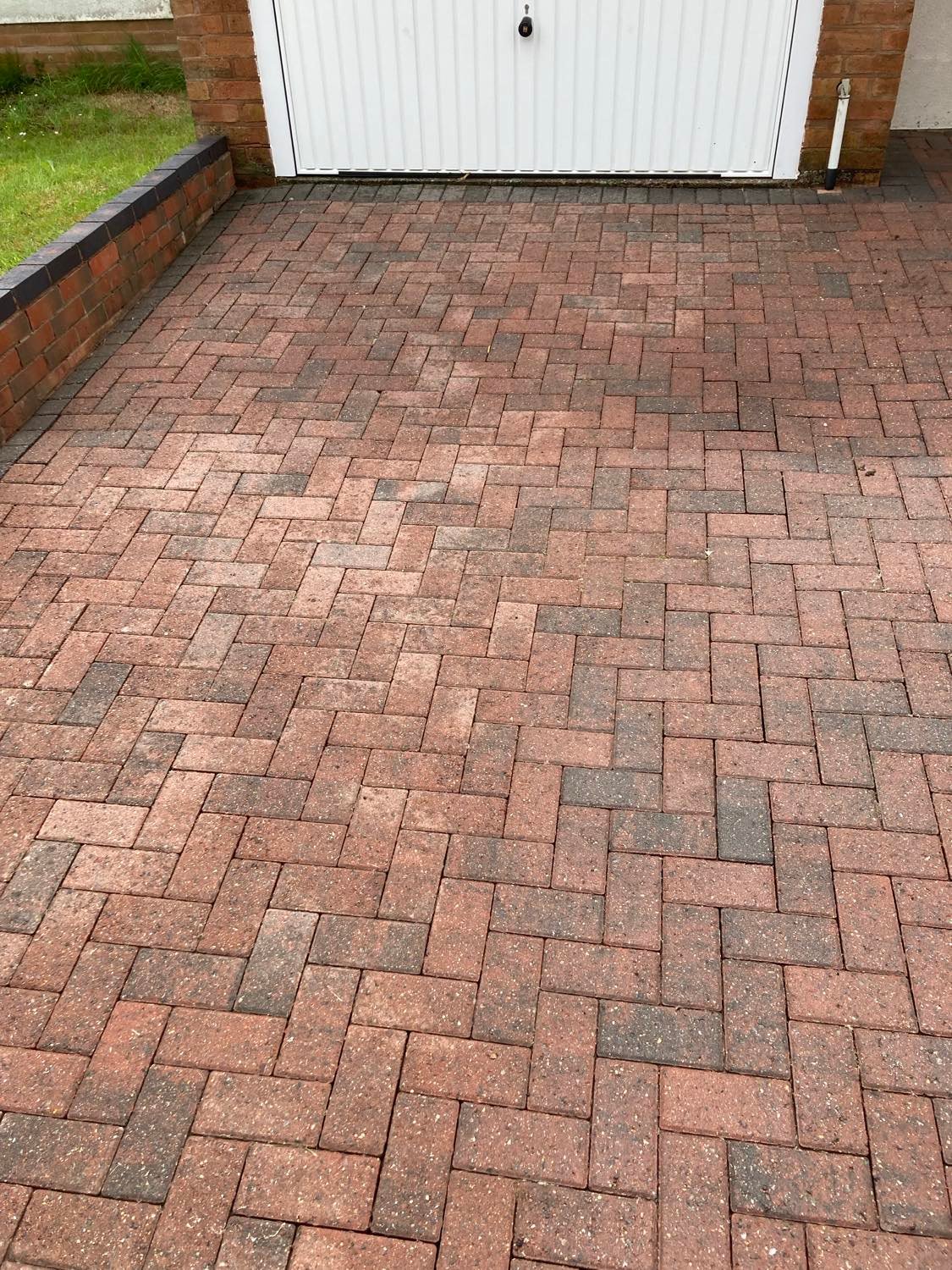
Why does water collect on a driveway?
A driveway should generally direct rainwater towards an appropriate permeable area or drainage feature. Where water remains in the same place long after rainfall, look for one or more of these causes:
- Blocked channels or gullies: leaves, silt, moss and other debris may prevent water reaching an outlet.
- Low spots: settlement or an uneven surface can create a shallow basin.
- Insufficient fall: a driveway without adequate gradient may hold water even when perfectly clean.
- Compacted or clogged permeable surfaces: fine material can reduce infiltration through some permeable paving systems.
- Damaged pipework or outlets: a drainage channel may look clear at the top but still fail downstream.
Sometimes several issues occur together. A driveway can have a low spot and a blocked channel; removing the debris may improve runoff without eliminating the puddle.
Driveway drainage problems in Telford: a practical first inspection
1. Watch what happens during rainfall
From a safe position, note where the water arrives, which direction it moves and where it stops. Does it flow towards the house, collect beside a garage threshold or simply linger in the middle of the paving? A photograph taken during rain can be more informative than one taken on a dry day.
2. Look for obvious surface obstructions
Check visible channel grates, drainage openings and the edge of the driveway for leaves and debris. Wear gloves and remove only material that is safe and accessible. Do not lift heavy covers or enter drains. If water is backing up from a gully, or there is a sewage smell, contact an appropriate drainage professional.
3. Check whether the paving has moved
Sunken blocks, rocking slabs, cracks or a visibly uneven area suggest a structural problem. Cleaning does not reset the bedding layer, stabilise an edge restraint or restore the original fall. These issues may need a paving contractor.
4. Identify the surface before using a pressure washer
Concrete block paving, tarmac, resin-bound surfacing, natural stone and permeable block paving are not interchangeable. Aggressive washing can remove jointing material, disturb weak surfaces or push debris into drains. A suitable method depends on the material and its condition.
What professional driveway cleaning can and cannot do
| Problem | Can cleaning help? | What else may be needed? |
|---|---|---|
| Leaves and dirt blocking a surface channel | Often, if the blockage is accessible | Drain inspection if water still backs up |
| Algae and moss making wet paving slippery | Often improves surface cleanliness and grip | Address persistent moisture or shade |
| Low spot caused by sunken blocks | No, not the underlying level | Lift and relay affected paving |
| Water flowing towards the house | Not if the fall is incorrect | Professional drainage and paving assessment |
| Clogged permeable paving | Specialist maintenance may help in some cases | Check the system specification; specialist assessment |
| Blocked underground drain | Ordinary driveway washing will not solve it | Drainage contractor |
For surface contamination, our driveway cleaning service in Telford can help assess a suitable cleaning approach. We do not describe washing as a cure for structural drainage faults.
Block paving: cleaning and re-sanding must be planned together
Conventional sand-jointed block paving can lose jointing sand through traffic, weathering and pressure washing. After suitable cleaning, kiln-dried sand may need to be brushed back into the joints once the paving is sufficiently dry. The sand must be compatible with the paving system; wet joints prevent it from flowing down properly.
Re-sanding is a finishing and maintenance step, not a drainage repair. It will not fix a sunken section or a blocked pipe. On permeable block paving, the jointing aggregate may be different: do not automatically use ordinary kiln-dried sand, because it could affect how the surface drains. Read our guides to re-sanding after block paving cleaning and choosing kiln-dried jointing sand.
When should you call a drainage specialist?
Get specialist advice where water repeatedly approaches the property, a drain overflows, there is evidence of subsidence, or a persistent puddle remains after channels have been cleared. Water entering a garage or house deserves prompt attention. Do not use high-pressure equipment to force an unknown blockage deeper into a pipe.
For significant changes to a front driveway, check the applicable planning and surface-water drainage requirements before work starts. Requirements depend on the size, materials and proposed drainage arrangement; a contractor or local planning authority can advise on the specific proposal.
How to reduce repeat moss and silt build-up
- Sweep leaves and loose dirt before they accumulate around channel drains.
- Inspect visible outlets after heavy rainfall, without dismantling underground drainage.
- Trim overhanging vegetation where practical to improve light and airflow.
- Deal with weeds and moss before they become established in joints.
- Arrange surface-appropriate cleaning when contamination becomes significant, not simply because a fixed number of months has passed.
- Keep a record of puddle locations and how long water remains after rain; this can help a drainage contractor diagnose recurring faults.
For more on maintenance timing, see how often a Telford driveway needs cleaning.
Frequently asked questions
Will pressure washing stop puddles forming?
Only if removable dirt or debris was the main cause of poor runoff. Washing cannot alter the slope of the driveway or repair sunken paving.
Can moss block driveway drainage?
Moss and organic debris can accumulate around surface channels and joints. Removing them may improve cleanliness and help keep visible openings clear, but persistent drainage problems need investigation.
Should I re-sand block paving immediately after washing?
Not while the joints are wet. Conventional dry-jointed paving should be sufficiently dry, and the sand must be suitable for the paving. A wet-weather delay is sometimes necessary.
Can you clean a driveway without using my outside tap?
We can bring our own water where needed. Tell us about access and the surface when requesting a quote.
Will cleaning remove every stain?
No. Some long-standing oil, rust and synthetic stains can remain even after appropriate treatment. We explain realistic expectations before work.
Request a practical driveway cleaning assessment in Telford
If the main problem is algae, moss, weeds or accumulated surface dirt, send clear photographs of the driveway, the problem areas and any drainage channels. Include your postcode and explain where water collects. We can discuss whether cleaning is appropriate or whether a drainage or paving specialist should assess the problem first.
Our driveway cleaning pricing starts at £5 per m², with a £100 minimum charge; the suitability and scope of work are confirmed before a quote. Balo Jetwash carries £5 million public liability insurance. Cleaning may improve the appearance and maintenance of your surface, but we will not promise to repair drainage faults by washing it.